

Jenks Fall Festival Vendor Application: Permits and Costs
You've picked your products, started packing totes, and found a fall festival vendor application for a booth near Main Street. Before you pay, match your business type and the exact event location to the right paperwork, because a festival acceptance isn't the same thing as permission to operate in Jenks.
For vendors coming into The Ten District, the useful question isn't just “Where do I apply?” It's which document goes to the organizer, which goes to the city or state, and whether the site involves Muscogee (Creek) Nation requirements. Get that sequence straight before you commit to inventory, equipment rentals, or a nonrefundable fee.
Table of Contents
Which Permits Your Jenks Booth Needs - Start with what you sell and where you'll stand - A Jenks address doesn't settle jurisdiction
Building a Complete Application Packet - Assemble the review file - Make the packet easy to check
Counting Back from Your Event Date - Put the controlling deadlines first - Track dependencies, not just dates
What Booths Cost Around Tulsa - Ask what the payment actually buys - Budget beyond the booth
Fixing Turn-Aways and Confirming Your Space - Make the display reviewable before you arrive - Get a confirmation you can act on
Which Permits Your Jenks Booth Needs
A vendor with a food booth, a craft table, and a temporary retail setup in a Muscogee (Creek) Nation facility is handling three different paperwork paths. The event organizer may accept your application, but that acceptance does not replace city, state, or tribal permissions. I recommend deciding the exact selling setup and exact booth address before paying any fee, because the document that gets one booth approved may do nothing for another.
Vendor type | Documents to gather | Fee | Timing |
|---|---|---|---|
Mobile food vendor | City of Jenks mobile food vendor permit, Oklahoma Tax Commission sales-tax permit, Oklahoma State Department of Health permit, certificate of liability insurance, property owner permission for private land | Confirm the current city permit fee through the finance-related contact before paying | Submit with supporting documents before space is assigned |
Temporary retail vendor at Muscogee (Creek) Nation facilities | Completed temporary vendor sales-license application, license payment, citizenship card or lease/permission document | $50 for non-Muscogee citizens; $0 for eligible enrolled citizens with proof | Separate application for each location, booth space, or event; materials due at a listed Tax Commission office at least one week before the event |
Craft or merchandise booth | Event-specific checklist from the festival organizer | Written booth-fee schedule from the organizer before payment | Organizer's stated application deadline and setup window |
Jenks vendor permits by vendor type: The tribal fees, separate-application requirement, and advance deadline above come from the Muscogee (Creek) Nation temporary vendor sales-license application. Confirm the current form and your site's eligibility before submitting payment.
Start with what you sell and where you'll stand
Mobile food vendors have the most substantial document stack in this comparison. Treat the city application as a separate submission, not an attachment the festival organizer will necessarily forward for you. Ask the city's finance contact how to deliver the packet and how you'll receive confirmation. That step matters when the organizer wants a booth list and the city wants its own permit record before space is assigned.
For a craft or merchandise booth, start with the organizer's written requirements. Don't copy a food truck's checklist or assume a neighboring vendor's approval covers your business. Your product category, selling arrangement, and event site determine which questions need answers.
Home-based food businesses should describe their actual products and preparation methods before asking which application to use. “I sell food” isn't specific enough to distinguish packaged baked goods from meals prepared and served at the booth. That distinction affects the documents a reviewer expects to see.
A Jenks address doesn't settle jurisdiction
A Main Street festival space and a booth at a Muscogee (Creek) Nation Riverwalk-area facility shouldn't be treated as interchangeable locations. Ask for the exact site and the authority handling vendor licensing, not the event's marketing name. Fees and deadlines change, so confirm them with the office that controls the permit rather than relying on last year's booth conversation.
For the tribal application, send the materials to a Tax Commission office listed on that form, not automatically to Jenks City Hall or the Oklahoma Tax Commission. Those are different offices. Citizenship documentation supports eligibility for the enrolled-citizen rate; it isn't a substitute for the application.
Practical rule: Confirm the location before choosing the licensing track. Don't assume a permit follows you to another booth or event.
If you're testing a temporary retail concept beyond a festival, our guide to hosting a pop-up shop in Jenks can help you separate the selling arrangement from the event application.
Building a Complete Application Packet
Build a packet that someone can review without calling you to decode filenames or hunt through text messages. For mobile food businesses, the City of Jenks Mobile Food Vendor Application identifies the city permit track and supporting state permits, liability insurance, and private-property permission.
Use that official checklist for city submission. Use the organizer's checklist for festival acceptance, and keep the two destinations clearly labeled.
Assemble the review file
Business identity. Include the legal business name, owner's name, mailing address, and the person who'll answer questions during setup. If your booth sign uses a different trading name, connect those names clearly.
Oklahoma Tax Commission sales-tax information. Supply the permit number and copy requested for your application track. Make sure the business identity matches the rest of the packet rather than leaving the reviewer to explain discrepancies.
Food-service documentation. Include the applicable Oklahoma State Department of Health permit for a mobile food application. If you're unsure how your home-based food business is classified, resolve that with the relevant agency before describing yourself as exempt.
Certificate of liability insurance. Ask the organizer for the required coverage and certificate wording before contacting your agent. A certificate holder receives evidence of coverage; additional insured status concerns coverage under the policy and may require an endorsement. Have your agent confirm what was issued.
Products and menu. List what you intend to sell by category. Food applicants should identify preparation locations, items needing temperature control, holding equipment, and allergen-handling arrangements so the reviewer can assess the proposed operation.
Booth and equipment details. State the full footprint, who supplies the tent and tables, and every requested electrical connection. Describe cooking appliances and fuel rather than writing only “power needed.”
Waste arrangements. Explain how you'll contain trash, grease, and wash water. Ask where approved disposal points will be, and don't plan to empty a container into a street drain.
Property permission. For private land, include the owner's permission in the form the reviewing office requests. Identify the actual site so the permission can be matched to your proposed setup.
Payment and presentation attachments. Add payment confirmation when payment is due, along with requested product or setup photos. Keep an unpaid invoice separate from a receipt so nobody mistakes one for the other.
Make the packet easy to check
Create a cover sheet listing each document, its status, the date sent, and the receiving office or organizer. Use descriptive PDF filenames, and keep approved versions separate from drafts. An email saying “received” should remain separate from an email saying “approved.”
Organizers can make this easier by publishing a category-specific checklist rather than sending everyone the same instructions. Our guidance on finding vendors for a Jenks event addresses that organizer-side work.
An application missing a required document is incomplete, however strong the booth.
Counting Back from Your Event Date
Start by asking the organizer where the event approval stands. A vendor can have a tidy packet and still be waiting on decisions about the festival site, access, or available spaces.
Put the controlling deadlines first
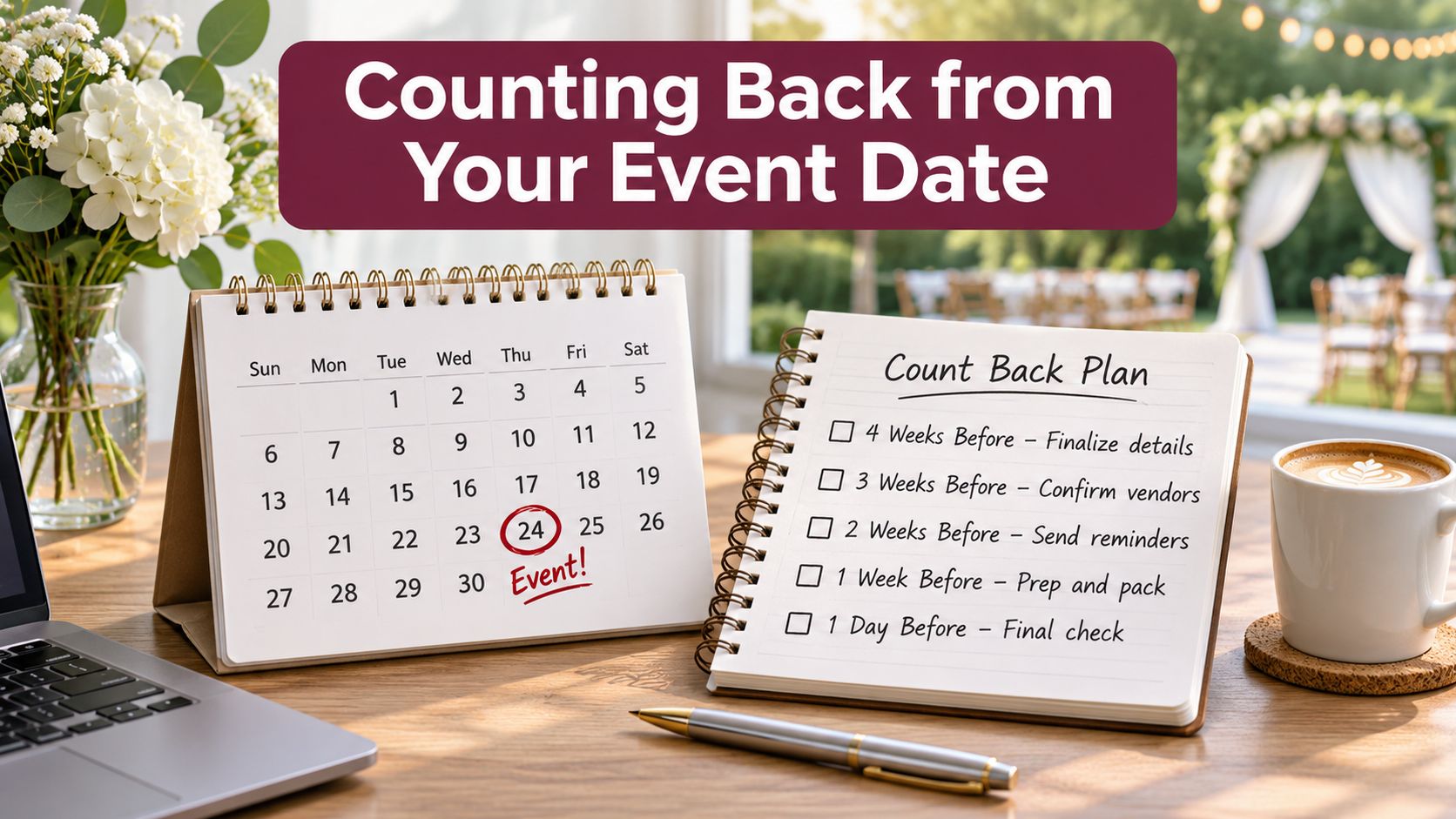
At least 90 days before the event, the organizer must submit the City of Jenks Special Event Application, which carries no application or approval fee and allows possible exceptions for special or unusual circumstances. Ask whether it has been filed because unresolved event approval can affect recruitment and site planning. An exception is something the city grants, not something a vendor should build a purchasing plan around.
Before the organizer's commitment deadline, settle the proposed space and equipment responsibilities. Ask when acceptance decisions will arrive and how much time you'll have to respond. If the organizer hasn't finalized the layout, avoid ordering a custom display that only fits one arrangement.
Before promising an opening date, ask the state agencies about their current processing times. Oklahoma sales-tax and health documents come through separate channels. Record each agency's requested materials and follow-up method instead of assuming the festival application starts those processes.
Before the insurance-document deadline, give your agent the organizer's written requirements. Leave room to correct the named entity, event location, or endorsement request. Forwarding an old certificate without checking it can create another round of paperwork.
Before the tribal filing cutoff, deliver the complete packet to the listed Muscogee (Creek) Nation Tax Commission office when that application applies. Keep delivery confirmation and a copy of the submitted materials. Don't treat mailing or emailing an incomplete file as approval to sell.
Track dependencies, not just dates
A useful calendar entry names both the action and the person responsible: request insurance wording from the organizer, send it to the agent, then submit the issued certificate. Those are separate tasks, and the last one can't be finished properly until the others are done.
For a reusable planning format, the Pretty Progress event planning timeline guide can help organize milestones. Enter the actual Jenks, agency, and organizer deadlines yourself rather than treating a general template as regulatory guidance.
Volunteer-run festivals need the same clarity. Our event-planning guidance for nonprofits is useful when responsibilities are split among committee members and the person recruiting vendors isn't the person handling city paperwork.
The event permit covers the festival itself. It doesn't replace a vendor's own licensing, insurance, food-service, or sales-tax obligations.
What Booths Cost Around Tulsa
Space | Early registration | After August 1 | After September 1 |
|---|---|---|---|
10-by-10-foot space, vendor brings own tent | $215 | $225 | $240 |
10-by-20-foot space, vendor brings own tent | $290 | $300 | $315 |
Brush Creek Bazaar booth prices by registration date: Brush Creek Bazaar arts-and-crafts vendor schedule lists these amounts as a Tulsa-area benchmark, not a City of Jenks fee schedule. That schedule also asks applicants to complete their application by September 1.
Ask what the payment actually buys
A lower registration price helps only after you have chosen a space that fits the way you sell. A cheaper footprint is a poor bargain when racks, inventory storage, and checkout sit outside the approved area. Price comparison starts with operating needs, then the fee.
Ask the organizer these questions before comparing fees:
What is the total booth charge? Request an itemized explanation of any separate power, equipment, or application charges.
Is payment due before or after acceptance? Ask whether a payment reserves space, requests review, or confirms an already approved assignment.
Is a tent included? Confirm tables, chairs, tent responsibility, and permitted anchoring methods in writing rather than relying on an event photo.
A booth fee also needs to be read against the selling format. Our explanation of how a pop-up market works can help you compare that format before committing. A short-term market may suit product tests, while a festival booth calls for tighter planning around stock, staff, and setup time.
Budget beyond the booth
Keep the festival fee separate from permit costs, insurance, transport, staffing, and packaging. For the Jenks mobile food permit amount, contact the city's finance office. For a downtown craft space, get the organizer's current written schedule. When city, state, and Muscogee (Creek) Nation requirements differ, match each cost to the office that receives that filing.
Use contribution per sale, not gross sales, to assess whether attending makes financial sense. Subtract product and transaction costs from a typical sale, then compare the remaining amount with event expenses. Include setup and teardown labor, even when you do the work yourself.
A market can still be useful for testing products or meeting local shoppers, but make that a deliberate objective rather than an excuse for an unclear budget. It works when the target, the product mix, and the spend limit are written down before payment.
Fees and registration windows change. Reconfirm the live schedule before paying.
Fixing Turn-Aways and Confirming Your Space
The booth doesn't fit the assigned space. Measure the entire operating setup, not just the tabletop. Include racks, checkout, stored inventory, tent legs, and any equipment that projects beyond the display. Send a simple overhead sketch with measurements so the organizer can evaluate it before setup morning.
You assumed the festival supplied the tent or tables. Ask who brings each item and what equipment standards apply. If you're borrowing a tent, inspect it before promising that it's ready for outdoor use. Confirm the organizer's anchoring requirements and keep all supports inside your approved footprint.
Your product category is already full. Ask about category availability before spending money on application photos or event-specific inventory. Describe your merchandise precisely, because “handmade gifts” doesn't tell the organizer whether you sell pottery, candles, or children's clothing. Don't change categories on paper and arrive with the same restricted products.
The private-lot arrangement is only verbal. Get the property owner's written permission and submit it with the requested packet. Identify the location clearly and make sure the person granting permission has authority to do so. An invitation from another vendor doesn't establish permission to use the property.
A payment deadline arrives before a space decision. Request written acceptance and space details before sending the booth payment. If the event requires an application or jury fee before review, ask for its refund terms and distinguish that charge from the space fee. You shouldn't have to guess whether a payment buys consideration or an actual booth.
Make the display reviewable before you arrive
You don't need previous festival photos to explain a new booth. Set up the proposed display in a driveway, garage, or other suitable space, then photograph it with the products, signage, and checkout position visible. Label it as a mock setup rather than presenting it as a past event.
A clean mockup is more useful than a close-up product photo when the organizer needs to understand traffic flow. Our craft-fair booth setup ideas can help you plan the display without letting fixtures crowd out customers.
For a Main Street assignment, ask where unloading happens, when the vehicle must move, and where vendors should park afterward. A booth assignment isn't a parking reservation. Don't assume you can leave a trailer beside the selling space or carry stock through another vendor's display.
Ask about weather decisions, too. Get the cancellation notification method, the person authorized to make the call, and the written refund or credit policy. Plan protection for merchandise without extending tarps or storage into the public walkway.
Get a confirmation you can act on
Before sending the booth fee, ask the organizer to confirm:
Event identity and schedule. The event name, location, date, setup window, and required selling hours.
Assigned space. The booth dimensions and location, or a clear explanation of when final assignments will be issued.
Equipment responsibility. Who supplies the tent, tables, chairs, electricity, and any shared facilities.
Payment terms. The amount due, deadline, acceptance status, and cancellation or refund conditions.
Compliance status. The exact documents already on file and any outstanding items that could prevent operation.
Keep the resulting confirmation with your cover sheet, permits, insurance documents, and receipts in an event-day folder. Save an offline copy on your phone, and give the person staffing the booth access to it.
The Ten District's downtown Jenks coverage provides Main Street context, but the organizer controls the event's space assignments and fees. This article explains the filing sequence; it isn't an acceptance notice or a substitute for an agency decision.
Before paying for the space, get written confirmation of what you're being offered and what you still need to submit.
The Ten District covers downtown Jenks, Main Street businesses, and the community events that bring vendors and neighbors together. Visit The Ten District for local context as you plan your booth, and tell us your vendor type and any changed application requirements so we can keep this checklist useful.


Comments