

Downtown Walking Tour of Jenks Main Street
You're deciding where to park in downtown Jenks, someone wants lunch, and someone else is already asking how far we're walking. For a downtown walking tour, park once and choose the Main Street loop that suits your group, not the longest route you can squeeze into the afternoon.
The shortest line down Main isn't always the best walk. In The Ten District, shade, an open door for a pause, and a comfortable crossing matter more than reaching every block.
Table of Contents
Pick a Jenks Loop Before You Park - Choose an outing, not a distance target
How to Walk Main Street From the River Side - From the parking space to Main Street - From the core to the turnaround
Where to Eat Shop and Step Inside - Make the indoor stop intentional - Keep meal decisions separate from the walking route
Start Times Shade and Event Weekends - Pick the departure time before picking lunch - Match the season to the kind of outing
If You Have a Stroller Kids or a Slower Pace - Check the parts that can interrupt the walk - Treat evening as a different route
Go on a Quiet Weekday or Wait for an Event - Decide what you want from downtown - Leave home with a simple plan
Pick a Jenks Loop Before You Park
Park once and walk Main Street rather than hopping between lots. Choose a row below before leaving home so everyone knows whether this is a short outing, a broader downtown orientation, or a walk built around staying comfortable.
Three downtown Jenks walking loops
Loop | Where it stays | Best for | Watch for |
|---|---|---|---|
First-visit Main Street | First Street to Fifth Street | A first walk with kids or a short errand | Festival crowds and full curb spaces |
River to railroad | Arkansas River side west toward the Midland Valley tracks, off railroad property | Visitors who want the full Ten District orientation | Treating the tracks as a viewpoint, not a crossing |
Heat-aware | Same Main Street blocks, using sidewalk trees and indoor pauses | Hot afternoons, older adults, and strollers | Exposed crossings and a later start |
The Jenks Chamber of Commerce's downtown overview identifies the four-block Main Street core from First Street to Fifth Street, marked by overhead lights and mature sidewalk trees. The Chamber also lists the Herb and Plant Festival in April, Jenks America Food Truck Festival in May, and Lights On! in November, occasions worth checking before committing to curbside parking.
That core sits inside The Ten District, our downtown Jenks, Oklahoma, corridor extending from the Arkansas River west toward the historic Midland Valley Railroad tracks. You don't have to walk the whole district to get a satisfying afternoon out of it. A meal, a shop, and a little time looking at the buildings can be enough.
Choose an outing, not a distance target
For a first visit, I'd choose the Main Street core. It gives the group an easy stopping rule without turning a casual stroll into a commitment. If everyone's enjoying themselves, spend longer inside a shop rather than automatically adding more sidewalk.
The river-to-rail option makes more sense when your group wants to understand downtown's layout. Its value is orientation: the river gives you an eastern reference, and the railroad provides a western boundary. Neither requires leaving public walking areas.
The heat-aware choice changes the walking order rather than the destination list. You might browse before eating, take an indoor break earlier, or turn back before the group gets tired. A comfortable return matters more than a complete outbound walk.
Practical rule: Pick the route for the person who needs the most flexibility, not the person who walks fastest.
Leave room in the plan for shopping bags, a child's slower pace, and the walk back to the car. Those details are easy to overlook when a route looks compact on a phone.
For the wider outing, use our downtown Jenks weekend trip planner. Keep this walk focused on the streets and stops your group can comfortably enjoy.
How to Walk Main Street From the River Side
A good river-side walk starts before the first storefront: where you leave the car decides whether the return feels easy. Treat this as a self-guided street route with a clear start, a clear turnaround, and room for an early exit.
From the parking space to Main Street
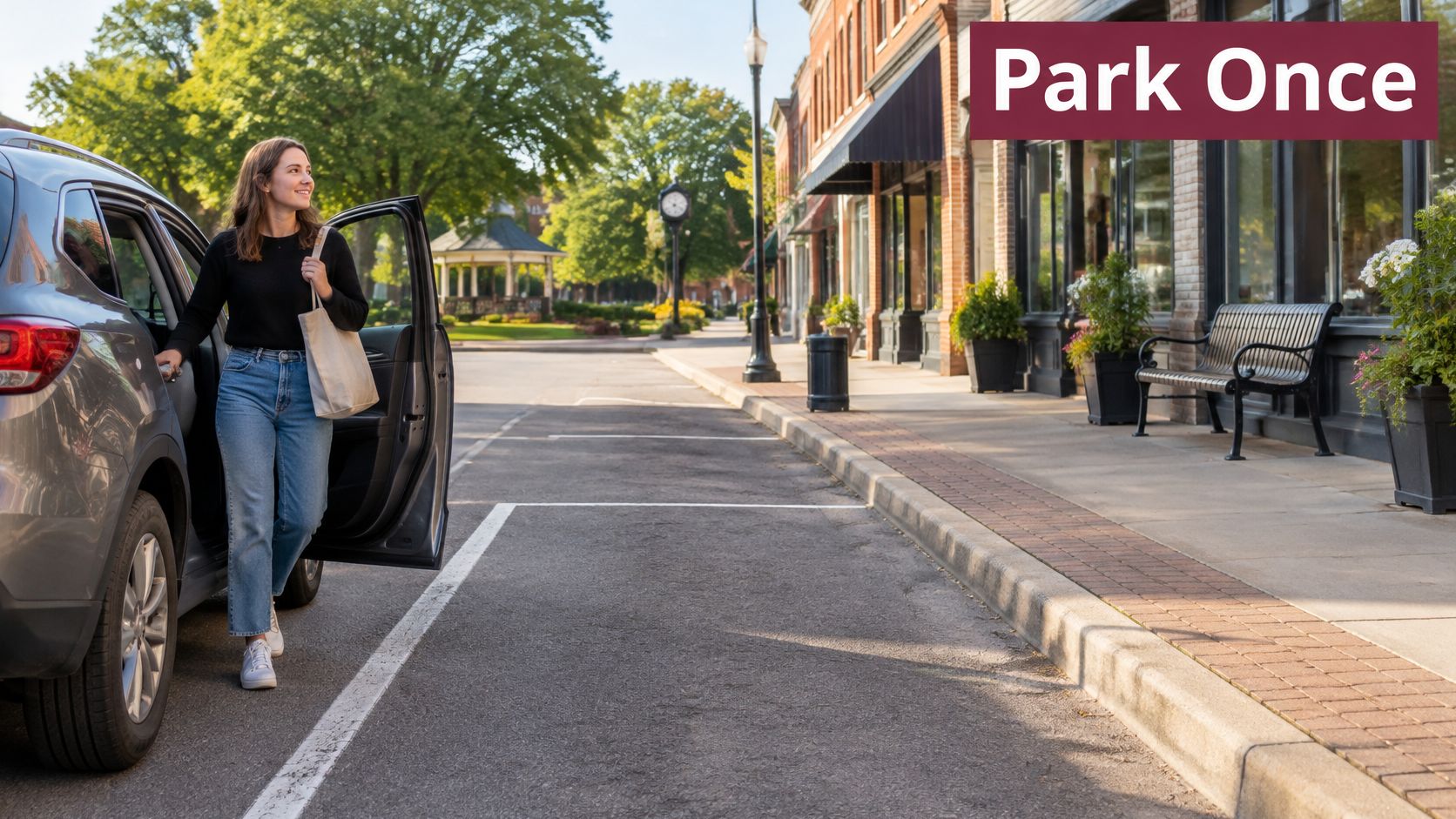
Take the first legal space that fits the plan. Read posted restrictions before leaving the car, especially when temporary event signs are out. If curb space is tight, use a public lot or a side street and walk in rather than circling Main until the group gets restless.
Use the backup rather than circling for the perfect curb space. If an event has closed a block, approach from the next open cross street and follow closures and staff directions instead of assuming your usual entrance is available.
Orient toward the river side of downtown. Once you're on Main Street, establish which direction leads east toward the Arkansas River, then face west for the outbound walk. You don't need to reach the water's edge just to begin; the river is your orientation cue.
Follow cross streets, not a storefront count. Keep to the First-to-Fifth core for the short version. Use street names at intersections to check your position, with the overhead lights and sidewalk trees helping confirm that you're still in the downtown core.
Pause away from a doorway if you need to check your phone. It's easier to make a good navigation decision while standing clear of pedestrian traffic than while steering a stroller around other walkers. Shade matters here too: a slightly longer line with trees can beat the shortest sunny stretch.
From the core to the turnaround
Continue west only if your group chose the broader route. The downtown Jenks district overview matches the simple layout walkers can feel on foot: Main Street runs from the Arkansas River side toward the historic Midland Valley Railroad tracks. The draw is orientation, not extra mileage. If shade is thin or energy is fading, the shorter core is the better walk.
Turn around before railroad property. Treat the historic tracks as the district's boundary, not an invitation to explore the rail corridor. If a legal public viewpoint isn't comfortable or clear, stop earlier.
Keep the return simple. With a stroller, stay on the same sidewalk where practical instead of repeatedly crossing Main to inspect individual windows. When you do need to cross, use an appropriate intersection and assess traffic before entering the roadway.
Return to the same vehicle. Save its location on your phone or note the nearest cross street before starting. A purposeful return is easier when nobody's trying to remember which side street held the car.
If you want something to notice between stops, consult our downtown Jenks public-art installations overview before setting out. Select an addition that fits your route rather than chasing every possible stop.
For families negotiating phone use during the outing, Badger's explanation of Badger walking pacts offers a way to discuss walking and screen time beforehand. Keep any agreement separate from route safety: nobody should hurry through a crossing to satisfy a walking goal.
Where to Eat Shop and Step Inside
Say your group arrives ready for lunch, but a child wants to browse a window and another walker needs to sit down. Don't force everyone through the sightseeing portion first. Food stop, shop, then back outside is a better pattern than saving all the comfortable pauses for the end.
Along the Main Street core, the outing unfolds across independent shops and restaurants rather than inside a single attraction. That gives you flexibility, but it also means each door has its own opening schedule, customer expectations, and restroom arrangements.
Make the indoor stop intentional
Freeform, the second-floor space at 106 E. Main St., can be an indoor pause when it's open. The old antique-mall property also holds Lenny Lane on the ground floor. Treat them as possible stops, not guaranteed recovery points that must be available for the route to work.
A second-floor destination deserves an access check before you count on it for someone using a mobility device or pushing a stroller. An open building entrance doesn't establish that every member of the group can comfortably reach the intended space.
For a bench or public-restroom backup off the main sidewalk, keep Jenks Commons Park in mind. Check facility availability before the need becomes urgent, and don't assume every shop has a public restroom just because you're browsing.
A useful indoor pause is somewhere your group can actually enter and comfortably use, not just a name saved on a map.
Let the group's condition set the next move. If lunch restores everyone's energy, continue browsing. If someone is still tired, returning to the car is a sensible finish, not a failed tour.
Keep meal decisions separate from the walking route
Use our downtown Jenks casual-dining overview to narrow the meal choice, then check the business's own page for current hours, menus, ordering, and reservations. Don't build a walk around a specific meal without confirming that the business will be serving when you arrive.
During the food-truck festival, a mobile-food stop may replace the sit-down plan. That also changes where people gather, where lines form, and how easily your group can move together.
Choose the pause before everyone's worn out. Stop while the group still has enough patience to decide what sounds good.
Keep browsing manageable. Carry purchases you can comfortably bring back on foot, particularly if your hands are already occupied by a stroller.
Respect the doorway. Move discussions about the next stop away from entrances so customers and staff can pass.
The walk itself is the point. You don't need to buy something at every door, and you don't need to keep walking just because another storefront is nearby.
Start Times Shade and Event Weekends
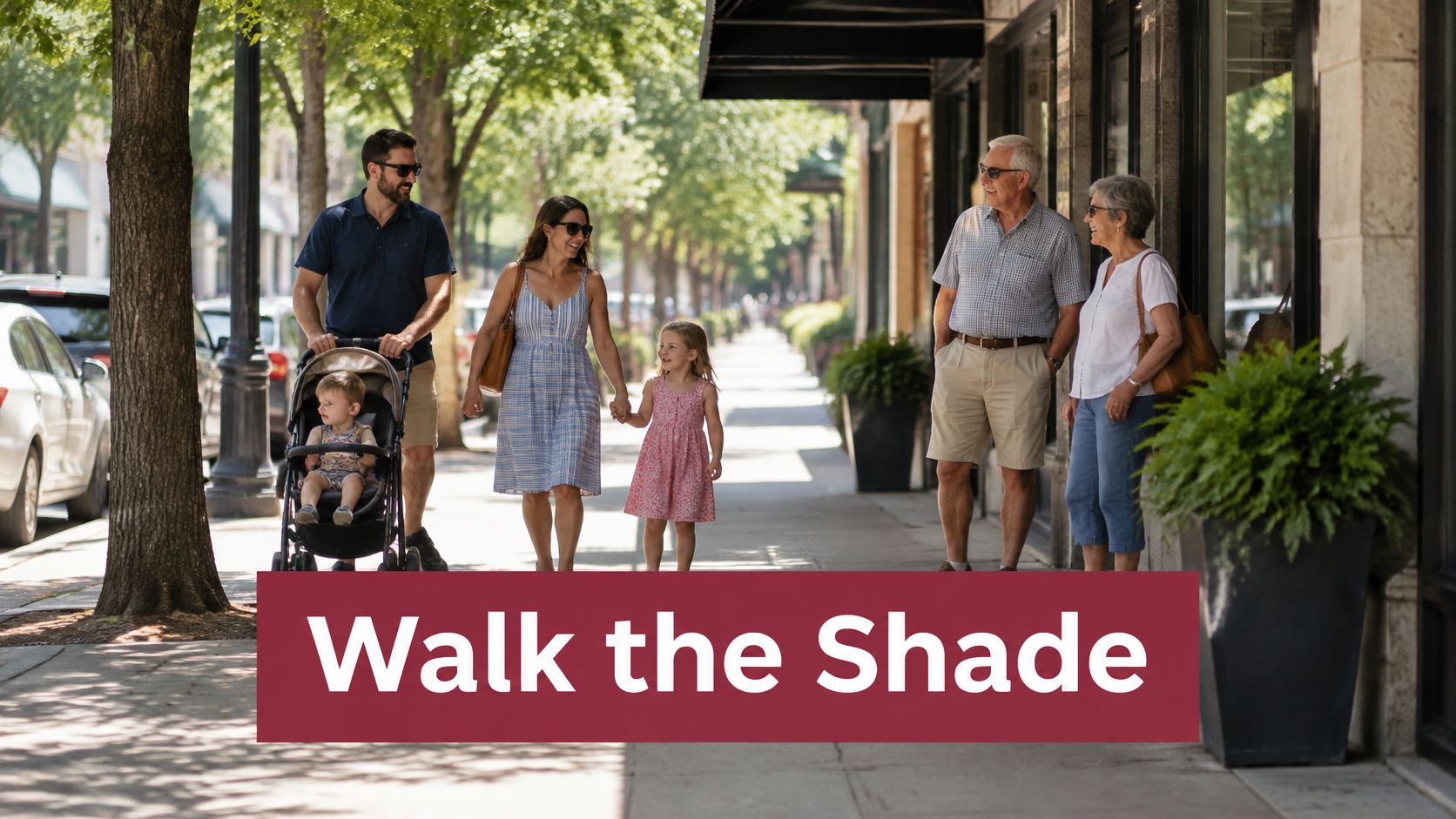
The straightest Main Street line isn't always the kindest one. On a hot Jenks afternoon, exposed crossings and a delayed indoor break can make a compact walk feel much harder than its map suggests.
A Boston study of summertime walking trips, described by Streetsblog Massachusetts in its coverage of MIT's heat-and-walking findings, found pedestrians accepted an average detour of 81 meters to avoid a 1°C increase in perceived temperature. That isn't a Jenks route measurement, but it explains why choosing shade over the shortest line is reasonable.
Pick the departure time before picking lunch
For summer, I'd favor a morning start, with drinking water already packed. Check the forecast and conditions that morning rather than relying on the season alone. A walk that sounds pleasant from an air-conditioned kitchen may need shortening once you step outside.
HYDAWAY's guidance on staying hydrated in hot weather is a useful packing reminder. Bring your own water rather than assuming you'll find a refill exactly when someone needs one.
There isn't a published shade map to rely on for this route, so we shouldn't promise that a particular side of Main will be shaded at noon. Look at the sidewalk when you arrive, use the mature trees where they help, and plan crossings deliberately rather than chasing every patch of shade across the street.
An open shop can make a useful break. Freeform is another possibility when open and accessible to your group, while a park bench works better as a rest stop than as a substitute for cooling indoors.
Match the season to the kind of outing
Conditions | A practical starting plan | What to adjust |
|---|---|---|
Hot summer weather | Start in the morning | Shorten the route and arrange an indoor pause |
Mild spring or fall weather | Keep midday flexible | Check wind, rain, and business openings |
A festival visit | Arrive for the event you want | Allow for crowds, closures, and slower crossings |
An evening outing | Make the event the reason to stay | Check the return route before darkness |
Spring and fall are the seasons I'd consider first for an unhurried walk, with the forecast making the final call. The plant festival can make spring browsing the main attraction; food-truck crowds call for more patience at crossings; Lights On! makes an evening visit purposeful.
If you're combining the walk with entertainment, check our local summer concert planning coverage before setting the schedule. Don't add a long afternoon walk automatically just because there's something happening later.
Heat-day decision: If someone is wilting, turn back within the Main Street core. Reaching the railroad boundary isn't worth making the return miserable.
If You Have a Stroller Kids or a Slower Pace
The question isn't whether downtown is compact. It's whether everyone in your group can comfortably complete the particular route you've chosen.
We don't have a measured curb-cut audit for this walk, so we shouldn't score individual blocks or claim every crossing is flat. A short route reduces the commitment, but it isn't a substitute for checking curb transitions, sidewalk continuity, and the entrance to any planned indoor stop.
Check the parts that can interrupt the walk
For a wheelchair user, a stroller, or someone who tires quickly, choose the Main Street core and skip the extra walk toward the tracks. Select parking by the usable pedestrian connection, not just by how close the space looks to your destination.
At older storefronts, watch for uneven surfaces, thresholds, and changes in sidewalk width. Don't assume a welcoming window means an equally easy entrance.
At crossings, allow the group to gather before stepping off the curb. A gap that suits a fast adult may not suit a child or someone walking slowly.
At planned breaks, confirm both entry access and a usable place to rest. An upstairs stop shouldn't be the only recovery option.
For restroom needs, identify a backup before leaving the parking area. A purchase doesn't automatically guarantee access to a business's facilities.
Accessibility also includes how a place feels. A child who dislikes noise, a neurodivergent visitor, and an older adult who prefers room to move may all enjoy the same blocks more on an ordinary weekday than during a festival.
Treat evening as a different route
A St. Paul downtown streets and sidewalks engagement summary recorded 1,643 responses and identified safety, connectivity, beautification, and infrastructure as major themes. That doesn't establish conditions in Jenks, but it's a useful reminder to consider the connections between stops, not just the destinations.
For a first visit with a mixed-ability group, I'd choose daylight over an unfamiliar dark weeknight. An evening festival is a different decision because the event itself is the attraction, though crowds and temporary changes still need attention.
Use our family activities around Jenks for the weekend to choose a manageable addition rather than stacking outings onto a group that's already tired.
If your group has to ask whether everyone can finish, take the short loop. Leave the river-to-rail version for a day when the answer feels easy.
Go on a Quiet Weekday or Wait for an Event
Choose an ordinary weekday if walking and browsing are the reason for coming. Choose an event day if the event is the reason. Those are different outings, and neither improves by pretending it's the other.
A quieter visit gives your group more freedom to stop, reconsider a meal, or turn around without navigating a festival crowd. It doesn't guarantee every business will be open, so confirm any essential stop directly before leaving home.
Decide what you want from downtown
The Ten District began with a dedicated group of local merchants coming together to rebrand and promote Jenks' downtown community. Today, the name identifies the ten downtown blocks from the Arkansas River to the historic Midland Valley Railroad tracks, a place we can explore together rather than as disconnected errands.
For an event visit, accept that parking and pedestrian access may shape the outing more than your preferred storefront order. Don't arrive expecting a quiet shopping walk and then spend the afternoon frustrated that other people came for the celebration.
If you'll return after dark, read 3rd-i's guidance to plan a safer route home before setting out. Apply that thinking locally by identifying your vehicle's location, the crossings you'll use, and a public return route you can follow confidently.
Leave home with a simple plan
Pick the loop. Choose short, river-to-rail, or heat-aware according to the people coming.
Park once. Use Main Street or the Commons Park backup without making repeated parking moves part of the afternoon.
Name the turnaround. Finish the outbound walk at Fifth Street or before railroad property, with permission to stop sooner.
The downtown overview and The Ten District's community coverage are worth consulting for the broader context; each business's own page is the place to confirm a particular meal or opening. Keep those jobs separate, and you won't mistake a useful walking route for a guaranteed business schedule.
After your visit, tell us which block felt hardest in the heat or with a stroller, and what made it difficult. A missing comfortable pause or an awkward crossing is more useful to the next neighbor than a general verdict that downtown was easy or hard to walk.
The Ten District offers local coverage of downtown Jenks' shops, dining, public art, and community events to help you build a walk that fits your group. Visit The Ten District to plan your next Main Street outing, and share the shade, crossing, or stroller detail you wish you'd known before parking.


Comments