

Your Ultimate Festival Planning Checklist for 2025: 10 Steps
Launching a festival is a monumental undertaking, blending artistic vision with meticulous logistical execution. Whether you're planning a small community gathering or a sprawling multi-day music extravaganza, a single misstep can cascade into major challenges, impacting everything from attendee safety to financial viability. A detailed, phase-by-phase guide is not just helpful; it is essential for success. This is where a robust festival planning checklist becomes your most critical tool.
This comprehensive guide is your strategic blueprint, designed to steer you through every crucial stage of the process. We will move beyond generic advice to provide the specific, in-depth insights needed to navigate complexities from initial concept and financial forecasting to on-site logistics and post-event analysis. Forget vague tips; this is about actionable strategy.
You will learn how to master ten core components of event production:
Budgeting and Financials: Creating a realistic financial plan that prevents cost overruns.
Venue and Site Logistics: Securing the perfect location and designing a functional layout.
Talent and Programming: Booking artists and entertainment that align with your brand.
Legal and Permitting: Navigating the complex web of licenses and regulations.
Marketing and Promotion: Building buzz and selling tickets effectively.
Think of this checklist as your roadmap to not just hosting an event, but creating an unforgettable experience that runs smoothly, stays on budget, and brings your vision to life. Let’s begin building your festival from the ground up, ensuring no detail is left to chance.
1. Budget Planning and Financial Management
Your festival's budget is its lifeblood. It's more than just a spreadsheet of numbers; it's the financial blueprint that dictates every decision you make, from securing a headliner to ordering enough portable restrooms. This foundational step in any festival planning checklist involves meticulously forecasting all potential income and detailing every single anticipated expense. A well-managed budget is the single most critical factor determining your event's viability and success.
Why It’s Foundational
Without a solid financial plan, even the most creative festival concept is destined for failure. It provides a realistic framework, prevents overspending, and helps you allocate resources effectively. Major events like Coachella, with its multi-million dollar budget, and smaller community gatherings both rely on detailed financial tracking to stay afloat. The goal is to create a dynamic document that evolves with your planning process.
Key Budget Components
Your budget should be split into two main categories: revenues and expenses.
Revenues: Identify all potential income sources. This includes ticket sales (early bird, general admission, VIP), sponsorships, vendor fees, merchandise sales, and even grants.
Expenses: Itemize every cost. This includes venue rental, talent fees, production costs (stage, sound, lighting), marketing and advertising, staffing, security, permits, and insurance.
A crucial, often overlooked, part of your expenses is a contingency fund. This buffer, typically 10-20% of your total budget, is essential for covering unexpected costs like bad weather damage or last-minute equipment needs. For a more detailed breakdown, you can use a comprehensive event budget planning template to ensure no expense is forgotten. You can learn more about creating a detailed financial plan to get started.
The following summary box highlights the core pillars of any festival budget.
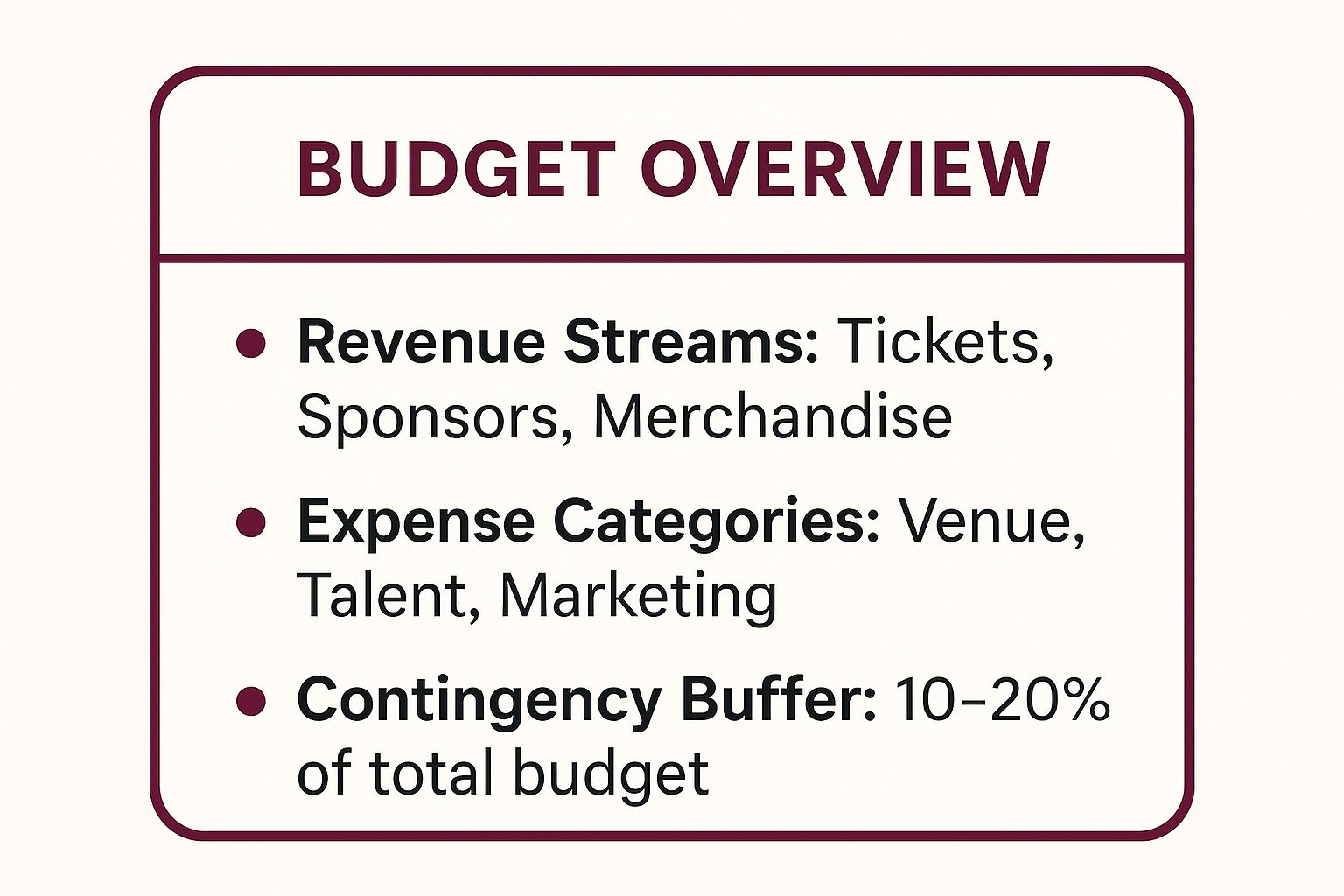
Balancing these revenue streams against your core expenses while maintaining a healthy contingency buffer is the key to financial stability for your event.
2. Venue Selection and Site Planning
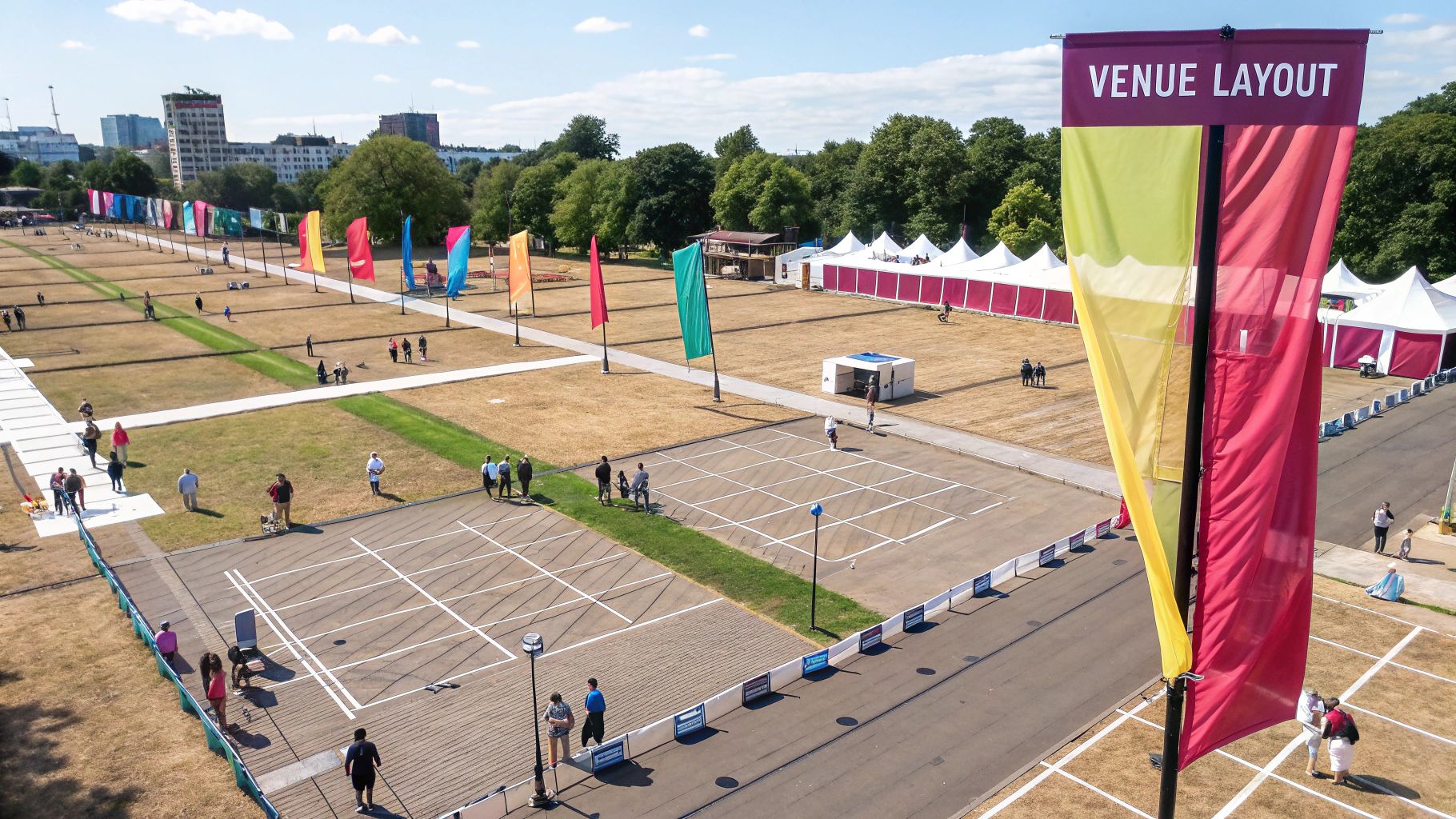
Your festival's venue is the canvas upon which the entire event experience is painted. This critical step in any festival planning checklist goes beyond simply finding an open field; it involves a rigorous evaluation of potential locations and the meticulous design of the festival layout. The right site dictates your event's capacity, accessibility, and overall atmosphere, directly shaping attendee experience and logistical feasibility.
Why It’s Foundational
The physical space defines the potential and limitations of your festival. A poor choice can lead to logistical nightmares, safety hazards, and a subpar guest experience, regardless of your talent lineup. Iconic events are inseparable from their locations, whether it's Ultra Music Festival adapting to the urban constraints of Bayfront Park or Glastonbury's sprawling layout optimized over decades at Worthy Farm. Your venue selection and site plan are the physical foundation of your event's success.
Key Site Planning Components
Effective venue selection and planning involve two interconnected phases: evaluation and design.
Venue Evaluation: Assess potential sites based on critical criteria. This includes capacity, accessibility for attendees and service vehicles, existing infrastructure (power, water, restrooms), and local permitting requirements. Consider factors like noise ordinances and proximity to transportation hubs.
Site Design: Create a detailed site map that optimizes flow, safety, and experience. This involves strategically placing stages, vendor areas, medical tents, restrooms, and entry/exit points. The goal is to prevent bottlenecks and create an intuitive, comfortable environment for everyone on-site.
A crucial aspect of site design is planning for logistics like load-in and load-out for vendors and production crews. Proper infrastructure planning is essential for a smooth operational flow, a concept that's just as important for a music festival as it is for a city project. You can learn more about strategic infrastructure and project planning to understand the principles involved.
The following summary box highlights the core pillars of effective venue and site planning.
Site Planning Checklist: * Capacity & Scalability: Does the venue match your projected attendance and allow for growth? * Accessibility & Parking: How will attendees, staff, and emergency services access the site? * Infrastructure: What are the existing power, water, and communication capabilities? * Safety & Security: Where are the optimal locations for medical, security, and evacuation points?
Balancing an inspiring location with practical, on-the-ground logistics is the key to creating a festival environment that is both memorable and safe.
3. Artist and Entertainment Booking
The lineup is the heart and soul of your festival. Artist and entertainment booking is the strategic process of selecting, negotiating with, and securing performers who embody your event's theme and resonate with your target audience. It goes far beyond simply picking popular names; it's about curating an experience that creates buzz, drives ticket sales, and defines your festival's identity. From headliners to local acts, your lineup is your primary marketing tool.
Why It’s Foundational
The right entertainment lineup serves as the core attraction, directly influencing attendance and public perception. A compelling bill justifies ticket prices and generates organic excitement. For instance, Bonnaroo’s success is built on its genre-diverse lineup, blending rock, hip-hop, and electronic music to appeal to a broad audience, while local music festivals often succeed by creating showcase programs for emerging artists. Your booking strategy must align perfectly with your budget and brand.
Key Booking Components
A successful booking process requires long-term planning, negotiation skills, and meticulous attention to detail.
Talent Sourcing: Identify and contact potential artists. This involves working with major booking agencies like CAA or WME for headliners, or using platforms like Sonicbids and ReverbNation to discover up-and-coming talent. Building relationships with agencies is crucial for securing better deals.
Negotiation and Contracts: This is where the details are hammered out. Key negotiation points include performance fees, travel and accommodation, and crucial radius clauses, which prevent artists from playing other shows within a certain distance and timeframe of your festival. Every agreement must be solidified in a legally-binding contract that specifies all technical and hospitality rider requirements.
Advance planning is non-negotiable in this part of your festival planning checklist. Headliners should be booked 6-12 months in advance to secure availability and often more favorable pricing, setting the stage for the rest of your lineup.
4. Permits, Licenses, and Legal Compliance
Navigating the web of legal requirements is a non-negotiable and often complex part of any festival planning checklist. This phase involves securing all necessary permits, licenses, and insurance to legally host your event. From mass gathering permits and alcohol licenses to music rights and safety certifications, this bureaucratic process ensures your festival operates within the bounds of local, state, and even federal law, protecting you, your attendees, and your vendors from legal trouble.
Why It’s Foundational
Overlooking a single permit can have catastrophic consequences, as famously demonstrated by the Fyre Festival's complete collapse due to permit and infrastructure failures. Legal compliance is the bedrock of your event's legitimacy and safety. It provides the official green light from authorities and assures stakeholders that you are a responsible organizer. Events like SXSW, which spans hundreds of venues across Austin, showcase how meticulous and complex this process can be, requiring deep coordination with numerous city departments.
Key Legal Components
Your compliance journey will touch on several critical areas, each requiring its own application and documentation.
Event & Venue Permits: This includes mass gathering permits, special event permits from the city or county, fire safety permits, and noise ordinance variances. Start these applications 6-12 months in advance, as they often require multiple reviews.
Licensing & Insurance: Secure liquor licenses if selling alcohol, and ensure all vendors have the necessary health permits. Music licensing through Performing Rights Organizations (PROs) like ASCAP and BMI is essential to legally play copyrighted music. Comprehensive event liability insurance is also mandatory.
Contracts & Documentation: Work with legal counsel to draft and review all contracts with artists, vendors, and sponsors. Maintain a centralized, accessible file of all approved permits, licenses, and insurance certificates for easy access during inspections.
Building positive relationships with local officials and regulatory bodies can be invaluable. These connections can help streamline the application process and provide clarity on complex requirements. For intricate legal landscapes, hiring an experienced entertainment lawyer or a permit expediting service is a wise investment.
5. Marketing and Promotion Strategy
A brilliant festival concept with no audience is just a private party. Your marketing and promotion strategy is the engine that builds awareness, generates excitement, and ultimately drives ticket sales. This isn't just about placing an ad; it's a systematic, multi-channel approach that tells your festival's story, engages your target audience, and creates a sense of urgency. A robust marketing plan is a non-negotiable part of any festival planning checklist, ensuring your event reaches its full potential.

Why It’s Foundational
Without a strategic promotional plan, even the best-laid festival plans will fail to attract attendees. Effective marketing builds a community around your event long before the gates open. Look at Coachella's Instagram-first strategy, which uses stunning visuals to create an aspirational brand, or local food festivals that leverage community media partnerships to drive local attendance. The goal is to create a sustained buzz that converts interest into ticket purchases.
Key Marketing Components
A successful strategy integrates various channels to maximize reach and impact.
Digital Presence: This is your foundation. It includes a professional website, active social media profiles (Instagram, TikTok, Facebook), and email marketing. Use tools like Hootsuite or Sprout Social to schedule posts and manage engagement consistently.
Content is King: Create compelling and shareable content. This can be artist announcements, behind-the-scenes glimpses, user-generated content contests, or high-quality video recaps. The more your audience shares, the wider your organic reach.
Partnerships and PR: Collaborate with influencers, local businesses, and tourism boards for cross-promotion. Secure media coverage through press releases about your headliners, unique attractions, or community impact.
A crucial tactic is starting early, ideally 6-8 months before the event, to build momentum. Implement retargeting ad campaigns to remind website visitors who haven't purchased tickets. By combining these elements, you create a powerful marketing ecosystem. For more detailed insights, you can explore this comprehensive guide to social media marketing to enhance your strategy.
6. Ticketing and Registration System
Your ticketing system is the primary gateway for your attendees and a critical revenue driver for your festival. It's much more than a simple point of sale; it's a comprehensive platform for managing sales, controlling access, gathering data, and communicating with your audience. A sophisticated ticketing and registration system is a non-negotiable part of any modern festival planning checklist, ensuring a seamless experience from purchase to entry.
Why It’s Foundational
A robust ticketing platform streamlines your entire sales process, providing security for transactions and valuable insights into your audience demographics. It automates inventory management for different ticket tiers and prevents overselling, safeguarding your event's reputation. Major platforms like Eventbrite and Ticketmaster provide the infrastructure that allows festivals of all sizes to handle high-volume sales, manage complex pricing strategies, and integrate directly with marketing efforts. The right system turns a potentially chaotic process into a controlled, efficient operation.
Key Ticketing Components
Your ticketing strategy should be built around user experience and operational efficiency.
Platform Selection: Choose a platform that fits your festival's scale and needs. Options range from Eventbrite, known for its user-friendly interface and marketing integrations, to Universe, which excels at social media promotion, and Ticketmaster, which offers powerful reserved seating and venue mapping.
Sales Strategy: Implement a clear plan for your ticket release. This includes setting up early bird, general admission, and VIP tiers, creating clear refund and transfer policies, and offering multiple payment methods. For high-demand events, using a queue system is essential to manage traffic and ensure a fair purchasing process.
A crucial aspect of modern ticketing is on-site execution. Utilizing mobile-first technology like QR codes and efficient scanning systems is vital for smooth and rapid entry management. This reduces wait times and improves the overall attendee experience from the very first touchpoint at the gate. You can learn more about optimizing event entry to ensure your festival starts on the right foot.
7. Vendor and Sponsor Coordination
Your vendors and sponsors are critical partners who shape the festival's commercial and experiential landscape. This element of your festival planning checklist involves the strategic management of all commercial relationships, from food trucks and merchandise sellers to major corporate sponsors. Effective coordination ensures these partnerships enhance the attendee experience through quality offerings and engaging activations, rather than feeling like intrusive advertisements.
Why It’s Foundational
Well-curated vendors and meaningful sponsorships elevate the festival atmosphere and create essential revenue streams. They provide food, shopping, and interactive experiences that become memorable parts of the event. For example, Taste of Chicago's identity is built on its diverse restaurant vendor curation, while Red Bull’s high-energy music festival activations are legendary. Proper management turns these partners into assets that contribute directly to your event's brand and financial health.
Key Coordination Components
Successful management requires a structured approach to both recruitment and on-site logistics.
Vendor Management: This covers the entire lifecycle, from application to breakdown. Create standardized applications that clearly state fees, insurance requirements, and rules. Vet applicants thoroughly to ensure they align with your festival's quality and brand.
Sponsorship Integration: Develop tiered sponsorship packages that offer clear, measurable value, such as logo placement, stage naming rights, or dedicated activation zones. Work collaboratively with sponsors to ensure their presence feels authentic and engaging for attendees.
A crucial part of this process is clear and consistent communication. Implementing vendor management software can streamline everything from payments to sharing logistical updates. Establishing clear guidelines for setup, operation, and teardown prevents chaos on-site and ensures a smooth experience for everyone involved. To dive deeper, you can explore some vendor management best practices for event success to refine your approach.
8. Security and Safety Planning
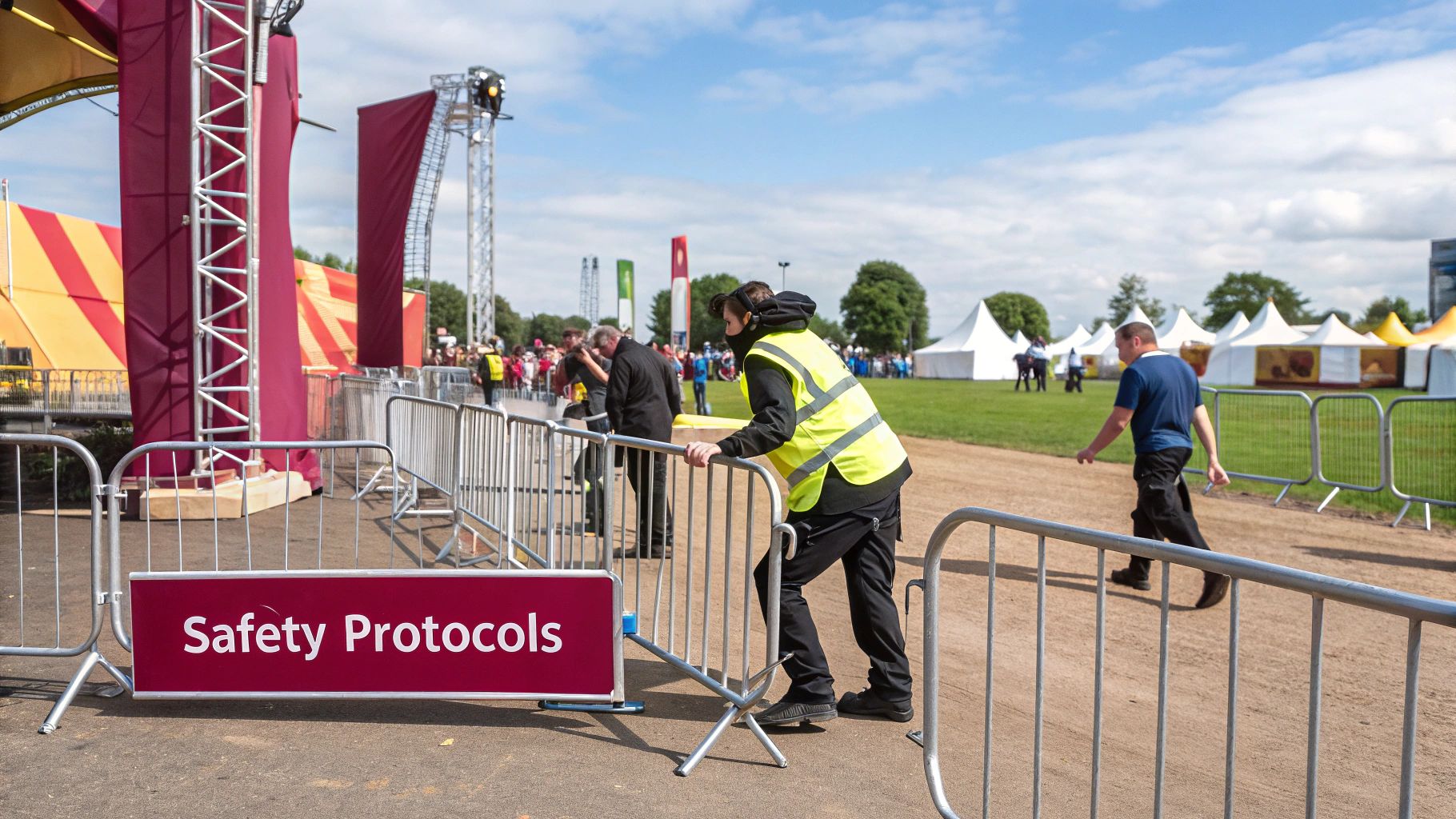
A festival's atmosphere is built on a foundation of safety. Security and safety planning is the comprehensive process of creating and implementing protocols to protect everyone involved: attendees, staff, performers, and vendors. This critical step in your festival planning checklist involves much more than hiring guards; it's about proactive risk assessment, emergency preparedness, crowd management, and seamless coordination with local emergency services.
Why It’s Foundational
The well-being of your attendees is a non-negotiable priority. A single serious safety incident can irrevocably damage your festival's reputation, lead to legal consequences, and jeopardize future events. A robust safety plan demonstrates professionalism and care, building trust with your audience and local authorities. Major festivals like Bonnaroo invest heavily in comprehensive medical and security infrastructure, while even small community fairs must establish clear protocols, often working with volunteer fire departments and local police to ensure a secure environment.
Key Safety Components
Your security plan should be a multi-layered strategy addressing potential risks from various angles.
Risk Assessment: Identify all potential hazards specific to your venue and event type. This includes crowd density, weather-related dangers, medical emergencies, and potential security threats.
Response Protocols: Develop clear, step-by-step procedures for different scenarios, such as medical incidents, lost children, severe weather, and security breaches. Everyone from volunteers to security leads must know their role.
Coordination: Establish strong lines of communication with local law enforcement, fire departments, and emergency medical services (EMS). Ensure they are familiar with your site layout and emergency plans.
A vital component is proactive crowd management to prevent dangerous situations like surges or bottlenecks. For a deeper understanding of this area, you can learn more about expert event crowd management tips to ensure your gathering is safe. The following summary box highlights the essential pillars of a comprehensive festival security plan.
Pro-Tip: Conduct "tabletop exercises" with your core team and local emergency personnel before the festival. This involves walking through various emergency scenarios verbally to identify gaps in your plan and clarify roles and responsibilities in a low-stakes environment.
9. Technical Production and Equipment
The technical production of your festival is the sensory backbone of the entire experience. It's the powerful sound system that lets a crowd feel the music, the dynamic lighting that paints the night sky, and the sturdy stage that elevates your performers. This crucial element of any festival planning checklist covers the coordination of all technical gear, including sound, lighting, staging, power, and audiovisual equipment, transforming your artistic vision into a tangible, immersive reality.
Why It’s Foundational
Without professional-grade production, even a world-class lineup will fall flat. High-quality technical execution ensures every attendee, from the front row to the back, has an optimal audio and visual experience. It’s what differentiates a polished, professional event from an amateur gathering. For example, Electric Forest is renowned for its immersive experience, where lighting is masterfully integrated with the natural environment, a feat only possible through meticulous technical planning.
Key Production Components
Your technical plan must be comprehensive, addressing sourcing, logistics, and management.
Equipment Sourcing: This involves renting or purchasing all necessary gear. Key items include sound systems (speakers, mixers, microphones), lighting rigs (trusses, fixtures, controllers), staging (decks, roofs, barricades), and power distribution (generators, cabling).
Logistics and Crew: This covers the transport, setup, operation, and teardown of all equipment. You will need a skilled crew of technicians, including audio engineers, lighting designers, and stagehands, managed by an experienced production manager.
A critical step is creating detailed technical riders for each performer, which specify their exact equipment needs. You must also conduct an advance site survey to assess power availability and ground stability for rigging. Building a strong relationship with a local production company can often secure better rates and more reliable service. Finally, always have a contingency plan for weather, including protective coverings for sensitive electronic equipment, to prevent costly damage and show-stopping failures.
10. Logistics and Operations Management
Logistics and operations management is the intricate art of orchestrating all the moving parts of your festival in real-time. It’s the behind-the-scenes engine that ensures everything from waste management to artist transportation happens seamlessly. This critical part of your festival planning checklist involves creating detailed schedules, managing staff, and coordinating every operational element to guarantee a smooth, safe, and enjoyable experience for everyone on site.
Why It’s Foundational
Flawless logistics is what separates a chaotic gathering from a professional, well-run festival. Without a master plan, you risk communication breakdowns, logistical gridlocks, and a poor guest experience. Major events like SXSW, which coordinates activities across hundreds of venues, and even local marathons managing complex course logistics, demonstrate the power of meticulous operational planning. The goal is to anticipate needs and have a system in place to address them instantly.
Key Logistics Components
Your operational plan should be a comprehensive guide for your entire team, detailing responsibilities, timelines, and procedures.
Run-of-Show Document: This is a minute-by-minute schedule of the entire event, from the first vendor arrival to the final teardown. It includes stage schedules, staff shift changes, and key operational cues.
Departmental Coordination: This involves ensuring all teams, including security, medical, production, and guest services, are synchronized. It requires clear communication channels and a defined chain of command.
Resource Management: This covers the physical logistics of the event: managing the deployment of equipment, coordinating vendor load-in/load-out, overseeing waste collection, and ensuring essentials like water and power are consistently available.
A key to successful operations is proactive problem-solving. Develop contingency plans for common issues like power outages, medical emergencies, or sudden weather changes. Using project management software like Asana or Monday.com can help track countless tasks and keep all departments aligned.
Festival Planning Checklist: Key Area Comparison
Item | Implementation Complexity 🔄 | Resource Requirements ⚡ | Expected Outcomes 📊 | Ideal Use Cases 💡 | Key Advantages ⭐ |
|---|---|---|---|---|---|
Budget Planning and Financial Management | High 🔄🔄 | Financial expertise, software tools ⚡⚡ | Accurate budget forecasts, ROI tracking 📊 | Festivals needing detailed financial control | Prevents overspending, attracts sponsors ⭐ |
Venue Selection and Site Planning | Medium-High 🔄 | Site visits, CAD software, permits ⚡ | Optimized layout, improved safety & flow 📊 | Outdoor/large festivals requiring complex layouts | Enhances attendee experience and vendor sales ⭐ |
Artist and Entertainment Booking | Medium 🔄 | Talent buyers, booking agents, contracts ⚡ | Compelling lineup, increased ticket sales 📊 | Festivals focused on entertainment value | Drives ticket sales and media attention ⭐ |
Permits, Licenses, and Legal Compliance | High 🔄🔄 | Legal counsel, permit fees, documentation ⚡ | Legal operation, risk mitigation 📊 | All events requiring legal and regulatory adherence | Prevents fines and shutdowns, builds trust ⭐ |
Marketing and Promotion Strategy | Medium 🔄 | Marketing team, social tools, ad budget ⚡ | Increased awareness and ticket sales 📊 | All festivals aiming for strong brand and sales | Builds loyalty, extends reach via partnerships ⭐ |
Ticketing and Registration System | Medium 🔄 | Ticket platforms, tech support, payment gateways ⚡ | Smooth ticket sales, real-time analytics 📊 | Festivals requiring multi-tier ticket sales | Maximizes revenue, improves entry efficiency ⭐ |
Vendor and Sponsor Coordination | Medium 🔄 | Contract management, relationship building ⚡ | Revenue from fees, enhanced attendee experience 📊 | Festivals with commercial partnerships | Generates significant revenue and community support ⭐ |
Security and Safety Planning | Medium-High 🔄 | Security personnel, emergency plans ⚡ | Safe environment, incident prevention 📊 | All festivals, especially large or high-risk events | Reduces liability and enhances attendee safety ⭐ |
Technical Production and Equipment | High 🔄🔄 | Equipment rental, technical crew, setup ⚡⚡ | High-quality sound, lighting, and staging 📊 | Festivals with complex technical needs | Enhances performance quality and artist appeal ⭐ |
Logistics and Operations Management | High 🔄🔄 | Staff, volunteers, transport, communications ⚡ | Smooth event execution and problem resolution 📊 | Large-scale or multi-venue festivals | Prevents operational failures, improves attendee experience ⭐ |
The Encore: Sustaining Momentum After the Final Bow
You've navigated the intricate maze of festival planning, from the initial spark of an idea to the final tear-down. This comprehensive festival planning checklist has served as your roadmap, guiding you through the critical phases of budget management, venue selection, talent booking, legal compliance, and the myriad logistical challenges that define a successful event. It’s a journey that demands precision, creativity, and relentless attention to detail.
The true measure of a festival's success, however, isn't just a flawless execution on the day of the event. It's about what happens after the lights go down and the crowds go home. The post-event phase is where a good festival becomes a great, enduring one. It’s the bridge between a memorable one-off event and a celebrated annual tradition that your community eagerly anticipates.
From Checklist to Legacy: The Most Critical Takeaways
This article covered ten pillars of festival planning, from financial frameworks to operational execution. While each element is vital, the overarching theme is proactive, integrated planning. Your marketing strategy must inform your ticketing system, your venue layout must align with your security plan, and your budget must underpin every single decision.
Let's distill the most crucial lessons from our journey:
Financial Foresight is Non-Negotiable: Your budget is not a static document; it's a living, breathing tool. Diligent tracking and a robust contingency fund are what separate financially sustainable festivals from those that fold after one year. This isn't just about paying the bills; it's about proving viability to future sponsors, partners, and stakeholders.
The Attendee Experience is Everything: From the moment someone sees your first social media ad to the post-event "thank you" email, every touchpoint matters. A seamless ticketing process, clear on-site signage, clean facilities, and a well-thought-out safety plan all contribute to an experience that attendees will rave about. This positive word-of-mouth is more powerful than any marketing campaign.
Data is Your Most Valuable Post-Event Asset: The curtain call is not the end; it's the beginning of your analysis phase. Ticket sales data, attendee feedback surveys, vendor reports, and social media analytics are pure gold. This information is the foundation upon which you will build an even better festival next year. It tells you what your audience loved, what they tolerated, and what needs immediate improvement.
Your Actionable Next Steps: Turning Insight into Impact
Completing a festival is an immense accomplishment, but the work of building a legacy continues. Don't let the momentum fade. Here are your immediate, actionable steps to ensure the long-term success of your event.
Conduct a "Triple-Threat" Debrief: Schedule three separate post-mortem meetings within two weeks of the festival. * Internal Team Debrief: Discuss operational wins, challenges, and communication breakdowns with your core staff and key volunteers. * Vendor & Partner Debrief: Gather feedback from sponsors, food vendors, and technical crews. What could you do to make their experience more profitable and efficient next year? * Stakeholder Debrief: Present a high-level report to key investors, community partners, and municipal authorities. Showcase your success and outline your vision for the future.
Launch Your Feedback Loop Immediately: Don’t wait. Send out targeted feedback surveys to all key groups while the experience is still fresh in their minds. * Attendees: Ask about their overall satisfaction, the value for the price, lineup, food, and logistics. Offer a small incentive, like a discount on next year's early-bird tickets, to increase response rates. * Volunteers: Their on-the-ground perspective is invaluable. Ask about their training, communication with supervisors, and overall experience. A happy volunteer corps is essential for a sustainable event.
Close the Books and Analyze the Story They Tell: Reconcile every invoice, ticket sale, and sponsorship dollar. Compare your final numbers against your initial budget. Where did you overspend? Where did you save? This meticulous financial analysis is the most critical part of your festival planning checklist for future editions, providing a realistic baseline for your next budget.
By embracing this post-event process with the same energy you devoted to pre-event planning, you transform a single successful event into a powerful, self-improving engine. You build a brand that people trust, a community that feels heard, and a foundation strong enough to support bigger and better dreams. The final bow isn’t an ending; it’s an invitation to begin planning an even more spectacular encore.
Ready to bring your festival vision to life with venues that inspire and infrastructure that delivers? The Ten District offers a portfolio of unique, adaptable spaces perfect for community gatherings, cultural festivals, and large-scale events. Explore our venues at The Ten District and find the perfect backdrop for your next unforgettable experience.


Comments