

Small Business Cash Flow Problems: Quick Fixes That Help
Here's a hard truth: a business can be wildly profitable on paper but still go under. How? It all comes down to cash flow.
Simply put, small business cash flow problems happen when the money going out of your business (for things like payroll, inventory, and rent) is more than the money coming in during a specific period. It’s a timing issue. You’ve made the sales, but you don't have the actual cash in the bank to cover today's bills.
The Hidden Threat of Cash Flow Gaps
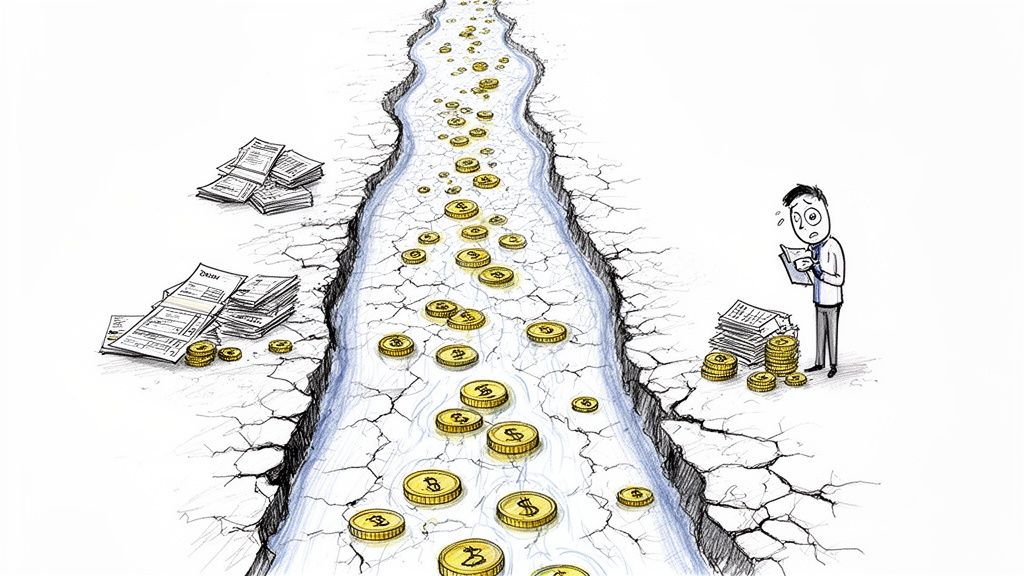
Let's be real for a minute. Managing money is one of the biggest headaches for any entrepreneur. When cash flow is inconsistent, it feels like you're dealing with a river that’s either flooding or bone-dry—making it impossible to plan for tomorrow, let alone next quarter.
This isn't just an inconvenience; it's the single biggest threat to your business's survival. The good news? It's a solvable problem. First, we'll dive into some immediate fixes to stabilize your finances. Then, we'll build a solid foundation for long-term health, so you can swap that financial anxiety for confident control.
Why Cash Flow Is a Universal Challenge
If you're stressed about cash flow, you're in good company. This isn't some unique failing on your part; it's a global reality for small businesses. For the independent shops, restaurants, and service providers that are the backbone of The Ten District, cash flow strain is just part of the game.
A massive global study by QuickBooks found that 61% of small businesses struggle with cash flow. Even more startling, nearly 32% couldn't pay vendors, loans, or even their own employees because of it. The emotional weight is real, too—69% of owners admit that cash flow worries keep them up at night. You can dig into the complete cash flow study findings for more details.
This data tells a crucial story: you are not alone. This challenge isn't a personal weakness but a structural hurdle that every business owner has to learn to clear. It’s proof that managing the movement of money is just as critical as making sales.
Getting a Grip on the Basics
Before we can fix the leaks, we need to know what we're looking at. Forget the dense accounting jargon. Think of these terms as the simple gauges on your business's financial dashboard. Understanding them is the first step to taking control.
For busy owners, here's a quick, no-fluff guide to the key ideas we'll be working with.
Key Cash Flow Concepts at a Glance
Term | Simple Definition | Why It Matters for Your Business |
|---|---|---|
Cash Inflow | All the money coming into your business (from sales, loans, etc.). | This is your business's income stream. Knowing when and how much is coming in is crucial for planning. |
Cash Outflow | All the money going out of your business (for inventory, salaries, rent). | These are your expenses. If outflows consistently beat inflows, you're heading for trouble. |
Net Cash Flow | The difference between your inflows and outflows. (Inflow - Outflow = Net) | A positive number is great! It means you have more cash on hand. A negative number is a red flag. |
Working Capital | The cash you have right now to fund day-to-day operations. | This is your financial safety net. It’s the money that covers immediate costs while you wait for revenue. |
Having these concepts down gives you the language and clarity to spot problems before they become crises. Now, let's put them to work.
Why Even Profitable Businesses Run Out of Cash
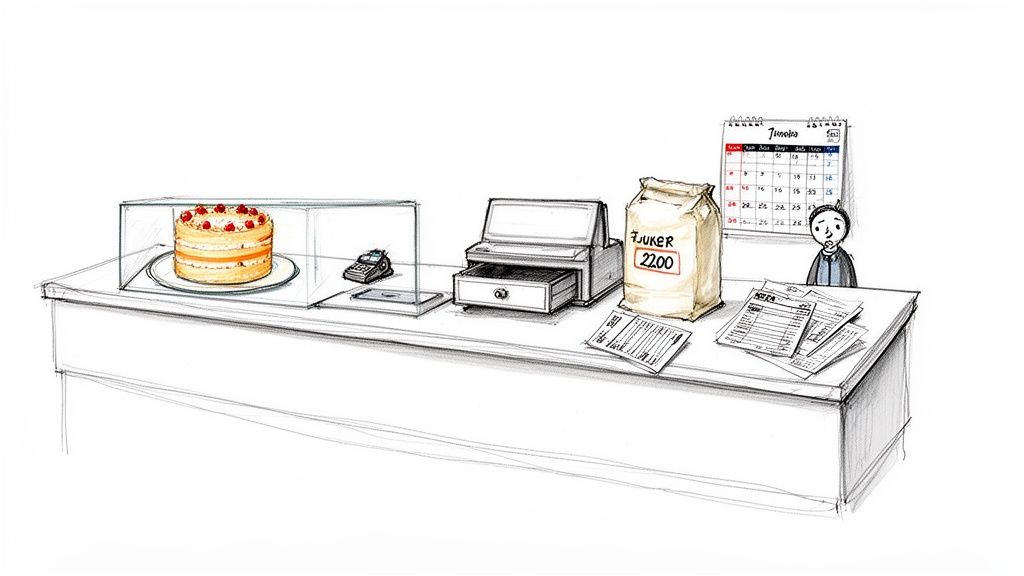
It’s one of the most confusing puzzles in business: how can a company be wildly profitable on paper but have a completely empty bank account? This exact scenario trips up countless entrepreneurs. The key is drilling down into one fundamental truth: profit is not the same as cash.
Think of it like this. You own a small bakery. Profit is the money you make on each cake after you subtract the cost of flour, sugar, and your time. Cash, however, is the actual money in your register today that you need to buy ingredients for tomorrow's cakes. You can sell ten fancy wedding cakes on credit and show a handsome profit in your books, but if you don't have cash in hand, you can't even afford to bake a single cupcake.
This disconnect is exactly where small business cash flow problems take root. Before you can fix it, you have to start by understanding the difference between cash and profit—it's a massive source of financial stress for a reason.
The Great Divide Between Profit and Cash
The culprit is often the massive gap between when you earn revenue and when you actually get paid. You might send a big invoice for a catering order, making your business look instantly profitable for the month. But if that client has 60-day payment terms, you won't see a single dime for two whole months.
In the meantime, real life keeps happening. You have immediate bills to cover:
Payroll: Your team needs to get paid every two weeks, whether your clients have paid you or not.
Rent: Your landlord isn't going to wait. Payment is due on the first, period.
Inventory: You need to buy more supplies to keep the doors open and serve other customers.
Utilities: The lights and internet don't care about your invoice terms.
This timing mismatch creates a painful cash flow gap. You're profitable in your accounting software but completely broke in reality. This isn't just a small hiccup; it's a critical threat to your survival.
Cash flow problems are the silent killer of small businesses. Staggering research shows that 82% of small businesses that fail do so because of poor cash management, even if they have a great product. It's a major reason why more than 50% of businesses don't make it past their fifth year.
Common Leaks in Your Financial Bucket
Beyond slow-paying clients, a few other common issues can quietly drain your cash reserves, even when you're technically making money. Finding these "leaks" is the first step to plugging them for good.
Over-investing in InventoryIt’s so tempting to buy in bulk to get a better price, but tying up too much cash in inventory is a classic trap. All that stock sitting on your shelves is just money you can't use for payroll, marketing, or rent. It only becomes useful cash once it's sold and paid for.
Unexpected or High Upfront CostsYour main oven could break down, forcing an immediate and expensive repair. Or maybe you have to pay a massive annual insurance premium or a steep commercial lease deposit all at once. These lump-sum payments can wipe out your cash reserves in the blink of an eye. For local businesses, getting a handle on property expenses is key, which is why you should check out our guide on how to master negotiating a Jenks commercial lease.
Rapid GrowthThis one sounds crazy, but growing too fast is one of the most common causes of a cash crunch. When you're expanding, you have to spend money now on new staff, more materials, and maybe a bigger space. The revenue from that growth, however, won't show up until much later. You're building for the future but getting paid in the past, creating a dangerous squeeze.
Spotting the Early Warning Signs of a Cash Crisis
A cash flow emergency rarely just shows up out of the blue. It’s more like a slow leak than a sudden flood, sending subtle signals long before it becomes a full-blown crisis.
Learning to recognize these early warnings is like giving your business a regular health check-up. It’s your chance to catch small business cash flow problems before they require major financial surgery. The most obvious sign is an empty bank account, but let's be honest—the real trouble started long before that.
These red flags often disguise themselves as temporary fixes or "just the cost of doing business," which makes them dangerously easy to ignore. Until it's too late.
Beyond the Bank Balance: Financial Red Flags
Think of these signs as your business's check engine light. You can ignore it for a while, but that just means the eventual breakdown will be way more severe (and expensive). If any of these scenarios feel a little too familiar, it's time to pop the hood and take a closer look.
You're Paying Bills with Credit Cards: Are you regularly swiping the company card to cover essentials like inventory, rent, or even payroll? That’s a classic sign your day-to-day cash isn't cutting it. While using a credit card for points or convenience is one thing, relying on it to survive means you’re borrowing from the future to pay for today.
Your Vendor Payments Are Consistently Late: Pushing back due dates with suppliers might feel like a savvy cash management trick, but it's a dangerous game. It puts a strain on crucial relationships and basically tells your partners you can't meet your obligations. Strong vendor partnerships are a lifeline. In fact, our guide on 9 vendor management best practices for 2025 success can help you keep those relationships healthy.
You're Offering Steep Discounts Just to Make Sales: Are you slashing prices out of desperation, not as part of a planned promotion? If you’re just trying to get any cash in the door, you’re not only killing your profit margins but also teaching customers that your product isn't worth full price.
Subtle Operational Shifts That Signal Trouble
Sometimes the warnings aren't on a balance sheet; they’re hiding in your daily decisions. These little operational pivots happen so gradually that they’re often tough to spot until you look back.
1. Delaying Necessary PurchasesPutting off buying critical inventory? Postponing that essential equipment repair again? Being frugal is smart, but delaying purchases that are vital for actually running the business will eventually hurt your ability to serve customers and, well, make money.
2. Owner's Salary Becomes "Optional"So many of us pay ourselves last. But if you’re frequently skipping or shrinking your own paycheck just to keep the lights on, that’s a flashing neon sign that cash flow is dangerously tight. Your salary is a legitimate business expense, not a bonus you get if things go well.
3. Chasing Invoices Is Your Full-Time JobIf you or your team are spending more time chasing down unpaid invoices than doing anything else, you’ve got a problem. It’s a massive time suck, and it means your cash is sitting in your customers' bank accounts instead of yours.
These warning signs are your business's way of screaming for help. Recognizing them early gives you the power to act proactively, turning a potential catastrophe into a manageable challenge. The whole point is to shift from reactive panic to strategic, informed decisions.
When your bank account is running on fumes, you don’t need long-term theories—you need practical solutions that work right now. If you’re staring down a cash flow problem, consider this your emergency playbook. These are tactics you can put in motion today to get money moving back into your business and give yourself some much-needed breathing room.
The first, most critical place to look is your accounts receivable. Let’s be clear: this is money you’ve already earned. It’s just sitting in someone else’s bank account instead of yours.
Late payments are a major, often invisible, source of cash flow pain. It's not just a minor annoyance; global data shows that about 28% of small and medium-sized businesses grapple with late payments, and roughly 1 in 10 of their invoices gets paid late. Think about that. Owners can burn nearly 15 days a year just chasing down money they're owed—that's a huge drain on time that could be spent growing the business.
Accelerate Your Invoicing and Collections
Getting paid faster is the quickest way to inject cash into your business. This isn’t about hoping clients remember to pay; it’s about having a proactive, systematic approach.
Start by tightening up your invoicing process. Don't wait until the end of the month to send a bill for work you finished today. Send invoices the moment a project is complete or a product is delivered. The value you provided is still fresh in your client's mind, making them more likely to pay quickly.
Here are a few proven ways to speed things up:
Offer Early Payment Discounts: A small incentive, like a 2% discount for paying within 10 days (often called "2/10 net 30"), can work wonders. It reframes paying early as a smart move for your customer.
Implement Late Fees: Be upfront on your invoices that overdue payments will incur a late fee. This isn’t about being difficult; it's about setting professional boundaries and discouraging delays.
Automate Your Follow-Ups: Use your accounting software to send out automatic reminders for invoices that are coming due or are already late. This saves you time and takes the awkwardness out of chasing payments.
Conduct a Rapid Expense Audit
When cash is tight, every single dollar going out the door matters. It’s time for a quick but ruthless audit of your expenses to find and plug any leaks. We’re not talking about long-term budget cuts here, but about finding immediate savings.
Pull up your last three months of bank and credit card statements. Go through them line by line, categorizing every expense. You’ll probably find some surprises, like recurring software subscriptions you forgot about or vendor services that just aren't pulling their weight anymore.
Your focus should be on sorting the "nice-to-haves" from the "need-to-haves." Can you pause that premium software subscription and make do with the free version for a month? Can you scale back marketing campaigns that aren't bringing in immediate sales? The goal is to trim the fat without cutting into the muscle of your business.
This is also a great chance to review your spending for tax benefits. Our guide on the top small business tax deductions to save in 2025 can help you identify expenses that might give you a financial break down the road.
Turn Slow-Moving Inventory into Quick Cash
If you run a retail shop or product-based business, that inventory sitting on your shelves is trapped cash. Turning it back into liquid money is a powerful short-term fix.
First, identify the products that haven't sold in the last 90-120 days. These items are costing you money in storage fees and represent missed opportunities. It's far better to sell them at a discount now than to let them collect dust forever.
Try one of these ideas for a quick inventory sale:
Create Bundles: Pair a slow-moving item with a bestseller and offer the package at an attractive price.
Run a Flash Sale: Announce a limited-time, high-discount sale on specific items. The urgency can drive immediate purchases.
Offer It as a Bonus: Use a slow seller as a free gift with a minimum purchase. You'll increase your average order value while clearing out old stock.
These immediate actions won't fix deep-seated issues, but they are designed to stop the bleeding and buy you time. For new businesses, careful planning right from the start is the best defense. Properly budgeting your initial capital is crucial to avoiding future cash flow shocks. For those in the food industry, for example, accurately projecting your restaurant's startup costs is an invaluable first step.
Once you've navigated a cash crunch, the goal is simple: never end up there again. It’s time to shift from reactive panic to proactive management, building a business that can actually withstand financial shocks. This means moving beyond the quick fixes and putting real, long-term systems in place for stability.
It all starts with looking ahead. Instead of just reacting to the bank balance you see today, you need a way to predict what it will look like next month, and the month after that. This is the core of building a financially resilient operation.
Create a Simple Cash Flow Forecast
A cash flow forecast is your financial crystal ball. It’s a straightforward tool that projects the money you expect to come in and go out over a set period, usually the next three to six months. This isn't some complex accounting document only a CPA can understand; it can be as simple as a spreadsheet.
The whole point is to anticipate future shortages and surpluses. When you map out expected sales against predictable expenses like payroll, rent, and vendor payments, you can spot a potential cash gap weeks or even months out. That gives you time to act, rather than being blindsided.
A rolling forecast, updated weekly, is one of the most powerful tools for preventing shortfalls. It gives you clear visibility into what’s coming, allowing you to make proactive decisions instead of constantly putting out fires.
Refine Your Pricing for Profitability
Pricing isn't a "set it and forget it" task. If your prices are too low, you might be busy, but you’ll never actually get ahead. You could be working twice as hard just to cover your costs, which is a fast track to burnout and a constant cash flow strain.
Regularly review your pricing strategy. Does it cover all your costs? I'm not just talking about materials, but your time, overhead, and a healthy profit margin. Don’t be afraid to increase prices to reflect the true value you provide. Losing a few price-sensitive customers is often much better than serving everyone at a loss.
Modernize Your Invoicing System
How easy do you make it for customers to pay you? Your invoicing process is a critical touchpoint that directly impacts how quickly cash enters your business. Clunky, old-school systems create friction and delays that you just can't afford.
It's time to implement modern invoicing solutions that offer features like:
Online Payment Options: Let customers pay you directly from the invoice with a credit card or bank transfer. The convenience alone can slash payment times.
Automated Reminders: Set up automatic emails to gently nudge clients about upcoming or overdue payments. This takes the manual effort—and the awkwardness—out of chasing down money.
Clear, Professional Layouts: Make sure your invoices are easy to read, clearly state the due date, and have all the details needed to avoid back-and-forth questions.
This decision tree helps visualize when to lean on short-term fixes versus when to build out these long-term strategies to solve your cash flow problems for good.

The key insight here is that while immediate actions are vital for survival, true financial health comes from building sustainable systems that keep you out of crisis mode in the first place.
Understand Your Financing Options
Sometimes, even with perfect planning, you need a cash injection. The trick is to understand your financing options before you're desperate. This isn't about taking on unnecessary debt, but about knowing which tools are available to bridge temporary gaps so you can make a clear-headed decision.
For entrepreneurs aiming for significant expansion, exploring structured support systems can be a game-changer. Our guide on top small business incubator programs to accelerate growth offers insights into programs that provide both capital and critical mentorship.
Choosing the Right Financing for Your Cash Flow Needs
Not all financing is created equal. The right choice depends entirely on your specific situation—why you need the cash, how much you need, and how quickly you can pay it back. Here's a quick comparison to help you choose the right tool for the job.
Financing Option | Best For | Key Consideration | Common Use Case |
|---|---|---|---|
Business Line of Credit | Covering unexpected expenses or managing seasonal dips in revenue. | It's flexible, like a credit card for your business. You only pay interest on the amount you actually use. | Paying for an emergency equipment repair or covering payroll during a slow month. |
Invoice Factoring | Businesses with long payment cycles (30-90 days) who need cash sooner. | You sell unpaid invoices to a third party at a discount. You get cash now but receive less than the full invoice amount. | A B2B service provider who just finished a large project but won't be paid for 60 days. |
Short-Term Loan | A specific, one-time investment with a clear and predictable return. | You get a lump sum of cash that you pay back with interest over a set period. It's less flexible than a line of credit. | Purchasing a large amount of inventory for a specific, profitable event like a festival or holiday sale. |
Ultimately, choosing the right financing is about matching the solution to the problem. A line of credit offers flexibility for unpredictable needs, while a short-term loan is better for a planned investment with a clear ROI.
Building a financially resilient business is a continuous process of planning, analyzing, and adapting. By forecasting your cash flow, pricing for profit, streamlining payments, and knowing your financing tools, you create a foundation that's built to last. This proactive approach transforms cash flow from a source of stress into a powerful instrument for sustainable growth. You’ll be ready to weather any storm and seize every opportunity with confidence.
Answering Your Top Cash Flow Questions
Let's dig into some of the most common questions we hear from business owners trying to get a handle on their money. We'll give you quick, straight-to-the-point answers to help you lock in what you've learned and start using these strategies right away.
What Is the Real Difference Between Profit and Cash Flow?
This is the big one, and getting it wrong is a classic mistake. The distinction is absolutely crucial.
Think of profit as your business's report card for the month or quarter. It’s what’s left after you subtract all your expenses from your revenue. It tells you if your business model is working on paper.
But cash flow is the actual money moving in and out of your bank account. You can be wildly profitable (you've made a ton of sales and sent out invoices) but still have no cash because your clients are slow to pay. You can't pay your rent with "profit"—you can only pay it with cold, hard cash.
How Often Should I Be Forecasting My Cash Flow?
For most small businesses, the sweet spot is a rolling 13-week (one quarter) cash flow forecast. This setup has you constantly looking about three months down the road. It's the perfect timeframe—long enough to spot trouble coming but short enough to be pretty accurate and let you take meaningful action.
The trick is to update it every single week. Once you have a template, this isn't a huge chore. A quick weekly check-in keeps your forecast from going stale and turns it into a powerful tool for making smart decisions instead of just reacting to financial fires.
The goal of forecasting isn't to be perfectly right every time. It’s to be prepared. Seeing a potential cash shortfall five weeks out gives you five weeks to adjust, whether that’s by chasing an invoice or delaying a non-essential purchase.
Is Accounting Software Worth the Investment?
One hundred percent, yes. You can definitely start with a spreadsheet, but modern accounting software is one of the single best investments you can make for your financial health. This isn't just about bookkeeping; it's about gaining visibility and making your life easier.
Good software automates the tedious little jobs that often cause cash flow headaches:
Automated Invoicing: Set it up to send professional invoices and automatic payment reminders without you having to think about it.
Online Payments: Let clients pay you instantly with a credit card. This simple feature can slash the time it takes to get paid.
Real-Time Reporting: Get a clear picture of your cash position at a glance with dashboards that make all the numbers easy to digest.
If you’re a brand-new entrepreneur, getting these systems in place from day one is a game-changer. For those just getting started, our guide on how to start a small business from scratch walks you through building that solid financial foundation. The small monthly fee for good software can pay for itself many times over by helping you dodge just one major cash flow crisis.


Comments