

The Ten District and Public Art Installations Near Jenks
You've finished lunch on Main Street, the kids aren't ready to head home, and you'd like to do something besides get back in the car without a plan. Start with public art in The Ten District, then choose a Tulsa-area outing that leaves time to return to downtown Jenks.
Seven stops are worth keeping in mind, from a painted concrete whale on Route 66 to sculpture in a museum garden. They're alternatives for an afternoon, not a single driving itinerary. Catoosa and Sapulpa belong on different outings, while the river corridor makes a more natural pairing with central Tulsa.
Before leaving Jenks, take a walk around Main Street. You'll get a local starting point for the bigger landmarks, and you can decide whether today calls for a quick photograph, a playground afternoon, or a slower visit with some history behind it. Save the destination's current visitor information before you leave, especially when admission, events, or grounds access could affect your plans.
Table of Contents
1. Golden Driller at Expo Square, Tulsa - Make the photograph worth the drive
3. Public Art and Sculpture at The Gathering Place, Tulsa - Let the group set the pace
4. Greenwood Murals and the Greenwood Rising History Center, Tulsa
5. Philbrook Museum of Art Sculpture Garden, Tulsa - Gardens first, if the weather cooperates
6. Route 66 Roadside Art in Sapulpa and Tulsa - Stop safely, then look around
7. Public Art Along Jenks Main Street and The Ten District - Look beyond the Main Street frontage
Build Your Day Around Downtown Jenks - If you're considering art for a downtown storefront
1. Golden Driller at Expo Square, Tulsa
The Golden Driller at Expo Square is the choice when someone in the car wants a recognizable Tulsa landmark without committing to a museum visit. The oilfield-worker figure and derrick make the connection to Tulsa's petroleum history plain before you've even stepped out.
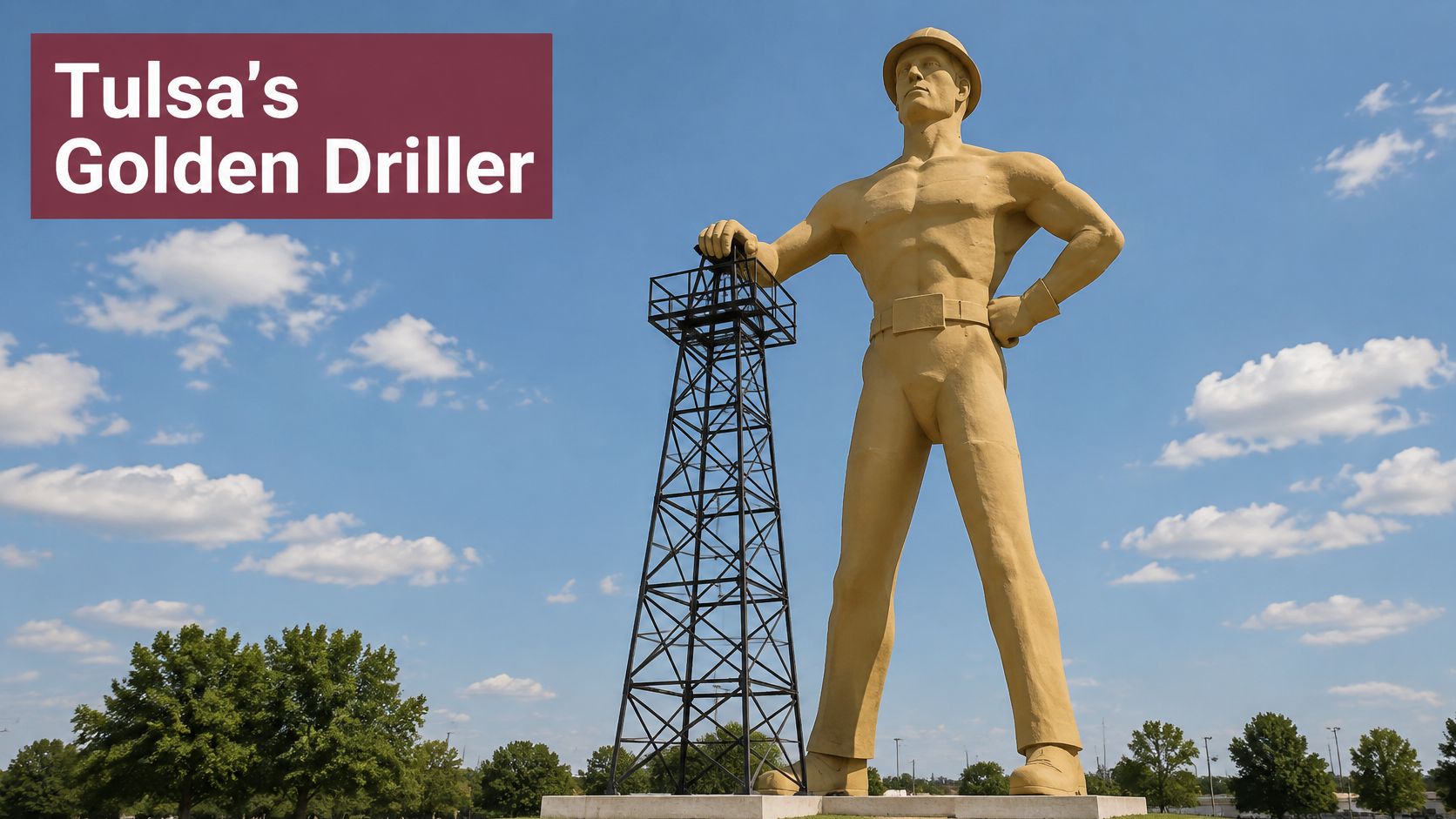
From downtown Jenks, treat Expo Square as a deliberate drive into Tulsa, not a quick extension of your Main Street walk. Check the grounds' event calendar before choosing your arrival time. An event can change where you park, how you approach the statue, and whether the visit feels relaxed or crowded.
Make the photograph worth the drive
A weekday morning is a sensible first choice if your schedule allows, though it isn't a guarantee of empty grounds. Stand back for the full figure and derrick, then move closer for a photograph that shows how the sculpture relates to the person beside it.
Before leaving Jenks: Check event activity and save your route to the grounds.
On arrival: Follow posted parking directions rather than assuming an open-looking area is visitor parking.
For a family outing: Make the Driller the photograph stop, then choose another Tulsa destination only if everyone still has energy.
The trade-off is straightforward: this is a strong landmark stop, but it doesn't need to fill the afternoon. Leave room to return to Main Street rather than adding unrelated stops just because you're already driving.
2. The Blue Whale of Catoosa on Route 66
Pick the Blue Whale of Catoosa when the drive itself is part of the fun. Beside a small lake along Route 66, the painted concrete whale feels different from a formal sculpture garden. It's roadside folk art, with the setting doing as much work as the sculpture.
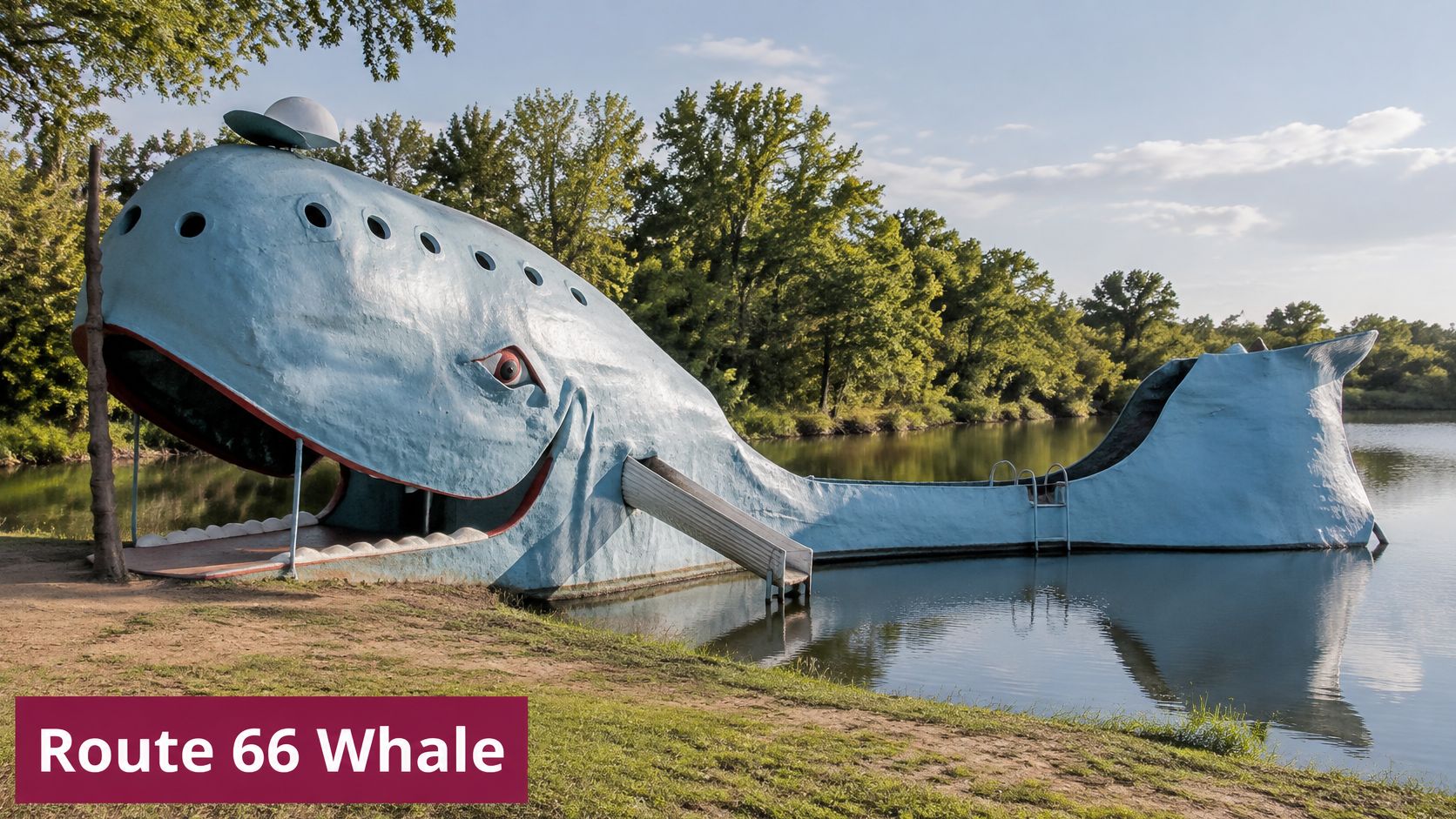
Hugh Davis built the whale as a gift for his wife, Zelta. That personal origin is a useful way to introduce it to children: public-facing art doesn't always begin with a museum commission or a civic committee.
For a Jenks-based outing, have breakfast or browse Main Street first, then head toward Catoosa. Morning or late-afternoon light is usually easier for photographs than overhead sun, and water and sun protection belong in the car.
Route choice: Give Catoosa its own outing. Adding Sapulpa simply because both places connect to Route 66 turns an easy afternoon into a driving assignment.
Say you're taking visiting relatives who want an Oklahoma roadside photograph. The whale gives that outing a clear destination, while a return to Jenks gives you somewhere to sit down afterward rather than eating wherever the highway leaves you.
Use The Ten District's guide to public art installations around Jenks to choose another outing, not to cram every landmark into this one. Follow current site rules, and don't assume that access to the grounds means every part of the structure is available for climbing or play.
3. Public Art and Sculpture at The Gathering Place, Tulsa
For a family that won't enjoy standing still in front of sculptures, Gathering Place offers a different approach. At this Arkansas River park, gardens, play spaces, and art can be experienced together rather than as separate appointments.
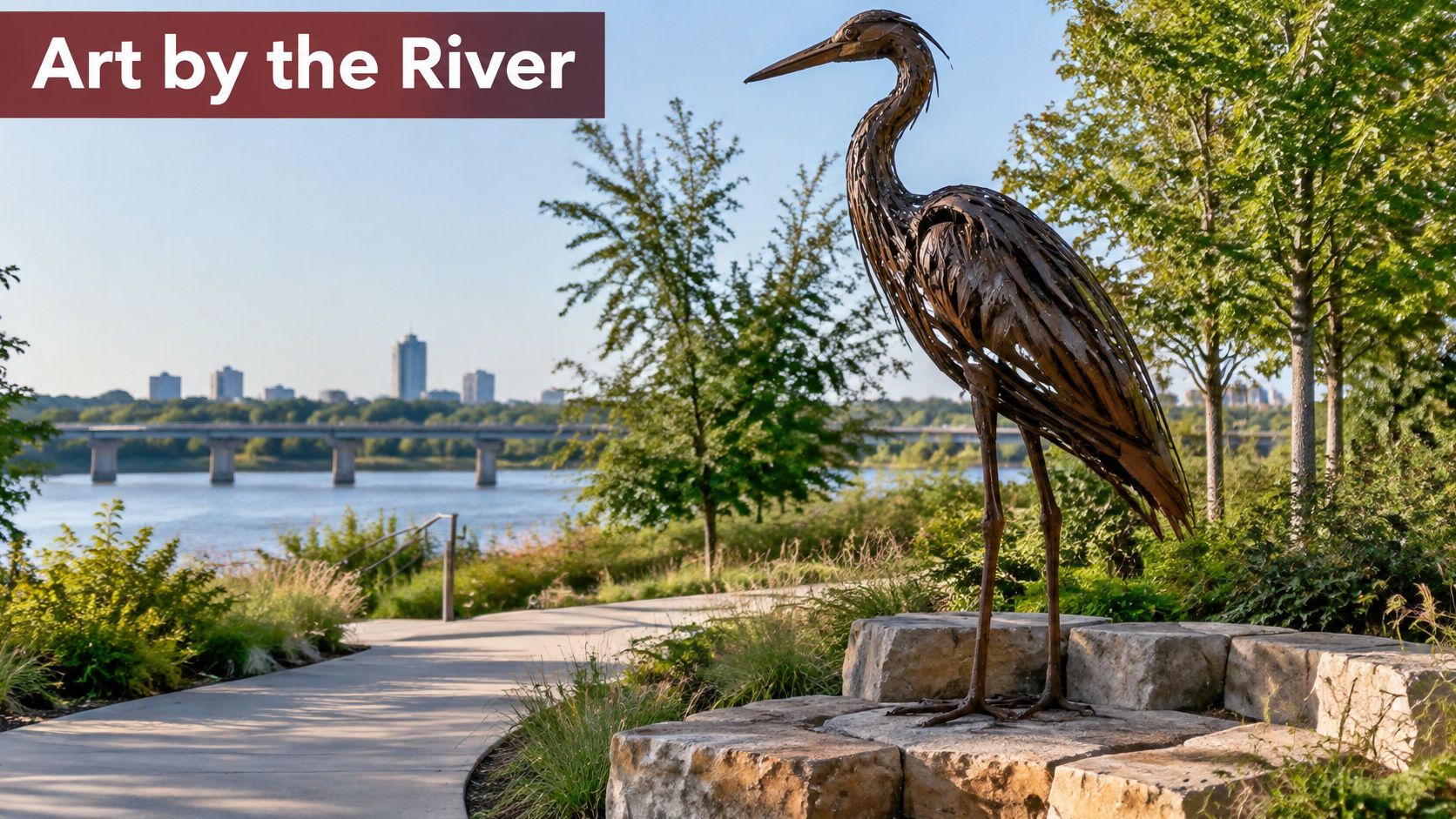
From Main Street in Jenks, make this a river-corridor outing. Check the park's current hours, parking guidance, and visitor map before leaving, then choose an arrival point that suits your group. Don't promise children a specific feature until you've checked whether it's operating.
Let the group set the pace
A workable afternoon might start with a short downtown Jenks walk, continue with play and art at Gathering Place, and finish back on Main Street for a meal. A Jenks Riverwalk stop can also fit a river-focused day, but it shouldn't become another obligation when everyone's tired.
With small children: Alternate looking with movement instead of asking them to follow a sculpture-only route.
With a stroller or mobility device: Review paths, rest opportunities, and the return route before heading deep into the grounds.
In hot weather: Build the outing around breaks, not around finishing the map.
Accessibility means more than being able to see an artwork from a path. The Canadian outdoor-spaces accessibility guidance emphasizes accessible routes and maintenance, a useful standard for judging any outdoor art outing.
Here, the practical win is flexibility. If the children remember the playground more clearly than the sculpture, the afternoon can still have worked.
4. Greenwood Murals and the Greenwood Rising History Center, Tulsa
Start with the history, not the camera. Greenwood's murals belong to a neighborhood whose story includes Black Wall Street, the Tulsa Race Massacre, rebuilding, and continuing community life. Greenwood Rising helps visitors approach the surrounding streets with that context.
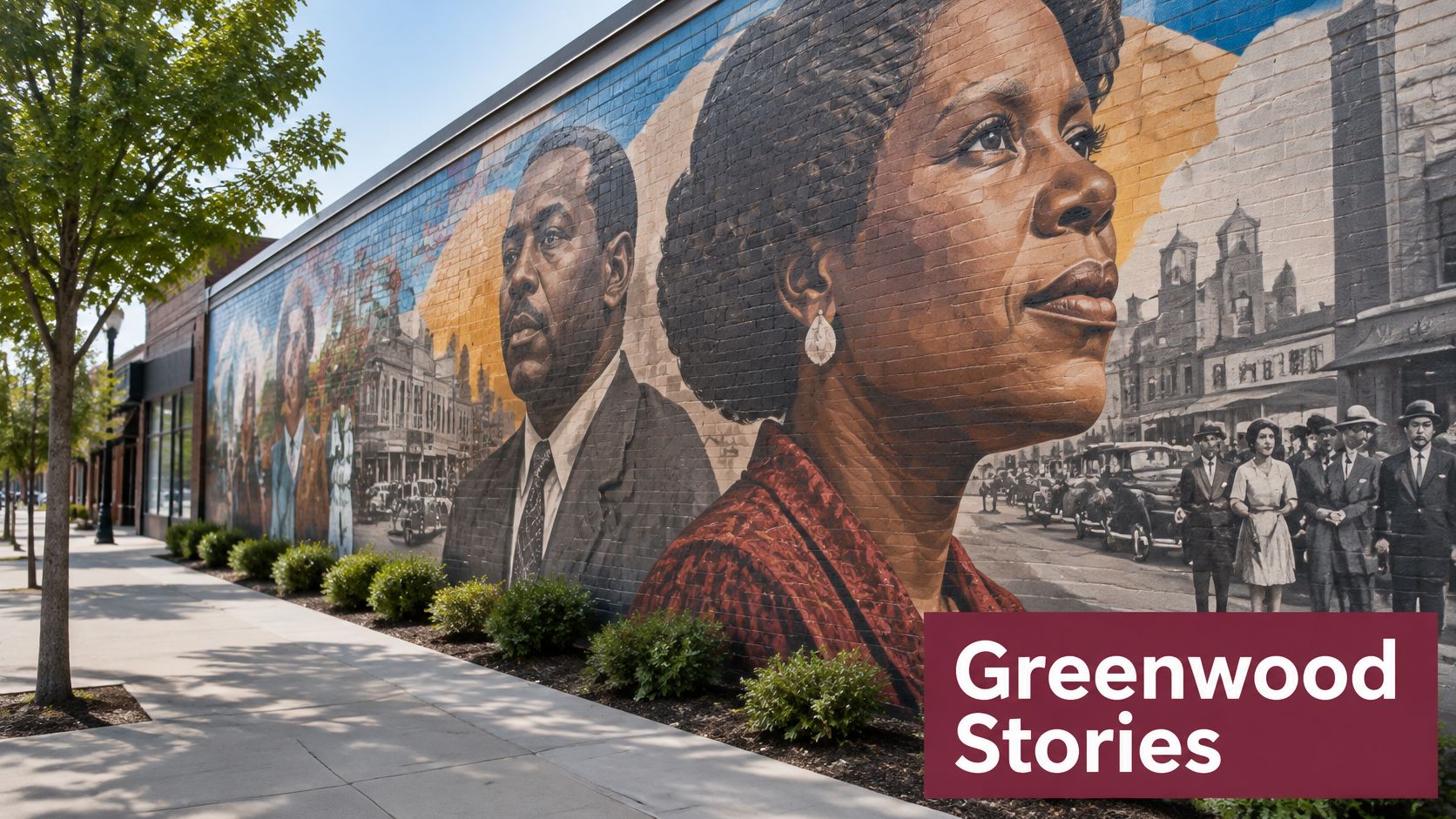
From Jenks, give Greenwood a substantial part of the day rather than squeezing it between roadside photographs. Check the history center's current admission arrangements and hours before driving north. Outdoor artwork and an indoor interpretive visit are different experiences, and access to one doesn't establish access to the other.
A mural can be a beautiful photograph and a record of grief, survival, or community pride. Read what's there before deciding how to photograph it.
The wider area also includes the Pathway to Hope Public Art Trail. An Oklahoma Arts Council account of the trail describes six large-scale artworks on Interstate 244 underpasses near historic Greenwood. Treat those as a mapped extension, not something you should expect to encounter automatically outside the history center.
For example, a family with older children could visit the center, walk a selected mural route, then return to Jenks with time to talk over a meal. That's more useful than collecting photographs without understanding the places pictured.
The Ten District's public art and murals coverage offers another way to consider how artists tell local stories. In Greenwood itself, keep sidewalks and business entrances clear, and approach memorial subjects with care.
5. Philbrook Museum of Art Sculpture Garden, Tulsa
Choose Philbrook when you want sculpture in a carefully arranged garden rather than beside a road or across a commercial wall. The museum's grounds in Tulsa's Utica Square area let you consider the artwork alongside lawns, planting, paths, and the building itself.
This is a planned museum outing, not an unrestricted sidewalk stop. Check current admission, garden access, hours, and special programming before leaving Jenks. Don't assume an outdoor setting means you can enter independently of the museum's visitor arrangements.
Gardens first, if the weather cooperates
For a pleasant afternoon, leave Main Street after an early meal, explore the gardens, and keep the indoor galleries as an option if the weather turns. Lunch around Utica Square can work too, but decide whether you want that meal in Tulsa or back in Jenks before filling the day.
The main trade-off is structure versus spontaneity. Philbrook offers a curated setting, but you'll need to work within its operating schedule and access rules.
For mixed interests: Let garden enthusiasts linger while keeping an agreed meeting point.
For changing weather: Check both the forecast and indoor access before departure.
For an art-focused day: Review The Ten District's local art events coverage before choosing your date.
Say you're hosting someone who enjoys gardens more than galleries. Walking outdoors first gives them a comfortable entry into the visit, without requiring a long indoor tour. Finish with enough energy for a Main Street stop on the way home rather than treating the museum as an endurance test.
6. Route 66 Roadside Art in Sapulpa and Tulsa
Take the Sapulpa direction on a different day from Catoosa. Starting in downtown Jenks, this outing works best as a selected stretch of Route 66, with time to park and walk historic commercial blocks.
Murals, sculptures, signs, and roadside pieces don't all announce themselves from a moving car. Save a map and select your stopping areas before leaving. Asking the driver to watch traffic and spot artwork at the same time is a poor plan.
Stop safely, then look around
A weekday morning is a reasonable option for a quieter visit, though local business activity and events can change parking conditions. Use marked spaces, check restrictions, and cross at designated crossings rather than stepping into the street for a wider photograph.
Choose a bounded route: Pick the Tulsa or Sapulpa stretch you want to explore.
Save locations: Keep your intended stops available on your phone rather than relying on roadside signs.
Ask locally: Shop staff may know about nearby murals, but make the question brief if they're helping customers.
The Ten District's public art near Jenks discovery guide can help you decide which direction suits the day.
For a couple who enjoys browsing older shopping streets, the artwork can provide reasons to stop without dictating every minute. Park legally, walk the block, visit a shop that interests you, and return to Jenks before the outing becomes tiring.
That's the advantage over a major museum visit: you can keep the day flexible. The disadvantage is that you'll need to do more of the route planning yourself.
7. Public Art Along Jenks Main Street and The Ten District
The most useful starting point is also the easiest place to finish: Main Street in The Ten District. Here, you can look at public art without separating it from the shops, restaurants, and people who make downtown Jenks worth walking.
A concrete place to begin is the mural on the west side of McGuillicuddy's Antiques. KJRH's account of the Ten District mural project identifies Julie Riley as its designer and Johnathan Heckman, known as Jox, as its painter, with Jenks High School art students participating; the report also says The Ten District funded the work at no cost to taxpayers.
Look beyond the Main Street frontage
Park in a legal public space and walk rather than moving the car between blocks. Approach the mural from the public pedestrian area, keep entrances clear, and look for artist information before moving on.
Jenks' adopted comprehensive plan identifies brick walls on First Street north and south of Main Street as potential mural locations. Those are planning recommendations, not a promise that finished artwork occupies every suggested wall.
Local distinction: A proposed mural location, a temporary display, and a completed installation aren't interchangeable. Check what's actually on view before bringing a group.
For a low-pressure family outing, start toward the river side of downtown, walk west toward the Midland Valley railroad tracks, and turn back whenever the group needs a break. Stay on public walkways and use designated crossings.
The Jenks public art trail guide provides a starting point for that walk. Unlike a metro driving loop, this outing lets you pause for a shop or meal without having to reorganize the whole day.
How the public art installations compare for a visit
Use the table to decide how far to roam from Jenks and how much structure each stop needs. Some are pull-up photo stops, some reward an unhurried walk, and the museum and history center stops work better when you give them their own block of time.
Item | Location | Admission | Best for |
|---|---|---|---|
Golden Driller at Expo Square, Tulsa | Expo Square, east Tulsa | Free to view outdoors | Landmark photos and event visits |
The Blue Whale of Catoosa on Route 66 | Catoosa, along Route 66 | Free to visit | Families and Route 66 road-trippers |
Public Art and Sculpture at The Gathering Place, Tulsa | The Gathering Place, Arkansas River, Tulsa | Free with park entry | Families combining art and outdoor activities |
Greenwood Murals and the Greenwood Rising History Center, Tulsa | Greenwood district, north Tulsa | Murals free to view outdoors; paid admission for the history center | Visitors interested in Black Wall Street and local history |
Philbrook Museum of Art Sculpture Garden, Tulsa | 2727 South Rockford Road, Tulsa | Paid museum admission | A curated garden and museum art visit |
Route 66 Roadside Art in Sapulpa and Tulsa | Route 66 corridor through Tulsa and Sapulpa | Free to view from public roads and roadside stops | A flexible scenic drive with art stops |
Public Art Along Jenks Main Street and The Ten District | Downtown Jenks, from the Arkansas River to the Midland Valley railroad tracks | Free to explore on public streets | A walkable outing with shops and dining |
For a single outward leg, the Golden Driller and Blue Whale are the simplest wins: quick arrival, clear payoff, easy return toward Jenks. Gathering Place takes more energy because art, playgrounds, and riverfront space compete for attention. Greenwood asks for a slower pace and more context, while Philbrook suits travelers who want a formal ticketed visit rather than a casual stop.
The Jenks row is the outlier in a useful way. It needs no destination discipline beyond showing up on Main Street, and it lets the day end where it began, near food, storefronts, and the river-side edge of downtown.
Build Your Day Around Downtown Jenks
Start on Main Street, choose an outward destination, and leave room to come back. That's the most practical way to enjoy public art installations around Jenks without spending the afternoon managing a schedule.
Choose the Golden Driller for a landmark photograph, Catoosa for a roadside outing, or Gathering Place when children need room to move. Give Greenwood the attention its history deserves, and choose Philbrook when you want a museum-and-garden visit. Keep Sapulpa for a separate Route 66 drive rather than trying to connect every destination.
Before leaving, check each venue's current hours, access arrangements, and event schedule. Outdoor artwork isn't automatically available at all hours, museum gardens can have admission conditions, and temporary pieces may change. Save your route and decide where you'll stop legally before the driver needs to make that decision in traffic.
If you're considering art for a downtown storefront
A good afternoon of looking can also sharpen a business owner's ideas. Notice whether people can approach an artwork comfortably, read its information, and stop without blocking an entrance.
Then think beyond opening day. The public-art policy brief hosted by Connecticut's arts office explains that outdoor installations face maintenance demands including inspections, repairs, conservation, cleanup, insurance, and documentation. A manageable temporary work can be a better choice than a permanent piece without an upkeep budget.
For new retail and restaurant concepts, our personalized incentive roadmap outlines up to $250,000+ in available incentives, including TIF district opportunities, façade grants, and development programs. That's a separate development conversation, not a promise of funding for an artwork.
For today, keep it simple: take the Main Street walk, choose the outing that fits your group, and return with time to enjoy downtown rather than merely drive through it.
The Ten District offers local guides and discovery resources for exploring Jenks murals, sculptures, and outdoor art alongside downtown shops and dining. Visit The Ten District to plan your Main Street starting point and choose a public-art outing that fits your afternoon.


Comments