

Crisis Communication Planning for Jenks Businesses
A water line breaks above a Main Street shop, a storm knocks out power before a fundraiser, or a rumor starts moving through a Jenks neighborhood group. In each case, customers and staff need the same thing quickly: clear information from someone who knows what's happening. Crisis communication planning gives an independent shop, nonprofit, or civic group in Jenks, Oklahoma, a practical way to respond without pretending it has a corporate communications department.
Table of Contents
What Crisis Communication Planning Means for a Jenks Shop - The three jobs your plan must do
Mapping Local Risks and the People Who Need to Hear From You - Start with a two-column map
Building Your Chain of Command and Message Templates - Four messages worth drafting before trouble
Choosing the Right Channels in Jenks and the Tulsa Metro - What to skip when staffing is thin
Your Activation Checklist and Training Rhythm - The first 15 minutes - The first hour - The first 24 hours
After the Dust Settles and FAQ - Questions Jenks owners actually ask
What Crisis Communication Planning Means for a Jenks Shop
A boutique near downtown Jenks closes its doors after water comes through the ceiling. The owner is calling the landlord, an employee is answering customer messages, and someone else is trying to decide whether the store's front sign should say “closed” or explain the damage. Meanwhile, people who planned to walk from Main Street toward the Riverwalk are asking whether nearby businesses are open.
That is where crisis communication planning earns its keep. It's a written playbook that decides who speaks first, what can be confirmed, and where the message goes when normal operations get knocked sideways. It isn't a public-relations performance. It's a way to protect trust with neighbors, customers, employees, vendors, city officials, and the people who help keep The Ten District moving.
A formal plan was already common among public relations practitioners by the mid-2000s. A 2006 survey published in Public Relations Review found that three-quarters of U.S. practitioners said their employers had a written crisis communications plan, as summarized in the BCI Emergency Communications Report. Yet a separate U.S. survey reported that only 49% of businesses had a formal, documented plan, while 28% used an informal plan and 23% had none or weren't sure, according to Forbes' coverage of the survey.
The three jobs your plan must do
For a Ten District shop or volunteer-run nonprofit, the plan has three immediate jobs:
Respond within hours: Put out a short, accurate acknowledgment before customers have to guess whether the business is open or safe.
Keep messages aligned: Make sure the person at the register, the volunteer answering email, and the owner replying to Facebook all use the same verified facts.
Show the return to normal: Tell people what has reopened, what remains limited, and what action the business has taken.
A one-page plan that lives behind the register is more useful than a polished document nobody can find. For a broader working outline, this crisis communications plan guide is useful when you're turning scattered notes into roles, channels, approvals, and message templates. Locally, your plan should sit beside the operational details in Jenks public relations basics, not replace them.
Practical rule: A first message can say, “We're aware, we're checking the facts, and we'll update you.” It shouldn't guess at the cause, blame a vendor, or promise a reopening time nobody has confirmed.
Mapping Local Risks and the People Who Need to Hear From You
A useful risk map starts with the place you operate. A shop near Main Street faces different communication problems from a large office park, and a nonprofit running an outdoor gathering near the Arkansas River needs a different contact list from a retailer serving regular customers.
Set aside a Tuesday afternoon and make two lists. First, write down incidents that could affect your doors, people, or reputation. For Jenks, that may include Arkansas River flooding near the Riverwalk, summer storm outages, a boil-water advisory, heavy Oklahoma Aquarium crowds spilling toward Main Street, a food-safety concern at a Ten District restaurant, an employee or customer injury, a social media pile-on, or a data breach at a small retailer.
Next, list who needs information and what they need to do with it. The CDC's crisis and emergency risk communication planning guidance treats public information, media, partners, and other stakeholders as separate planning concerns. That fits Jenks. A customer in the parking lot needs immediate safety direction. A landlord may need a facilities update. A delivery driver needs to know whether access has changed.

Start with a two-column map
Use a simple working sheet rather than a complicated risk register.
Local risk | People who need to hear from you |
|---|---|
River flooding or Riverwalk access issue | Customers, neighboring businesses, landlord, city officials, staff |
Storm-related power outage | Customers, employees, vendors, event partners |
Food-safety concern | Affected customers, staff, health officials, owner or board |
Injury in the shop or at an event | The affected person, emergency responders, staff, insurer |
Data breach or lost customer information | Customers, payment provider, IT support, legal adviser |
Rumor or online backlash | Customers, staff, spokesperson, local media if it grows |
Give each risk two scores, likelihood and impact, using a simple low, medium, or high label. A storm outage may be more familiar than a data breach, but both deserve a prepared first message. A rare event with serious consequences still needs a named decision-maker and a clear escalation path.
Social channels deserve their own review because a false claim can spread before the owner sees it. A practical primer on what is risk assessment for social media can help you examine account access, impersonation, posting mistakes, and monitoring gaps without treating social media as an afterthought.
Then match each group to a channel. Staff may need a group text and a direct supervisor. Walk-up customers need a door notice or A-frame board. Neighbors may see a Facebook post or Nextdoor update. The Jenks Reporter, Tulsa World, Jenks Police, city officials, vendors, and the chamber each need a current contact record. Keep those names and preferred methods in stakeholder communication for Jenks organizations, and review the list after staff or leadership changes.
Building Your Chain of Command and Message Templates
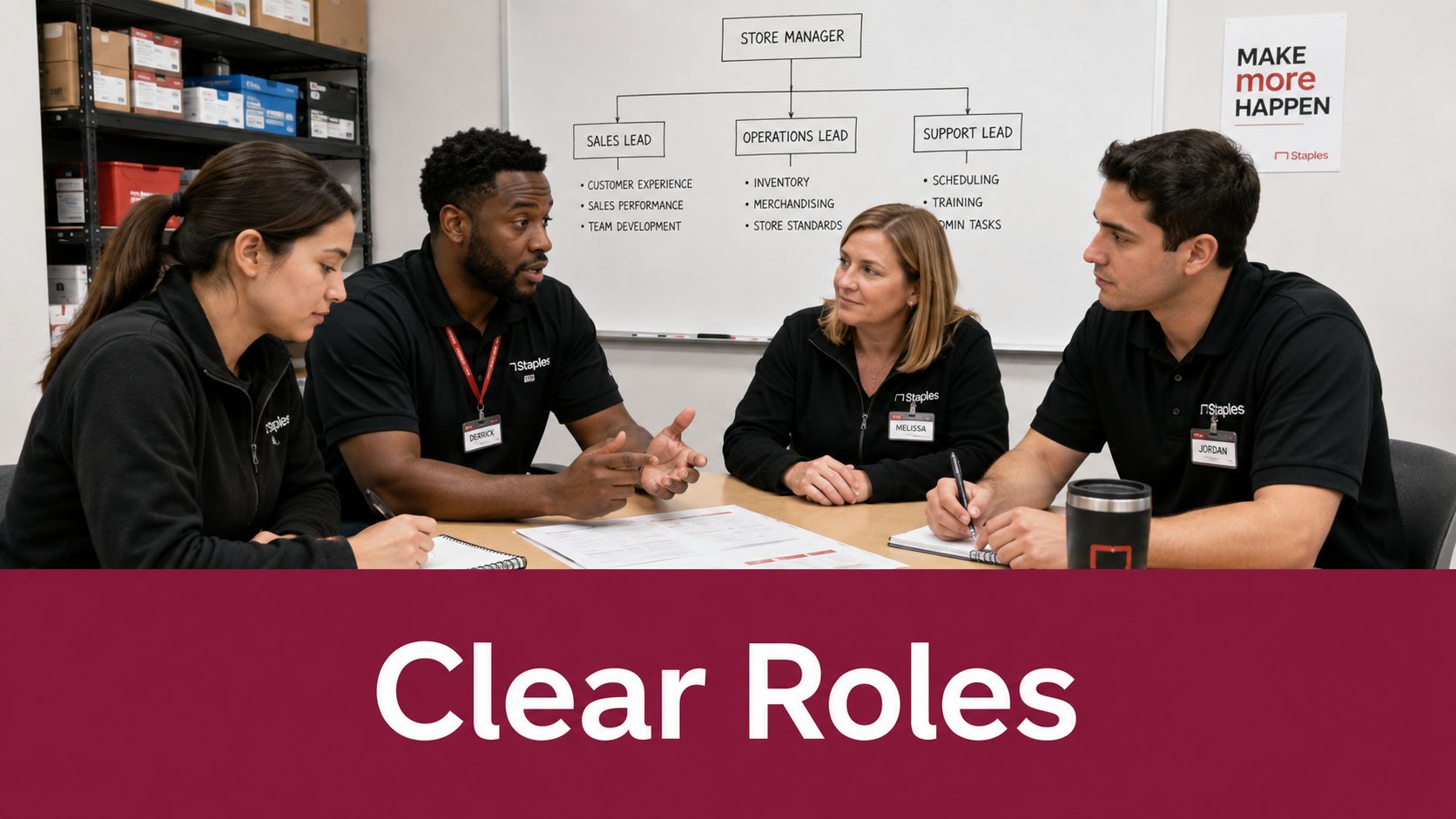
A small business doesn't need a crisis department. It does need clear decision rights. If everyone can post but nobody knows who approves the wording, the shop may publish three different versions of the same incident before lunch.
Use a compact chain of command:
Owner or executive director: Lead spokesperson and final approver for public statements.
Backup spokesperson: Takes over when the owner is unavailable or directly involved.
Floor lead: Answers in-person questions, directs customers, and reports new facts.
Message monitor: Watches social media and email, records questions, and flags urgent issues.
The owner should approve external statements unless the incident affects the owner personally. In that case, the backup spokesperson makes the first public decision and documents it for later review. The floor lead shouldn't speculate, and the message monitor shouldn't argue with commenters. Everyone should know where the current statement lives and who can change it.
Four messages worth drafting before trouble
Use the same structure every time: what happened, what you're doing, what you need from people, and where updates will appear.
Initial holding statement
We're aware of an issue affecting our Jenks location. We're checking the situation and putting safety first. Please don't enter the affected area or rely on unverified posts. We'll share our next confirmed update on our official social page and at the store entrance.
Customer email
Subject: Update from our Jenks location We're writing to let you know that [brief verified description]. Our team is [action underway]. For now, please [customer instruction]. We'll update this message thread and our official social channels as we confirm more information. We're sorry for the disruption and appreciate your patience.
Press statement
[Business or organization] is responding to [incident] at its Jenks location. No further details are confirmed at this time beyond [verified fact]. Our immediate priorities are safety, communication with affected people, and restoring normal operations. [Spokesperson name and contact method] will handle media questions and future updates.
Internal staff note
Today's shift plan is changing because of [verified issue]. [Name] is the decision-maker for public updates. Staff should tell customers [approved wording], avoid guesses, and send questions to [contact]. We'll confirm shift changes, pay guidance, and reopening information through [channel]. Please report new facts, customer concerns, or safety issues directly to [role].
For customer-facing wording and response habits, these eCommerce customer communication tips offer useful reminders about clarity, timing, and consistent replies, even when your operation is a Main Street storefront rather than an online retailer. Keep the tone plain, then connect it to the human voice described in brand storytelling for Jenks businesses.
Print a role card with four names, backup contact details, approval rules, the shared folder location, and the first two approved statements. Tape it behind the register. That small physical reminder matters when the owner is handling a leak, a frightened customer, and a ringing phone at the same time.
Choosing the Right Channels in Jenks and the Tulsa Metro
The fastest channel isn't always the best channel. A Facebook post can reach nearby customers quickly, but it won't replace a direct message to employees. Instagram can show that a blocked walkway is open again, while a door sign reaches the person standing outside without checking a phone.
Use the channel that matches the audience and the job:
Message Type | Best Channel | Jenks / Tulsa Outlet | Speed |
|---|---|---|---|
Immediate safety direction | Social, email, signage, direct calls | Facebook, email list, front door, A-frame | Fast |
Temporary closure or changed hours | Social, Google Business Profile, email, signage | Facebook, Instagram, Google Business Profile, storefront | Fast |
Visual access or cleanup update | Instagram or TikTok, followed by website or email | Business accounts, Riverwalk-area posts | Fast |
Community-wide operational notice | Local media and direct stakeholder outreach | Jenks Reporter, Tulsa World | Varies |
Spoken update for a broad local audience | Radio contact | KGTO, KRMG | Varies |
Staff instructions | Group text, email, shared folder | Internal team channels | Fast |
Safety messages should go everywhere at once, provided the facts are verified. Operational updates can lead with social and email, then appear on the storefront and Google Business Profile so people planning a visit don't make a wasted trip. Reputation issues need one spokesperson. Don't let several employees debate the matter in public comments.
Local media serves a different purpose from a business account. The Jenks Reporter can matter to people who follow community news closely, while Tulsa World may be relevant when an issue affects a wider Tulsa metro audience. KGTO and KRMG can help with spoken updates when radio coverage fits the situation. Those outlets aren't interchangeable, and each may need a concise summary, a contact name, and a confirmed fact sheet.
What to skip when staffing is thin
Don't create a separate message for every platform. Choose one approved statement, adapt its length, and send people to one update location. Skip TikTok if nobody can monitor it, skip a long email if customers need a closure notice, and don't ask every employee to answer media questions.
Your social media guidance for Jenks retail should support the response, not turn the crisis into a content project. A storefront sign, a direct staff message, and one accurate public post often beat a scattered campaign across channels nobody has time to watch.
Your Activation Checklist and Training Rhythm
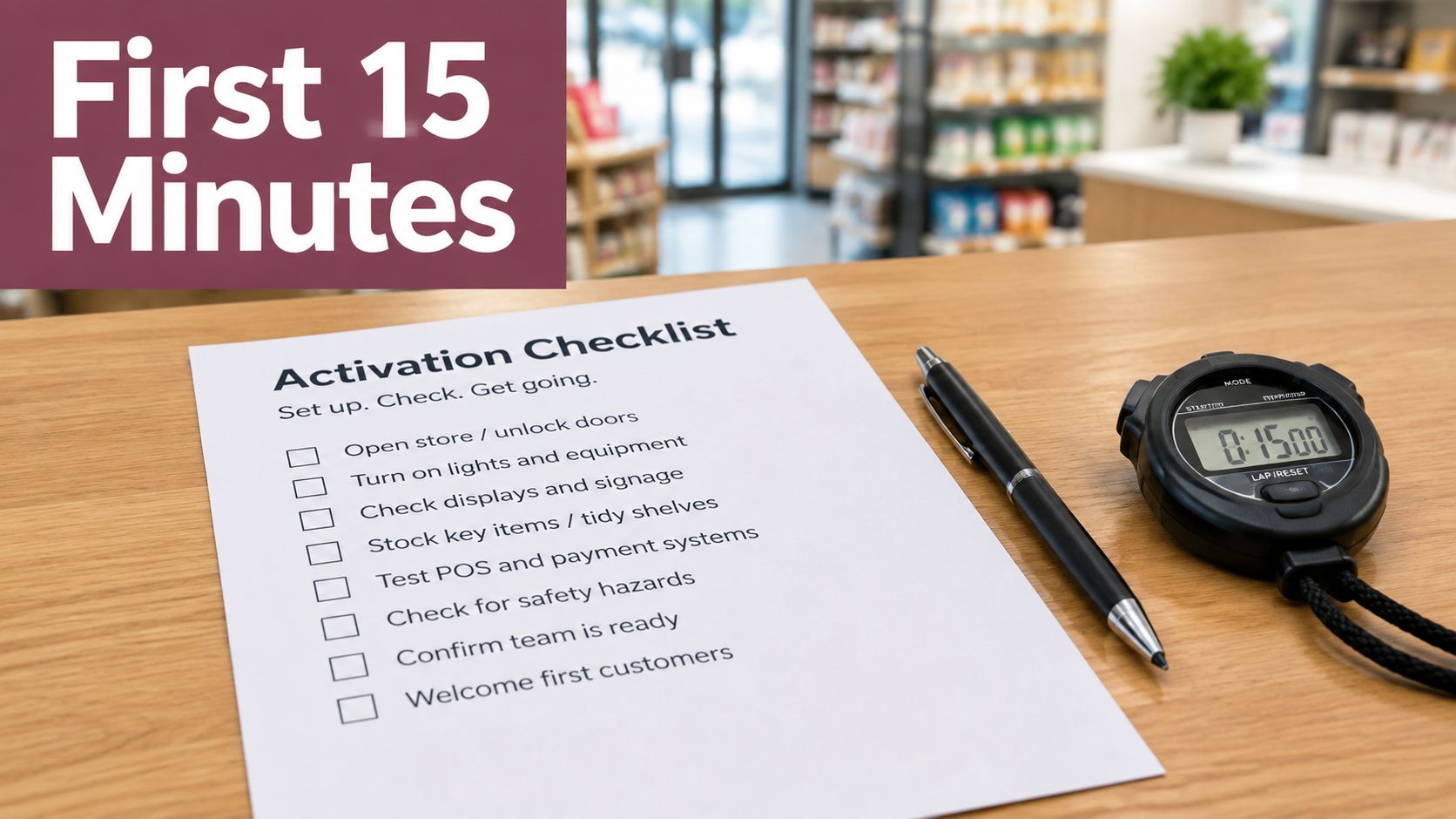
A plan becomes real when someone can use it with a phone in one hand and a set of keys in the other. Write assignments by role, not by department. A three-person shop can still cover the work if the owner, backup, and floor lead know which task belongs to whom.
The first 15 minutes
Start with safety and facts. Don't draft a polished statement while people are still in danger or while the cause remains unknown.
Check immediate safety: Call emergency services when appropriate, move people away from danger, and follow directions from Jenks officials.
Name the decision-maker: The owner or backup spokesperson takes control of public communication.
Open the incident log: Record the time, what was observed, who was contacted, and what remains unconfirmed.
Notify the core contacts: Call the backup, floor lead, landlord, and insurer when the incident calls for it.
Draft the holding statement: Use the pre-approved template and remove anything you can't verify.
The first hour
The message monitor posts the approved statement on the primary social channel. Another person updates the Google Business Profile, while the floor lead places a clear sign at the entrance and speaks with people who arrive.
The owner or backup spokesperson should contact affected staff, vendors, event partners, and the relevant city or public-safety contact. If the issue involves a building, water, food, injury, or customer information, bring in the appropriate professional rather than trying to diagnose the problem through a post.
The first 24 hours
Keep a steady record of updates, even if the update is that there's no new confirmed information. Notify the landlord and insurance agent, preserve receipts and relevant messages, answer staff questions about shifts and pay through one internal channel, and update customers when the operating status changes.
A short spring tabletop exercise before storm season can expose missing phone numbers and unclear authority. A 15-minute refresh during the week of heavy Oklahoma Aquarium traffic can remind staff how to handle crowding, parking questions, and a sudden access change. After every real incident, hold a brief debrief while the details are still fresh. The Jenks event planning checklist can help civic groups connect event logistics with communication assignments.
If the owner is the person having the bad day, the fallback plan should already name the backup decision-maker. Keep two approved statements and a shared drive folder that every assigned team member can open from a phone. Don't store the only copy on the owner's laptop.
After the Dust Settles and FAQ
The response isn't finished when the lights come back on or the first angry post disappears. A crisis leaves behind questions, missed calls, changed expectations, and small process failures that can become larger problems later.
Hold a debrief within 48 hours. Build a simple timeline from the incident log, then compare it with what people experienced.
What was said: Review the holding statement, staff note, email, signs, and public replies.
Where it landed: Check the business accounts, neighborhood Facebook groups, Nextdoor, local coverage, and direct customer messages.
What people asked: Record repeated questions about access, refunds, safety, hours, employees, or the next update.
What the team would change: Note missing contacts, unclear approvals, delayed signage, and tools nobody could access.
Update the contact list, replace stale templates, and schedule a 30-day check-in with the landlord, key vendors, event partners, and the Jenks Chamber. If a local reporter or neighborhood group picked up an inaccurate detail, record how you corrected it and whether the correction reached the same audience.
ISO 22361:2022 says organizations should plan, establish, maintain, review, and continually improve a strategic crisis management capability, with crisis communication included in its scope under Clause 8, according to the ISO crisis management standard. Its communication guidance covers preparation, reputation, roles, strategy, message consistency, barriers, and social media risks and opportunities, as outlined in the ANSI summary of ISO 22361. That cycle is a sensible fit for a downtown business. The plan should change after the incident, not just receive a new file name.
Questions Jenks owners actually ask
How fast should we respond when a rumor is spreading on Nextdoor
Acknowledge the concern once you've confirmed the basic facts. State what you know, what you're checking, and where the official update will appear. Don't fight every comment or repeat the rumor in a way that gives it more attention.
Should we apologize publicly after an employee mistake
If the business caused harm or failed to meet a clear responsibility, a direct apology paired with a corrective action is usually stronger than a defensive explanation. Protect private employee details, but don't use privacy as an excuse to avoid addressing affected customers.
How should we handle a negative Tulsa World comment
Separate a comment from a reported story. If the comment is on a public post, respond briefly with verified information and move the detailed conversation to a direct channel. If a Tulsa World journalist contacts you, send the inquiry to the designated spokesperson and answer the confirmed questions without guessing.
When should we bring in outside help
Bring in outside support when the incident involves serious injury, law enforcement, a data breach, legal exposure, a food-safety investigation, threats, or sustained media attention beyond the team's experience. A local attorney, insurance contact, technical adviser, or communications professional can help the owner avoid making a second problem while handling the first.
At the next annual review, keep what worked, retire what didn't, and practice the revised version. For Jenks shops, nonprofits, and civic groups, that's how a rough week becomes a more dependable way to care for the people who use our downtown.
The Ten District connects Jenks businesses, independent shops, nonprofits, and community organizers with a shared downtown setting where practical planning matters. Visit The Ten District to explore local resources, events, and ways to stay connected before the next disruption arrives.


Comments