

Jenks City Hall & A Practical Guide to Small Town Revitalization
Updated: Jul 27, 2025
Revitalizing a small town is about so much more than slapping a fresh coat of paint on a few storefronts. It’s the hard work of rebuilding a community’s economic foundation and social heart from the ground up. Real, lasting change is a marathon, not a sprint—a continuous effort driven by the people who call that town home, honoring its unique story while building a future that can stand the test of time.
What Successful Revitalization Really Looks Like
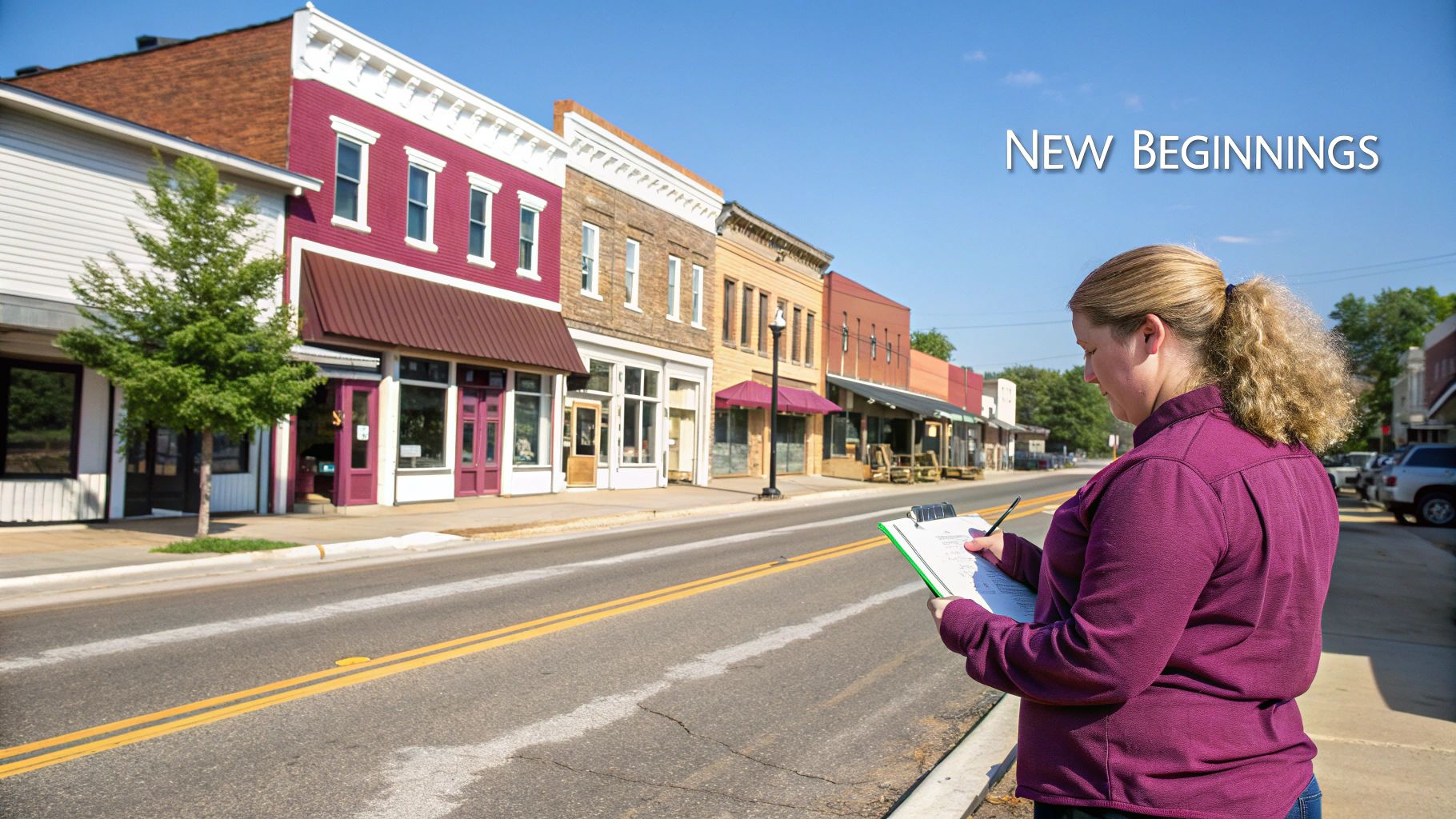
Truly successful revitalization goes way beyond the superficial fixes. It requires digging deep to understand what makes a town special—its history, its culture, and, most importantly, its people. The goal isn't to erase the past but to build on it. It’s about creating a place where lifelong residents and new faces alike feel a genuine sense of belonging and see real opportunities.
This kind of work is an ongoing process, not a one-and-done project. It’s about cultivating a sustainable ecosystem where local businesses can actually thrive, public spaces become hubs for connection, and community pride fuels the momentum for future growth.
The Bedrock Principles of Lasting Change
To make this happen, every successful initiative I've been a part of is built on a few non-negotiable pillars. These aren't just abstract ideas; they are the practical foundations that turn a shared vision into a vibrant, living reality.
Action from the Ground Up: The most powerful ideas always come from the residents themselves. When the community has a real seat at the table in both planning and execution, the projects have built-in cheerleaders and actually reflect what people want and need.
Celebrating What You’ve Got: Every single town has unique strengths. It could be a historic downtown, a beautiful river, or a rich cultural heritage. Finding and amplifying these authentic assets is what creates an identity that no other town can copy.
Smart Economic Strategy: This is about more than just filling empty storefronts. It means creating an environment that actively supports the small businesses you already have while attracting a new wave of entrepreneurs. The aim is to build a diverse and resilient local economy.
More Than Just a Good Vibe—It’s a Financial Engine
This community-first model delivers real, dollars-and-cents economic benefits. The data is clear: organized, strategic efforts produce a massive return.
In 2023 alone, the Main Street America network generated $5.68 billion in local reinvestment. This helped launch 6,630 new businesses and create over 35,000 jobs. For every single dollar invested in these programs, the communities saw an $18.03 return. That's an incredible testament to the power of this approach.
True revitalization creates a powerful cycle: smart investments improve the quality of life, which attracts new people and businesses. In turn, they contribute to a stronger local economy and an even deeper sense of community pride.
This is the exact philosophy fueling our work right here in Jenks. By focusing on [transforming downtown Jenks with e-commerce and omni-channel support for merchants](https://www.thetendistrict.com/jenks/transforming-downtown-jenks-how-the-ten-district-boosts-local-merchants-with-e-commerce-and-omni-ch), we’re seeing firsthand how blending modern tools with local charm can lift the entire district. It’s proof of what’s possible when a community truly commits to building its future, together.
Building Your Core Revitalization Team
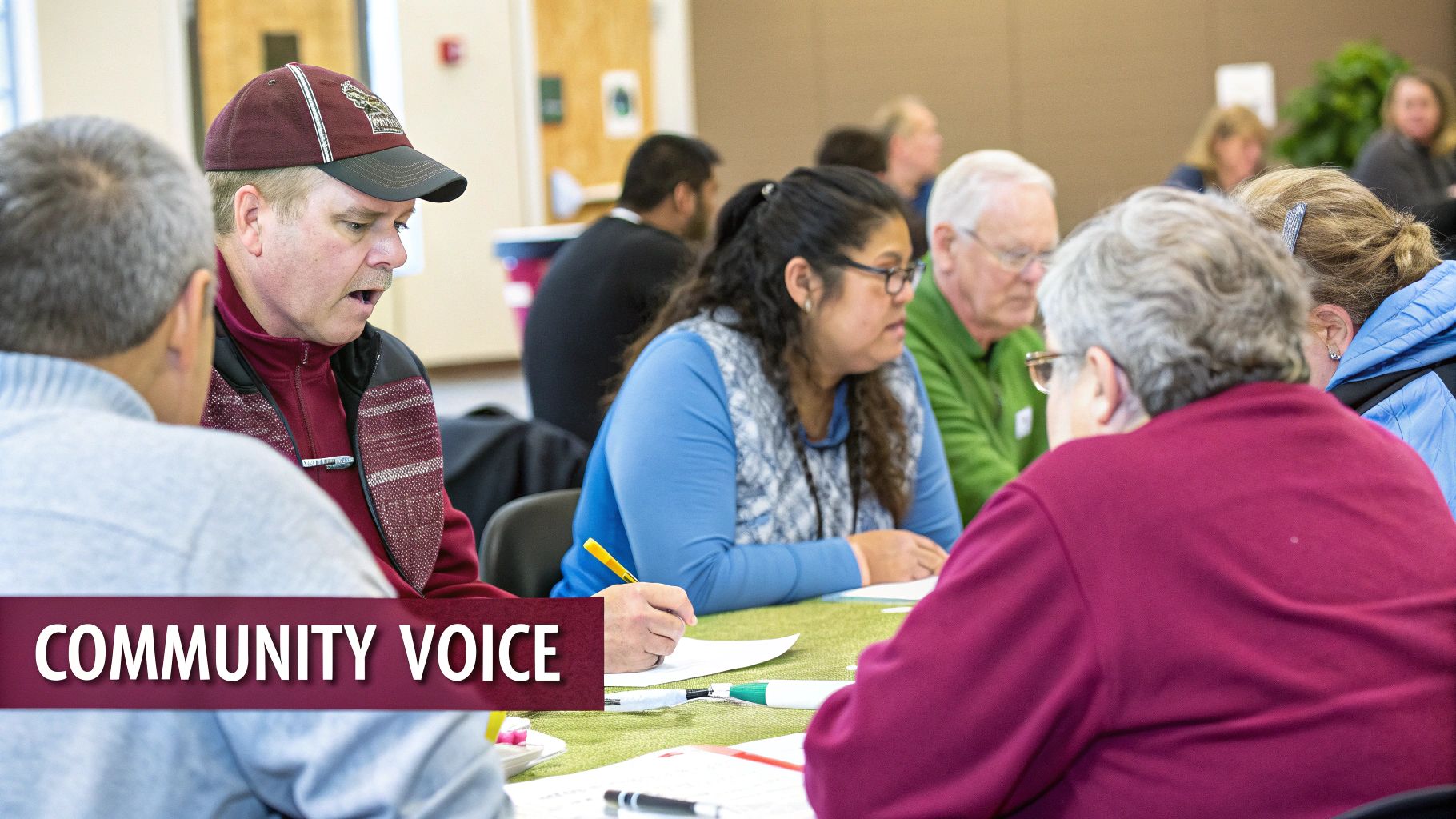
This isn't about slapping together a formal committee of the usual suspects. You’re building a human engine. A coalition of residents from every corner of your town who bring different skills, unique perspectives, and powerful networks to the table. Think of it less like a stuffy board meeting and more like a classic barn raising; everyone has a role to play, and every single contribution moves the needle.
Who Should Be on Your Team?
True community representation is the secret sauce. A team stacked with only business owners or only city officials is guaranteed to have massive blind spots. For a truly holistic small town revitalization, you have to cast a wide net and bring in voices that are often overlooked.
A well-rounded team should feel like a microcosm of the town itself. This means getting out there and actively recruiting a mix of people who can champion the project from all kinds of different angles.
Your dream team recruitment list should include:
Small Business Owners: They have a direct stake in the economic pulse of downtown. They know the on-the-ground challenges and can spot commercial opportunities nobody else sees.
Local Artists and Creatives: These are your placemaking experts. They’re the ones who can infuse your projects with culture, identity, and the kind of visual appeal that gets people talking. If you need inspiration, check out our guide on [top community art project ideas to revitalize a district](https://www.thetendistrict.com/jenks/top-community-art-project-ideas-to-revitalize-thetendistrict).
Long-Time Residents: These are your town historians. They hold invaluable knowledge of what’s been tried before, what actually worked, and what failed spectacularly. Their deep roots provide stability and a crucial connection to the town's heritage.
Energetic Newcomers: New residents often bring a fresh set of eyes, new skills, and an infectious, unbiased enthusiasm for what the town could become.
Farmers and Landowners: In many rural communities, the people who work the land have a profound connection to the regional identity and its economy. Their perspective is essential.
Youth Representatives: Don't forget the next generation. Inviting high school or college students ensures the town’s future is being shaped with them, not just for them.
Defining Roles and Fostering Collaboration
Once you have your group assembled, the next challenge is making sure everyone works together without stepping on each other's toes. The key is to avoid a rigid, top-down structure. Instead, you want to foster a collaborative environment where leadership is shared and roles are based on what people are passionate about and good at.
Clear responsibilities are non-negotiable. You might have one person who’s a wizard at grant writing, another who’s a natural at organizing volunteer events, and someone else who can run the group's social media. Define these roles early on to give everyone a real sense of ownership.
A team with defined roles is a team that gets things done. When everyone knows their purpose, meetings shift from endless talk to productive planning. That's when you start building real momentum.
Productive meetings are the lifeblood of any community project. Keep them focused and action-oriented. Always kick off with a clear agenda and wrap up with concrete next steps, assigning each task to a specific person with a deadline. This is the kind of accountability that turns great ideas into reality.
The Power of Diverse Voices
Bringing together people from different backgrounds isn't just about checking an inclusivity box; it makes the final outcome stronger, smarter, and more resilient. The artist looks at an empty wall and sees a canvas for a mural. The business owner sees an opportunity for new signage. The long-time resident remembers the beloved shop that used to be there.
All of these perspectives are valid—and they’re all essential for creating a plan that respects the town’s past while building an exciting future. It’s exactly what happened in Laurel, Delaware, where a successful waterfront redevelopment was only possible because it brought city officials, business leaders, and members of the local Nanticoke tribe to the same table. That collaboration resulted in a unique, culturally rich park that became an anchor for their entire downtown.
This is the kind of synergy you’re aiming for. You want a team that doesn't just represent the community but actively channels its collective wisdom and creativity into the revitalization effort.
Crafting a Data-Informed Action Plan
Great ideas are the spark, but a solid, data-informed action plan is the fuel that turns vision into reality. I've seen it time and again: successful small town revitalization isn't built on wishful thinking. It’s grounded in a clear-eyed understanding of a town's real-world conditions.
This means you have to move beyond assumptions and really dig into the data that tells your community's unique story. The whole point is to create a strategic roadmap that pinpoints specific, high-impact projects. Instead of trying to do everything at once, you use insights to focus your energy where it will make the biggest difference.
Conducting a Meaningful Town Assessment
Before you can chart a course forward, you need to know exactly where you stand. This is where a comprehensive assessment—often called a SWOT analysis (Strengths, Weaknesses, Opportunities, Threats)—becomes invaluable. It's not just some academic exercise. It has to be rooted in tangible information and broad community input to mean anything.
To get the right insights, you need a mix of hard numbers and human stories.
Hard Data: Pull up local economic reports, census data, and commercial vacancy rates. How many empty storefronts are there, really? What are the property tax trends telling you? This gives you an objective baseline to work from.
Community Surveys: Ask residents what they truly want and need. What kind of businesses do they wish for? What would make them spend more time and money downtown? Tools like SurveyMonkey are great, but don't underestimate simple paper forms at the local coffee shop.
Walking Audits: This one is non-negotiable. Get your team to physically walk the streets. Note the condition of sidewalks, the availability of public benches, and the overall vibe of different blocks. You can't get this kind of firsthand observation from a spreadsheet.
Your action plan should be a living document, not a report that gathers dust on a shelf. It’s a direct response to what the data and your residents are telling you. When people see their own ideas reflected in the plan, they become your most powerful allies.
Prioritizing Projects for Maximum Impact
Once you’ve done your homework, you'll likely have a long list of potential projects. Now comes the hard part: prioritizing. This is where you connect the dots between your town’s needs and its unique opportunities.
Not all projects are created equal. Some deliver quick, visible wins that build momentum, while others are long-term investments that lay the foundation for future growth. Foundational infrastructure improvements, for instance, are often the necessary first step before the "fun" stuff can even happen.
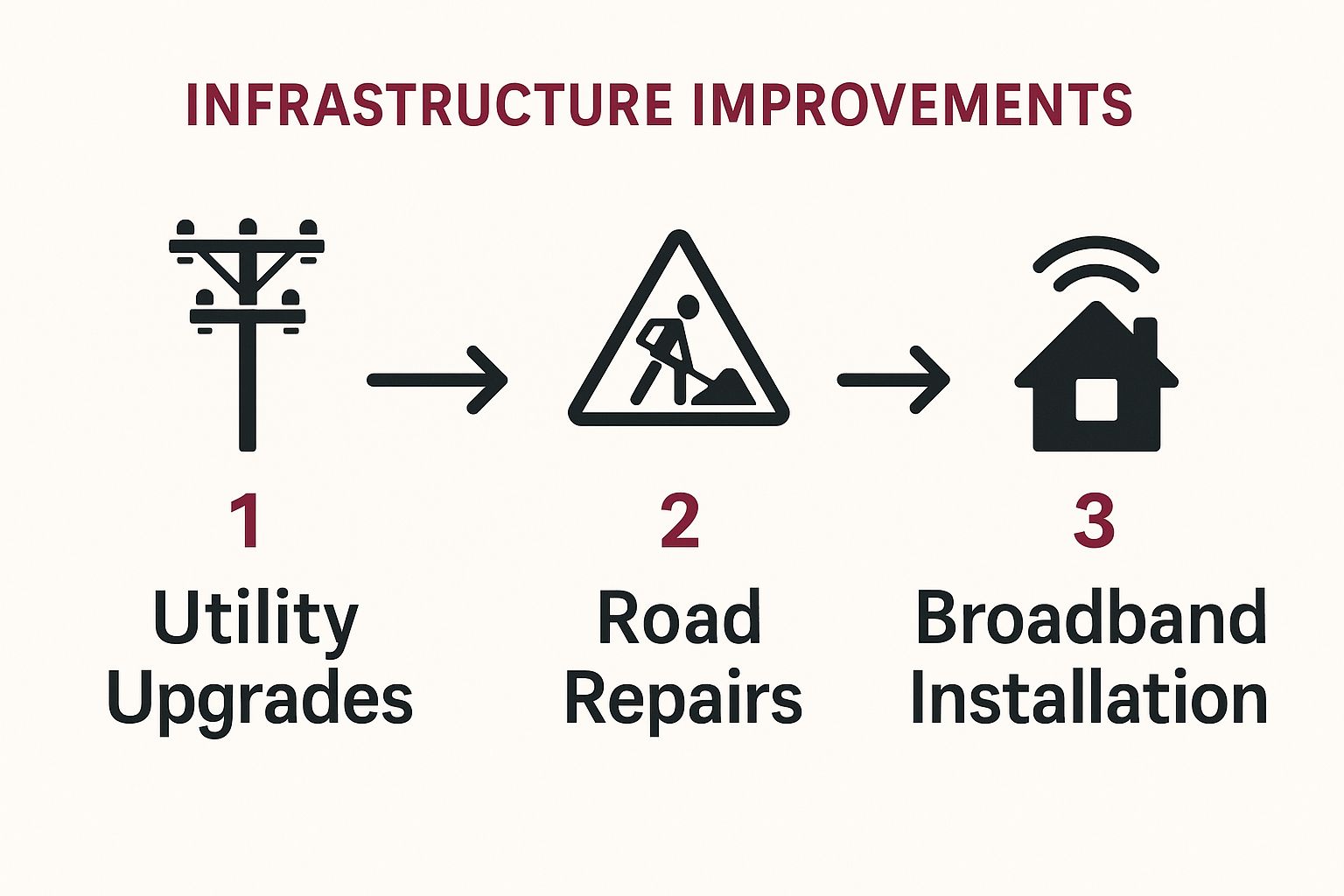
As you can see, you often have to secure reliable utilities and fix the roads before you can push for modern digital connectivity.
A powerful strategy is to group projects into clear focus areas. This helps organize your efforts and allows different people to take ownership. It also makes it much easier to communicate your plan to the community and potential funders. Learning about **strategies for building successful community partnerships** is absolutely crucial here, as you can't execute any of this alone.
To help you get started, here's a simple framework for organizing your plan.
Key Focus Areas for a Revitalization Plan
This table outlines the primary pillars of a comprehensive revitalization strategy, helping committees organize their planning efforts.
Focus Area | Objective | Example Initiative |
|---|---|---|
Economic Vitality | Support existing businesses and attract new entrepreneurs. | Launch a "Shop Local" marketing campaign with a unified gift card program. |
Placemaking & Design | Enhance the look and feel of public spaces to foster community. | Convert a vacant lot into a pop-up park with food trucks and seating. |
Community Engagement | Build social connections and a sense of shared ownership. | Organize a series of free outdoor concerts or movie nights in the town square. |
Infrastructure & Connectivity | Improve the foundational systems that support residents and businesses. | Develop a phased plan to install public Wi-Fi throughout the downtown district. |
This kind of structured approach ensures your revitalization efforts are balanced, strategic, and directly tied to the real data you've gathered. By setting realistic timelines and building a budget for each initiative, you transform a broad vision for small town revitalization into a concrete, actionable plan that you can actually achieve.
Finding the Funding to Fuel Your Vision
Let's be honest. You can have the most brilliant, data-driven plan in the world, but it’s just a stack of paper without the money to make it happen. This is the part where most small town revitalization efforts stall out. The sheer thought of securing funding can feel overwhelming.
But here’s something I’ve learned from seeing these projects succeed: the money is out there, and it's not hiding in just one place.
The most successful funding strategies I’ve witnessed don't rely on a single source. They skillfully weave together multiple streams of capital. Doing this not only gets you the cash you need, but it also creates a powerful coalition of investors who are all genuinely bought into your town's comeback.
Thinking Beyond the Local Budget
First things first: you have to look beyond the city's coffers. While local government support is a great start, it’s almost never enough to fuel a full-scale revitalization on its own. The real magic happens when you get creative and build a multi-pronged financial foundation.
This means getting familiar with a wide array of funding sources. Some are tailor-made for big infrastructure projects, while others are specifically designed for smaller, community-focused initiatives like public art, farmers' markets, or cultural events. Your job is to play matchmaker—connecting the right project to the right funding partner.
Key Funding Avenues to Explore
A diversified funding portfolio is your best defense against uncertainty. If one grant source dries up or an application gets denied, you’ve got other irons in the fire. Think of this as your treasure map for financing your town's future.
State and Federal Grants: You'd be surprised how many government programs exist to support rural and small-town development. The EPA has grants for green infrastructure, while other agencies focus on everything from historic preservation and economic growth to broadband expansion.
Philanthropic Foundations: Many foundations are deeply passionate about placemaking and community building. Find the ones whose missions align with what you’re trying to do, whether it’s building a new park, launching a youth program, or supporting local entrepreneurs.
Private-Public Partnerships (P3s): This is a big one. Teaming up with a major local employer or a regional developer can unlock serious resources. These partners have a vested interest in making the community better for their own employees and customers, which makes them incredibly powerful allies.
Building a compelling case for funding is really about telling a great story. You're not just asking for cash; you're inviting investors to be heroes in your town's comeback. Show them the plan, show them the passion, and most importantly, show them the potential for real, measurable impact.
Writing a grant proposal that actually gets read takes more than just filling in blanks. You need to paint a vivid picture of your vision and spell out exactly how their money will create lasting change for your residents. For a deeper look at this process, check out our guide on how to secure downtown Jenks revitalization grants today.
The Power of Collaboration
No town is an island, especially when it comes to funding. Sometimes, the best opportunities pop up when you team up with your neighbors. Joining forces with other towns, regional development groups, or the county can make your grant applications much more competitive.
This is a global challenge. In Europe, an estimated 50% of towns and villages are in decline. This shared struggle has spurred the creation of networks designed to help smaller communities access larger funding pools. This global context just hammers home the need for creative, collaborative funding strategies everywhere.
For a perfect example, look at Laurel, Delaware. They secured millions for their waterfront redevelopment by framing it as a green infrastructure project that improved water quality for the entire Chesapeake Bay watershed. That regional-minded approach opened doors to federal funds they never would have gotten on their own.
By thinking creatively and working collaboratively, you can piece together the financial puzzle to bring your vision to life. It takes persistence, no doubt, but the resources are out there for those with a great plan and the drive to see it through.
With your action plan mapped out and some initial funding in the bank, it's time to roll up your sleeves. This is where the real work begins—the moment you start turning blueprints and big ideas into something people can see and touch.
Honestly, this is where a lot of revitalization efforts either take off or fall flat. It's a tricky balancing act. You need solid project management, of course, but you also need flexible leadership that can adapt to the community's energy and needs.
Juggling timelines, budgets, and the enthusiasm of volunteers is a massive challenge, especially when everyone is already stretched thin. The secret is to sidestep burnout by focusing on smart, bite-sized steps. This isn't about launching a huge, multi-year construction project on day one. It's about building unstoppable momentum, one visible and celebrated success at a time.
The Power of Quick Wins
One of the most powerful tools in any small town revitalization playbook is the "quick win." These are the small-scale, high-impact projects you can knock out in a short time with limited resources. Think of a community clean-up day, planting fresh flowers in downtown planters, or commissioning a single, beautiful piece of public art for a neglected corner.
These actions do so much more than just pretty up a space. They inject a shot of excitement into the community and build critical belief in the bigger vision. When residents see positive change happening—even on a small scale—it creates a powerful ripple effect. It proves the revitalization effort is real, pulling more people into the fold and quieting the early doubters.
A quick win is a dose of adrenaline for your community. It’s a visible promise kept, building the trust and energy needed to tackle the bigger, more complex projects down the road.
This whole approach flips the script from feeling overwhelmed to feeling accomplished. And celebrating these small victories is just as important as the work itself. It keeps your core team fired up and shows the wider community that their support is actually leading to real, positive change.
Tracking Success with Metrics That Matter
To keep that momentum rolling and build a case for future funding, you have to prove your efforts are working. This means tracking success with metrics that go way beyond feel-good stories. You need to tell a data-backed story of your town’s ongoing transformation.
But remember, success isn't just about dollars and cents. It's about measuring the renewed pulse of your community.
I'd suggest tracking a mix of both economic and social indicators:
Economic Metrics: Keep an eye on new business openings, drops in commercial vacancy rates, and any growth in local sales tax revenue. These are the hard numbers that funders and city councils love to see.
Foot Traffic: You can use simple clicker counters or partner with local businesses to get a sense of how many more people are visiting downtown.
Resident Satisfaction: Run short, simple annual surveys. How do residents feel about the changes? Are they prouder of their town? Do they feel more connected to their neighbors?
Social Media Buzz: What are people saying online? Track mentions of your town, the use of revitalization hashtags, and the general sentiment. This is a fantastic way to gauge growing pride and outside interest.
This data gives you concrete proof of your impact. For example, after you turn a vacant lot into a pop-up park, you can point to a 20% increase in weekend foot traffic on that block and share social media posts from families loving the new space.
This kind of measurement is also part of a much bigger conversation. Globally, rural revitalization and small-town regeneration are finally being recognized as key to sustainable development. Frameworks from groups like UN-Habitat show how targeted projects can boost local incomes, cut unemployment, and slow the tide of people moving away, creating a stronger foundation for the future. You can find more on this global perspective over at the Urban Policy Platform.
By pairing quick wins with solid tracking, you create a powerful cycle of success. Each small project gives you a new data point and a new story to tell, building an undeniable case for your town’s bright future.
Common Questions About Small Town Renewal
Taking on a small town revitalization project always kicks up more questions than answers. It’s a road full of practical hurdles and, let's be honest, human challenges. Community leaders, eager volunteers, and passionate residents all wrestle with the same tough questions, from how to get the ball rolling with no budget to navigating the pushback that change inevitably brings.
This section is all about tackling those real-world questions head-on. We're getting past the theory to give you clear, straightforward answers that will help you make smart decisions and keep your project moving.
How Do We Get Started With Almost No Budget?
This is the number one question I hear, and the answer is surprisingly simple: focus on low-cost, high-impact activities that build momentum. You don’t need a massive grant to prove your concept. Success breeds success, and starting small is the smartest way to get in the game.
Think about things that require more sweat equity than cash. A single community clean-up day can completely change the feel of downtown over a weekend. Organizing a pop-up market for local artists or farmers costs very little but injects instant energy and brings people together.
Here are a few budget-friendly ideas to get some quick wins on the board:
Launch a social media campaign celebrating your local business owners and sharing their stories.
Host a "weed and feed" event where volunteers spruce up public planters and are rewarded with a simple cookout.
Create a simple walking tour map that highlights your town's historic buildings or unique landmarks.
These actions show you're serious and produce results people can see. That makes it a whole lot easier to attract more volunteers, forge partnerships, and eventually land the funding you need for the bigger stuff.
What If There Is Resistance from Some Residents?
I can guarantee you one thing: not everyone will be on board, at least not right away. Resistance and negativity are just part of the deal with any community-led change. A lot of times, this skepticism isn't even about the project itself. It often comes from a fear of the unknown or the feeling that they've been left out of the conversation.
The best way to handle this is to meet resistance with empathy and total transparency. Don't just dismiss their concerns; actually listen to them. Hold open town halls or even informal coffee chats where people can say what’s on their mind without feeling judged. Simply acknowledging their point of view is the first step to building trust.
Resistance often melts away when people see positive, tangible results that benefit everyone. Skepticism can be your greatest motivator to start with a project so universally popular that it's impossible to oppose.
Start with something small and beloved. Maybe it's restoring the old town welcome sign or finally improving the lighting at a public park. When skeptical residents see your team follows through on its promises and that the change makes their daily lives better, they're far more likely to become supporters—or at least quiet down. It’s all about building trust, one small, successful project at a time.
How Do We Keep Volunteers from Burning Out?
Volunteer burnout is the silent killer of so many community projects. A small, passionate crew often shoulders most of the work, and without careful management, their energy is going to fizzle out. The key is to make the work sustainable, rewarding, and even fun.
First, celebrate every single success, no matter how small. Did you land a $500 donation? Did 10 new people show up to help? Shout it from the rooftops. Recognition is a powerful reward that costs nothing but makes people feel seen and valued.
Next, give people clear roles. Nobody should feel like they have to do everything. Assign specific, manageable tasks so people can use their skills without getting swamped. A well-organized team is an energized team.
Finally, you have to be recruiting all the time. Bringing in new faces infuses the group with fresh energy and different ideas. Make sure the work is social—host appreciation dinners or mix work sessions with fun activities. Acknowledgment and a feeling of shared accomplishment are the best fuel for the long haul. This proactive approach can also spark new fundraising ideas; for more inspiration, you can explore these [eight Jenks downtown fundraising ideas for a vibrant 2025](https://www.thetendistrict.com/jenks/8-jenks-downtown-fundraising-ideas-for-a-vibrant-2025).
How Do We Ensure Our Efforts Are Sustainable?
Sustainability isn’t an afterthought you tack on at the end. It has to be woven into your plan from day one. A truly sustainable small town revitalization creates a legacy of leadership and builds systems that can outlast any single project or person.
You have to think about projects that can either generate their own revenue or cut long-term costs. For instance, renovating a historic building to house a community-owned event space can create an ongoing income stream. In the same way, investing in energy-efficient streetlights lowers the town's utility bills for decades to come.
Forge deep partnerships with your local businesses, civic groups, and the municipal government. Shared responsibility is sustainable responsibility. When multiple groups have a stake in a project’s success, it’s much more likely to be maintained over the long term.
Most importantly, you need to focus on building leadership capacity within your community. The ultimate goal is to create a culture of revitalization that isn't dependent on just one or two key people. By mentoring new leaders and empowering others to take ownership, you ensure the spirit of renewal will keep going for years.
At The Ten District, we believe a vibrant downtown is the heart of a thriving community. We are committed to fostering economic growth and social engagement that preserves the unique identity of Jenks Main Street. Come experience the convergence of tradition and innovation for yourself. Plan your visit to The Ten District today!


Comments