

Interactive Public Art Installations in Jenks
Title tag: Jenks Interactive Public Art Walks and Ideas
Meta description: Explore murals, river views, seasonal markets, and art walk ideas in Jenks, with practical tips on timing, access, and what's nearby.
Interactive public art does more than fill a blank wall. One widely cited public-art dataset found an 82% drop in solitary behavior around interactive installations, with about 1 in 2 visitors engaging with a stranger and 71% traveling to a site specifically to see the work, according to CODAworx's summary of public art and engagement data. That helps explain why a simple walk in Jenks can feel bigger than errands or dinner when art is part of the route.
In our part of the Tulsa metro, the best version of that walk usually mixes a few things at once. River views, murals, seasonal markets, temporary displays, and community-made pieces all change how a place feels under your feet. This guide stays centered on The Ten District and nearby Tulsa-area examples, and it separates what you can look for now from future-facing ideas that may show up in planning conversations rather than on the ground today.
Some stops are steady. Others depend on event calendars, weather, or whether a temporary setup is active that week. If you're heading out with kids, grandparents, or visitors from out of town, it helps to think ahead about shade, sidewalks, evening visibility, parking, and whether an art experience asks people to look, touch, listen, or join in.
Table of Contents
1. Jenks Riverwalk Art Installations & Pedestrian Bridges - What exists now, and what people often mean by "interactive"
3. Jenks Public Market Interactive Installations (Seasonal Markets) - When a market becomes an art experience
4. Bricktown Canal-Style Water Features & Sculptural Elements (Tulsa Metro Model) - Why water changes the mood
6. Interactive Light & Projection Art (Evening Activations) - What works after dark
7. Community-Created Public Art & Participatory Placemaking Initiatives - Why shared authorship matters
1. Jenks Riverwalk Art Installations & Pedestrian Bridges
The riverfront gives Jenks one of its strongest cases for interactive public art, even before a visitor sees a sculpture or reads a sign. The walk itself asks people to pause, look outward, and share the view.
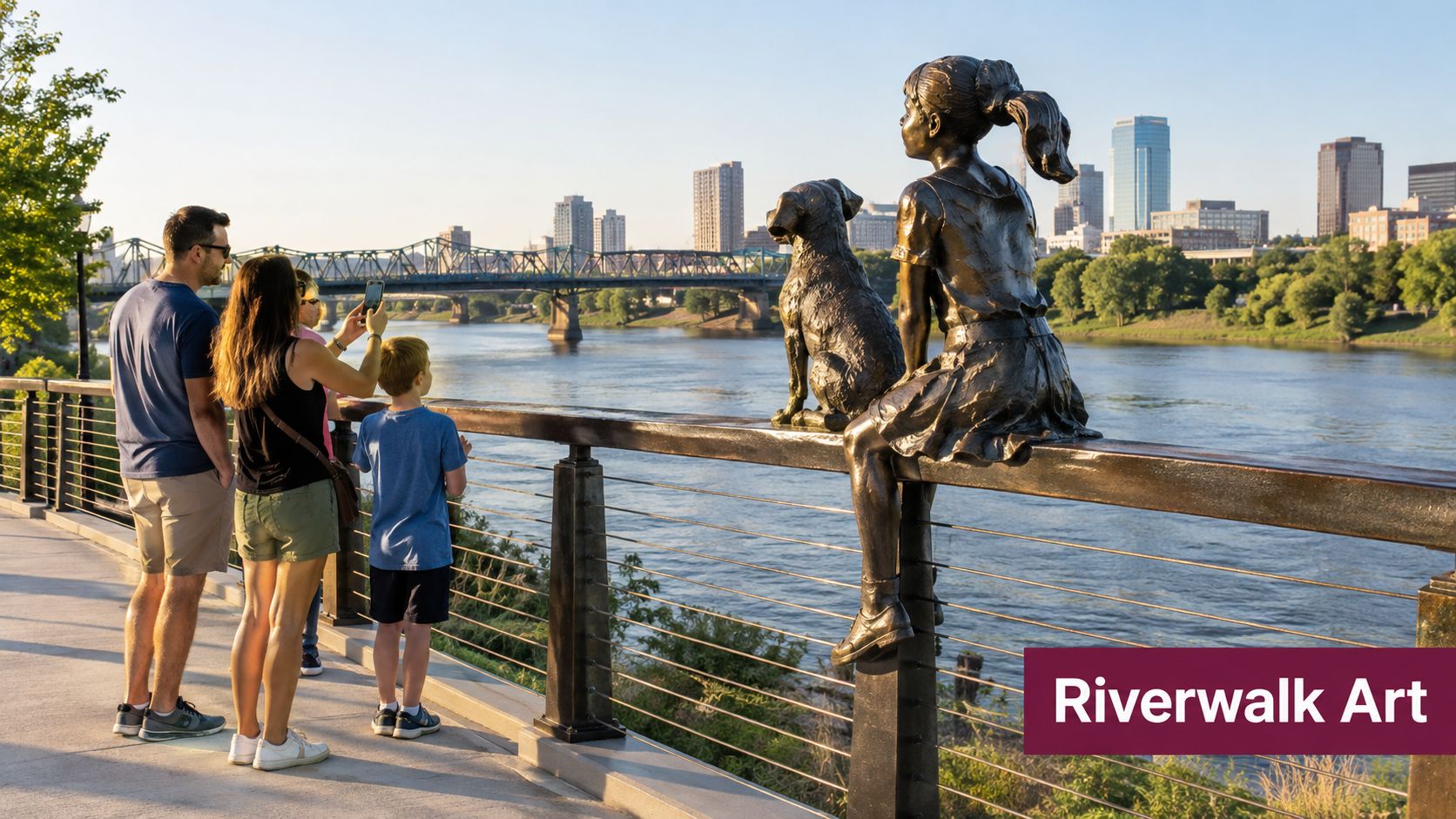
On the ground, this part of town feels different from Main Street. The pace is slower. People linger at railings, point toward the water, and stop more often without feeling like they are in anyone's way. That matters because interactivity here is usually simple and physical. A bridge crossing, an overlook, a sculpture placed along a walking route, or an interpretive panel can turn a basic stroll into something participatory.
Jenks visitors trying to map a broader outing can use the Jenks public art spaces guide to see how riverfront stops relate to downtown.
What exists now, and what people often mean by "interactive"
In Jenks, the documented river experience is the walk, the overlooks, the bridges, and the way those features frame public space. That is different from a proposal for sensor-based light art or a temporary projection show. Those ideas may come up in planning conversations, but they should not be confused with attractions that are regularly operating on the ground today.
Researchers have found that people engage with interactive installations in repeated, short bursts rather than one long session. A field evaluation published through EUDL described frequent repeat interactions during visits. Jenks does not need a large digital installation for that pattern to make sense locally. A bridge lookout can prompt the same behavior. Stop. Look. Take a photo. Walk on. Turn back for one more view.
Accessibility and weather shape this stop as much as art does. Flat walking surfaces and railings can make the route easier for mixed-age groups, but heat, wind, and glare off the water change the experience fast in Oklahoma. Late afternoon usually brings softer light. Midday can feel bright and exposed, especially with children or older visitors who need shade and benches close by.
The practical version of this outing is straightforward. Start near the river when temperatures are lower, expect a quieter atmosphere than downtown, and pair the walk with restaurants or shops back in The Ten District if you want a fuller evening rather than a stand-alone art stop.
2. The Ten District Main Street Mural Program
Downtown murals do real civic work in Jenks. They slow people down, give visitors an easy place to gather, and turn an ordinary stretch of Main Street into part gallery, part social space.
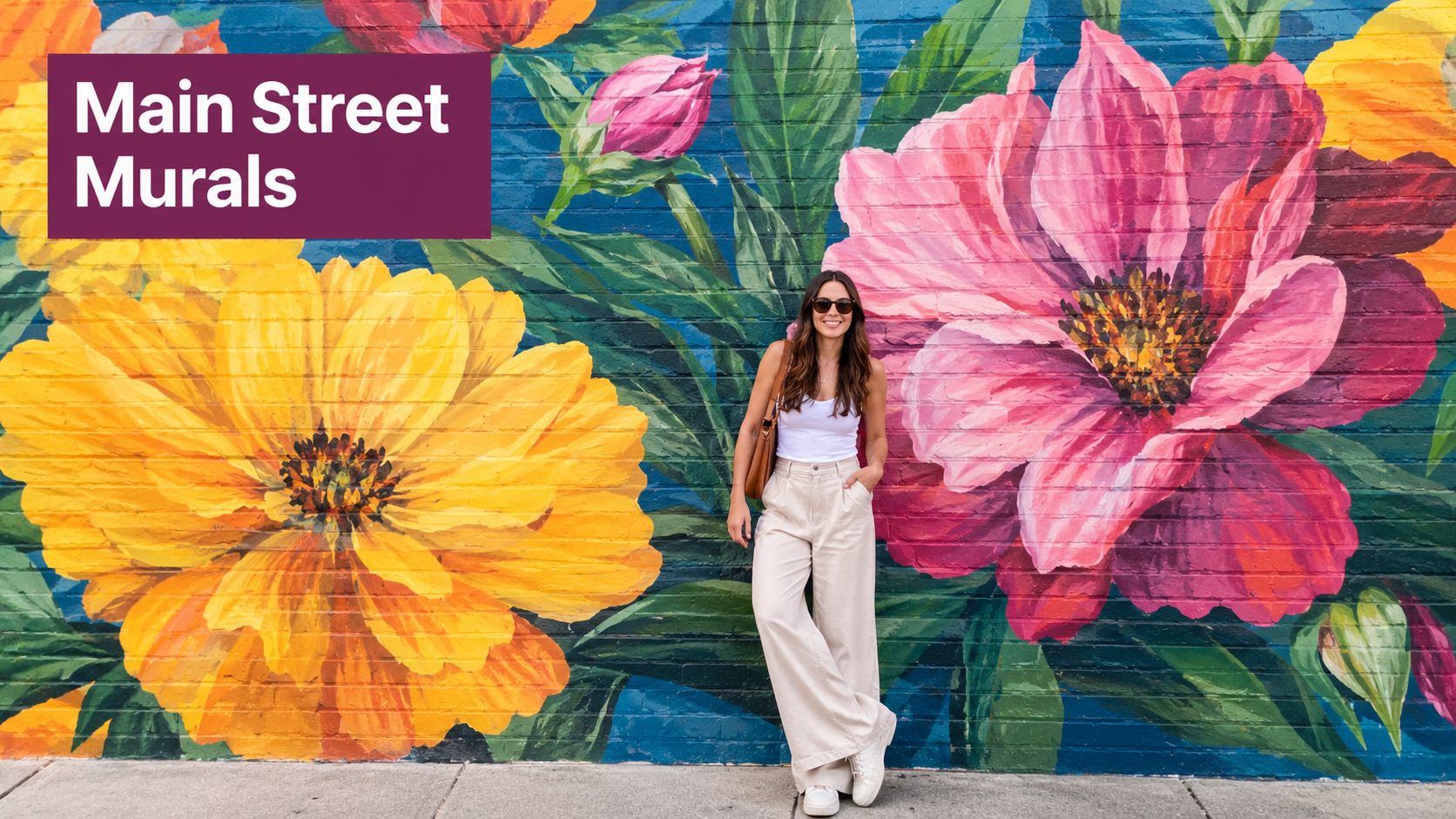
On a practical visit, that matters more than theory. The Ten District is experienced at walking speed. Storefront windows, side walls, benches, and cross streets all compete for attention, and a mural can be the feature that gets someone to keep strolling instead of heading back to the car. For nearby businesses, that can mean an extra stop for coffee or a few more minutes browsing. For visitors, it makes downtown feel inhabited rather than decorative.
Murals also show the clearest local version of interactivity that Jenks can already offer. People pose, point, compare photos, and use the artwork as a meeting spot. Parents line up kids for a quick picture. Teenagers try a few angles before settling on one. Out-of-town guests often treat a painted wall as proof of place. The artwork stays still, but the public activity around it keeps changing.
Urban researchers have long treated that kind of participation as part of public art's value. The Project for Public Spaces argues that successful public spaces work best when they give people reasons to linger, observe, and interact with their surroundings rather than just pass through, as outlined in its placemaking framework at Project for Public Spaces. A mural program fits that logic even without digital features or moving parts.
There is a limit, though. Murals are easy to approach, but they are still shaped by conditions on the street. Summer sun can bounce hard off brick and pavement. Narrow sidewalks can feel crowded during busy event hours. Visitors with strollers or mobility needs may find one block easy and the next less comfortable, depending on curb cuts, shade, and where people have clustered for photos.
Timing changes the experience.
Morning light is usually better for looking closely at color and paint texture. Late afternoon tends to be kinder for photos and for anyone trying to make a longer downtown loop on foot. If you want the murals to be part of a fuller outing, they work well alongside a meal, a drink, or a browse through nearby shops. If you arrive expecting a formal mural trail with built-in digital prompts or structured interpretation, that is a different idea from what is documented on the ground today.
A few practical things stand out for visitors:
Good for short visits: You can see a few walls in a brief walk without treating it like a major outing.
Easy social stop: Murals naturally create photo moments and meeting points.
Watch the conditions: Heat, glare, and event crowds can shape the visit as much as the artwork itself.
Look beyond the obvious walls: Side façades and alley-facing pieces often feel quieter and more local than the first mural you notice from the street.
3. Jenks Public Market Interactive Installations (Seasonal Markets)
On market days, art in Jenks becomes less about a single object and more about the whole scene. Booth layouts, craft tables, handmade displays, buskers, temporary signs, and participatory stations can turn an ordinary shopping trip into a piece of shared street theater.
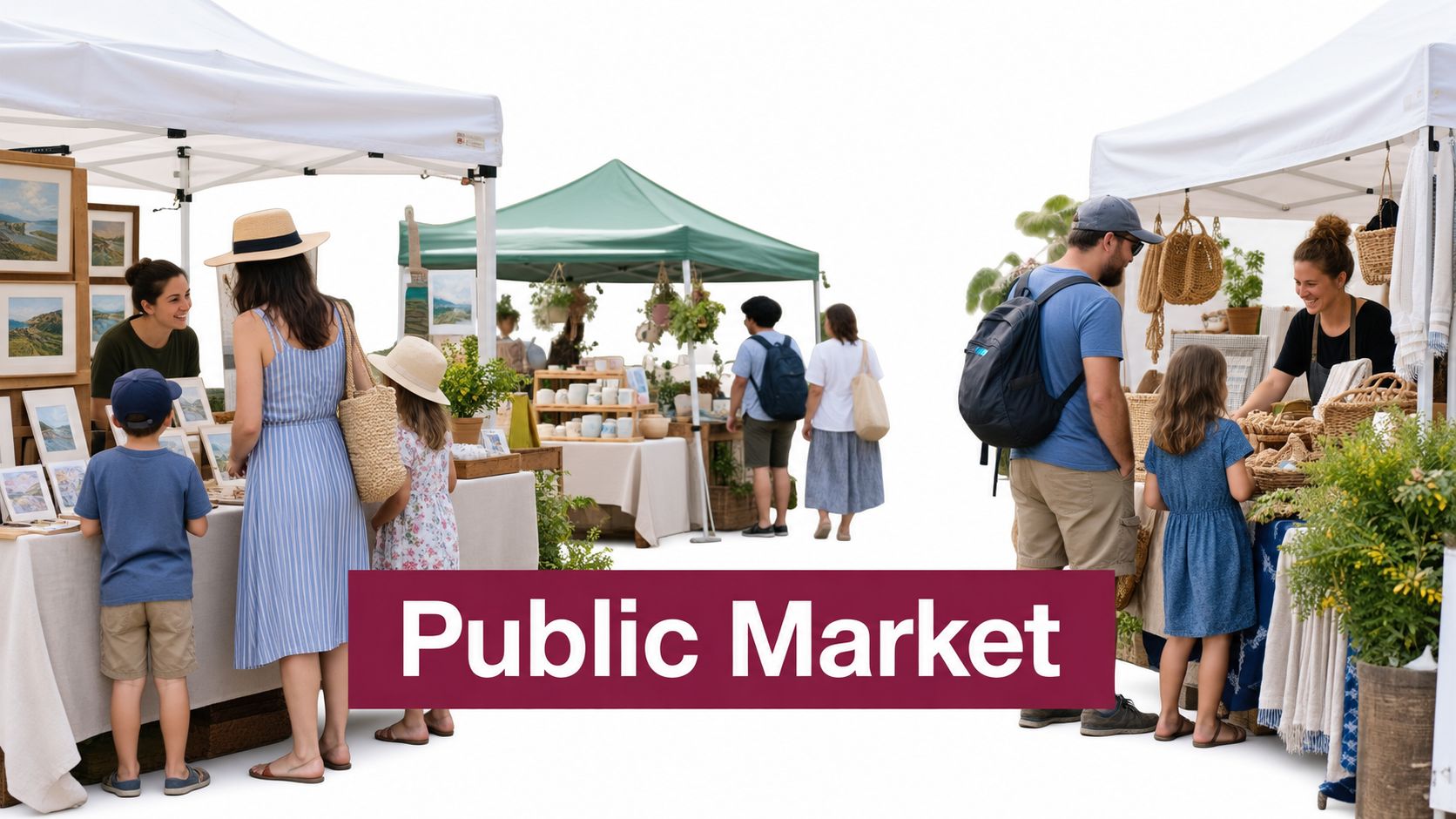
That's one place where downtown Jenks feels especially local. The best market mornings aren't polished in a museum way. They're a little noisy, a little improvised, and usually better when you don't rush them. If you want to know whether something is happening before you head out, check outdoor markets this weekend in Jenks.
When a market becomes an art experience
A market can act like interactive public art installations when visitors help make the atmosphere. Kids add to a craft project. Shoppers pose in front of a seasonal display. Neighbors stop to watch a live demonstration. The point isn't only what gets sold. It's what gets shared in public.
Research comparing static art with AR-enhanced work gives one useful benchmark for why participatory layers matter. One study reported average interaction time rising from 2.9 minutes to 6.8 minutes, with revisit rate moving from 34.2% to 63.5%, according to this comparative study on AR-enhanced public art engagement. We shouldn't pretend every Jenks market booth works that way, but the local lesson is simple. Give people something to do, not just something to look at, and they stay longer.
Markets work best when art is woven into the route instead of tucked off to one side.
Weather matters more here than in any other stop on this list. Wind can change a display. Heat can shorten a visit. Mud, puddles, and crowded curb edges can also affect access for wheelchairs and strollers, so it's smart to treat market art as a flexible outing rather than a fixed one.
4. Bricktown Canal-Style Water Features & Sculptural Elements (Tulsa Metro Model)
This one belongs in the idea file, not the current-attraction file. Jenks has the river, and that already gives us a powerful water backdrop. But when locals talk about what could make public space more playful, touchable, and family-friendly, water features almost always come up.
The appeal is easy to understand. A sculptural fountain, interactive mist element, or small splash-ready art feature changes behavior right away. Kids don't just pass by. They circle it. Adults don't just look. They wait, watch, cool off, and take pictures.
Why water changes the mood
Interactive public art installations often succeed because they reward motion and curiosity. Water does that naturally. It reflects light, adds sound, and creates relief in hot weather without asking visitors to understand a concept first.
One caution, though, is practical rather than artistic. Maintenance can become the whole story if a water feature isn't built for long-term care. Neutral industry guidance notes that interactive installations commonly need service contracts, monitoring, software updates, and hardware replacement, with maintenance often estimated at 5 to 15% of initial project value per year or about 2 to 5% of total project budget annually for larger commissions, according to this maintenance-focused overview of interactive installation costs.
If Jenks ever leans further into this category, visitors would need clear expectations about seasonality, splash zones, slipping hazards, and what counts as art versus what functions as play infrastructure.
What works in summer: Features with shade nearby and places for adults to sit.
What matters year-round: Drainage, non-slip surfaces, and simple sightlines for parents.
What should stay clear: Whether a feature is permanent, temporary, or still only a concept.
For now, think of this as a useful model rather than a current stop on a Jenks art walk.
5. Pop-Up Art Installations & Temporary Artist Residencies
Temporary art can change the feel of a Jenks outing faster than almost anything else. One weekend, a storefront reads as empty. The next, it holds a short-run exhibit, a hands-on workshop, or an artist working in public, and people who might have walked past start slowing down.
That short shelf life matters. Limited-run work gives residents a reason to come downtown now, not eventually, and it gives visitors another excuse to pair an art stop with coffee, dinner, or a walk through nearby shops.
Research on public art engagement points in the same direction, even if Jenks does not yet have a signature temporary-installation program to measure on its own. A report from Americans for the Arts on social impact and public art participation found that interactive and participatory work can prompt conversation, connection, and return visits in ways static viewing sometimes does not, according to Americans for the Arts research on public art and social cohesion. That does not guarantee every pop-up will land with every audience. It does suggest why short-term artist residencies and installations keep showing up in downtown development plans.
Jenks already has the kind of setting where this format could work well, especially in spaces that feel walkable and easy to reach between errands or evening plans. Some of those concept-level possibilities are reflected in The Ten District's Jenks street activation ideas for underused public spaces. They read as ideas, not a list of current attractions, which is an important distinction for anyone planning a real visit.
For visitors, the appeal is practical as much as artistic. Pop-ups often feel less formal than a gallery show. Kids are usually more willing to step in. Adults are more likely to ask questions. If an artist is on site, the exchange can be half the experience.
The tradeoff is reliability.
Hours may be limited. Weather can cut attendance or cancel an outdoor component. A residency inside an older building may look inviting online and still present a tough entry threshold, narrow door clearance, or tight turning space once you arrive. If you're visiting with a wheelchair, stroller, or anyone who needs seating nearby, it helps to confirm those details before you make the trip.
In Jenks, that means treating temporary art as a bonus stop rather than the only reason to come downtown unless an event schedule has been clearly posted. On a good day, a pop-up can become the part people remember most. On a bad-weather day or a lightly staffed one, it may be gone before you get there.
6. Interactive Light & Projection Art (Evening Activations)
Some downtowns come alive in daylight. Others find a second personality after sunset. Jenks has the bones for that kind of nighttime art, especially where brick façades, open walls, bridge structures, and river-adjacent surfaces can catch light well.
The attraction isn't just visual. Evening activations change who comes downtown and how long they stay. Families come after dinner. Couples build a walk around it. Teenagers who might not care about a daytime exhibit suddenly do care when color and motion take over a block.
What works after dark
Projection art, LED pieces, and responsive light builds can feel almost theatrical, but the best versions are still easy to use. You walk up, the piece responds, and you understand it in a second or two. One project highlighted by artist-lab documentation describes a public artwork that's playable by gestures using custom, self-contained electronics, as described by i/o lab's public art projects. That's a good reminder that interaction doesn't have to mean a phone app.
Evening work also raises a local question that daytime murals don't. Can people participate comfortably and safely? Guidance for interactive exhibits emphasizes keyboard access, seizure-safe flashing limits, contrast, captions, tactile alternatives, clear floor space such as 30" × 48", and one-handed operability, according to this accessibility guide for interactive installations. In plain terms, the glow can't be the only feature. People still need to use it.
If you're planning a later outing, things to do late at night in Jenks gives useful nearby context for food and after-dark stops.
Best family timing: Early evening, before younger kids hit the tired wall.
Best practical habit: Park once and walk, so you aren't moving the car between short stops.
Best design trait: Lighting that helps people see each other, not just the artwork.
7. Community-Created Public Art & Participatory Placemaking Initiatives
The public art people remember in a place like Jenks is often the work they had a hand in making.
That can mean a mosaic assembled over several weekends, a utility box painted by local artists, or a panel that grows piece by piece during a market or street event. These projects usually look quieter than a large sculpture or a dramatic light installation. On the sidewalk, though, they often hold attention longer. Someone points out a tile their child placed. A neighbor recognizes a school group's design. Visitors get a clearer sense that downtown was shaped by residents, not only by a formal arts plan.
That distinction matters here. Jenks already has murals, events, and small downtown destinations within an easy walk of each other. Community-made work adds a different kind of interaction. People are not just pressing a button, posing for a photo, or watching a feature respond. They are leaving a visible trace behind.
Why shared authorship matters
Researchers who study public art and placemaking have long argued that participation changes how people relate to a space, especially when the process is public and the result stays in view. In practice, that can be as simple as a workshop table at a festival, a guided paint day, or a temporary wall where residents add one small element at a time.
There is also a practical side. A collaborative piece can make a block feel less formal and more neighborly, which suits Jenks better than importing the scale of a big-city spectacle. It can also be easier to revisit. Families may stop once to contribute and return later to see how the piece aged through sun, rain, and steady foot traffic.
Some artists push participation much further. Rafael Lozano-Hemmer's project archive includes works that record and replay human presence through light and biometric input. That approach is far removed from a painted community panel in downtown Jenks, but it raises a useful question for local planners and arts groups. How much public involvement should happen during the making of the work, and how much should remain part of the finished piece people encounter later?
For the local civic argument, this overview of why public art matters in Jenks offers helpful context.
Community-made art usually looks best after a few seasons, when weather, foot traffic, and memory have had time to settle into it.
A real visit depends on ordinary details. Is there shade nearby if volunteers are painting in late summer? Are tables set at heights kids and wheelchair users can reach? Is there a coffee shop, lunch stop, or bench close enough that people linger after participating instead of leaving at once? Those factors shape whether a placemaking project feels welcoming or dutiful.
It also helps to separate what exists from what is still an idea. Jenks already has the kind of downtown setting where participatory art could fit naturally during community events and seasonal programming. A permanent, highly interactive co-created installation would still require curation, maintenance, and clear rules so the result stays legible rather than cluttered. The appeal is real. The work behind it is, too.
Interactive Public Art Installations, 7-Point Comparison
Project | Implementation complexity | Resource requirements | Expected outcomes | Ideal use cases | Key advantages |
|---|---|---|---|---|---|
Jenks Riverwalk Art Installations & Pedestrian Bridges | Medium–High, structural work and long‑term curation | Moderate–High, fabrication, site work, ongoing maintenance, permits | Increased foot traffic, placemaking, photo moments | Riverfront activation, family outings, seasonal programming | Leverages natural riverfront; year‑round public access; strong gathering spaces |
The Ten District Main Street Mural Program | Low–Medium, wall prep and artist coordination | Low–Medium, artist fees, paint, periodic restoration | Strong visual identity, increased pedestrian activity, social sharing | Facade refresh, low‑cost placemaking, photo backdrops | Cost‑effective; supports local artists; high street‑level impact |
Jenks Public Market Interactive Installations (Seasonal Markets) | Medium, event logistics and temporary installations | Medium, permits, vendors, temporary infrastructure, staffing | Weekend activation, economic uplift for vendors, community engagement | Farmers markets, seasonal events, pop‑up commerce | Activates underused spaces; supports local vendors; family‑friendly |
Bricktown Canal‑Style Water Features & Sculptural Elements (Tulsa model) | High, engineering, water systems, safety compliance | High, capital investment, utilities, ongoing maintenance | Distinct landmark, strong summer draw, repeat visitation | Signature placemaking, large‑scale public works, summer activation | Proven model; strong visual appeal; cooling and family attraction |
Pop‑Up Art Installations & Temporary Artist Residencies | Low–Medium, short‑term curation and site fit‑out | Low, short‑term funding, coordination, minimal build‑out | Media buzz, activates vacant spaces, drives repeat visits | Testing concepts, filling vacant storefronts, emerging artist support | Flexible and low‑cost; creates urgency and discovery |
Interactive Light & Projection Art (Evening Activations) | Medium–High, technical setup and content production | Medium–High, projection/LED equipment, power, tech support | Increased nighttime foot traffic, social media content, extended hours | Nighttime events, seasonal light shows, evening economy boosting | Programmable content; relatively low physical wear; strong night appeal |
Community‑Created Public Art & Participatory Placemaking Initiatives | Medium, workshop facilitation and consensus processes | Low–Medium, materials, facilitation, volunteer coordination | Local ownership, strengthened social ties, grassroots promotion | Community engagement projects, school partnerships, placemaking | Builds resident pride; cost‑effective labor; inclusive participation |
Plan a Better Art Walk in Jenks
The easiest way to enjoy interactive public art installations around Jenks is to think in layers instead of single stops. Start on Main Street with murals and storefront-scale visual art, then work your way toward the river corridor if the weather cooperates. That combination gives you the most balanced version of a local art walk. You get color, people-watching, open views, and room to slow down.
It also helps to separate what's here now from what's still in the realm of district ideas. Murals, market-day creativity, and river-adjacent public space are part of a real Jenks outing today. Evening light pieces, pop-up installations, and water-based concepts may appear in temporary form or in planning conversations, but they shouldn't be treated like permanent attractions unless a current local schedule confirms them.
For that reason, check The Ten District before you go, especially if your plan depends on a market, a temporary installation, or an evening activation. A self-guided walk is usually more enjoyable when you already know whether you're building around an event or using art as a thread between shops, meals, and river views. If your group includes grandparents, young children, or anyone using a wheelchair or stroller, pay close attention to sidewalk conditions, curb cuts, glare, and whether the experience depends on low light or crowded event conditions.
Weather changes the whole outing in Oklahoma. Summer heat shortens daytime walks. Wind can affect temporary displays. Rain can make a river-adjacent stroll feel different in a hurry. That's another reason to use the district's strongest local pages for context, including the downtown Jenks pillar content and the broader The Ten District hub, instead of relying on a vague plan.
If you're organizing a community art event, pop-up, or temporary activation, even simple wayfinding can shape how people use the space. Good silent host event signage ideas can help visitors understand where to gather, how to move through an installation, and what participation is invited.
Most of all, make room to support the people around the art. Buy from a local shop. Stay for a market. Eat downtown. Public art works best when it isn't isolated from local business and local life. In Jenks, that's usually the whole point.
The Ten District gives this kind of outing a real frame. You can use The Ten District to map a walk that connects murals, markets, nearby food, and the river edge without treating art like a separate errand. If you're showing off Jenks to friends or just trying to see our downtown with fresher eyes, it's a good place to start.


Comments