

How to start a boutique store: A Practical Startup Guide
- Jan 9
- 17 min read
Before you even think about fabric swatches or paint colors, you need a rock-solid foundation. Opening a successful boutique is really a four-part process: digging into the local market, carving out your unique niche, writing a business plan that actually works, and getting your funding lined up. This homework ensures your creative dream is built on a smart, profitable strategy.
Crafting Your Boutique's Foundational Business Plan
Long before the fun of stocking shelves and creating gorgeous window displays, there’s the groundwork that separates the boutiques that thrive from those that fizzle out. A well-thought-out business plan isn't just a stuffy document for bankers; it's your personal roadmap. It forces you to get real about every detail, turning a passion project into a business that lasts.
This is where you ask the tough questions. Who are you really selling to? I don't mean a generic "woman aged 25-40." I mean, who is she, right here in The Ten District? Is she a Jenks local searching for a perfect hostess gift, or a visitor from Tulsa wanting a unique shopping experience? Nailing this down is how you create a niche that truly stands out from the crowd.
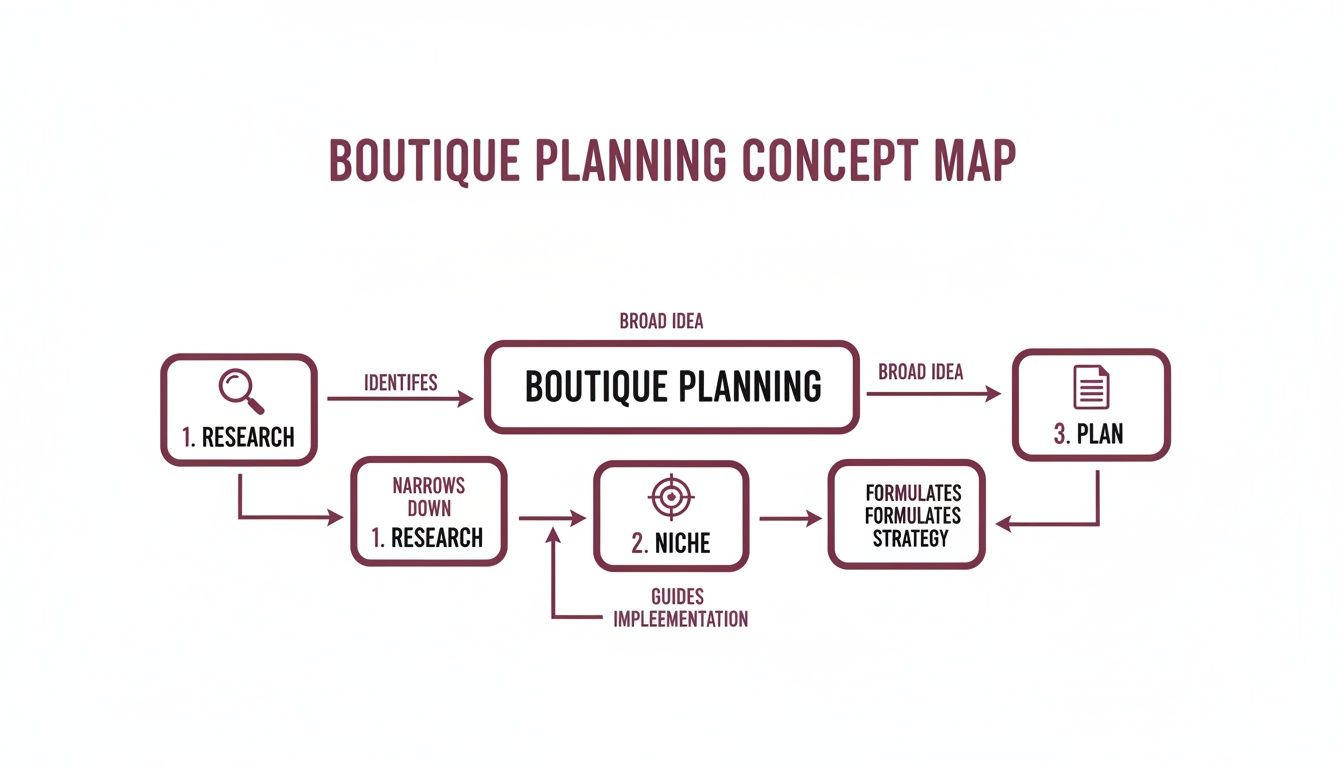
As you can see, a powerful business plan is the result of deep-diving into your market and niche first—it's not just about the big idea.
Analyzing Your Local Competitors
You have to know the lay of the land. Spend a weekend walking around the shopping areas in nearby Broken Arrow and Bixby. What are other boutiques doing right? More importantly, where are the gaps? Maybe every other shop is pushing modern farmhouse decor. That could be a wide-open lane for you to launch a boutique focused on minimalist, artisanal goods that no one else has.
Take notes on what you see:
Product Assortment: What brands are they carrying? What kinds of items dominate their shelves?
Price Points: Is their vibe luxury, mid-range, or budget-friendly?
Customer Experience: How do the employees talk to customers? What’s the energy like inside?
This isn't about copying anyone. It's about finding your own lane and giving shoppers in Jenks a reason to walk through your door because they can't get what you offer anywhere else nearby.
To help you brainstorm, here’s a look at how different boutique concepts could fit into the Jenks market.
Boutique Niche & Target Audience Analysis for Jenks
This table breaks down a few potential boutique ideas and who they might appeal to within The Ten District's unique mix of locals and visitors. Use it to spark ideas for a profitable niche of your own.
Boutique Concept (Niche) | Primary Target Audience | Potential Product Mix | Competitive Advantage |
|---|---|---|---|
Artisanal Home Goods | Jenks homeowners (30-55), interior design enthusiasts, gift shoppers | Locally sourced pottery, hand-poured candles, small-batch textiles, unique kitchenware | Exclusive local partnerships, focus on craftsmanship, offering something different from big-box stores. |
Elevated Athleisure Wear | Active professionals & parents (25-45), high school students, visitors from the nearby outlet mall | High-end leggings, lifestyle sneakers, versatile tops, stylish workout accessories | Curation of sought-after but hard-to-find brands, tapping into the local "on-the-go" lifestyle. |
Curated Children's Boutique | Young families in Jenks and surrounding suburbs, grandparents, baby shower gift buyers | Organic cotton clothing, European toy brands, design-forward nursery decor | Focus on quality and sustainability, offering a personalized shopping experience you can't get online. |
Men's Lifestyle & Grooming | Professional men (30-60), partners shopping for gifts | Quality denim, leather goods, craft grooming products, unique barware & accessories | Fills a significant gap in the local market, creating a dedicated space for male shoppers. |
Thinking through these angles helps you move from a broad idea to a sharp, focused concept that has a real chance to succeed here.
Building Your Financial Projections
Let's talk numbers, because a modern boutique is as much about spreadsheets as it is about style. Recent industry data shows that launching an independent clothing store can require an initial investment of around $157,000, with $50,000 of that going straight to your opening inventory.
But it doesn't stop there. Experts recommend having a cash reserve of about $468,000 to confidently get you through the first 26 months. That buffer covers rent, payroll, marketing, and the inevitable slow seasons. For a shop in a destination spot like The Ten District, these figures prove why locking in a good multi-year lease is so critical.
Your business plan needs realistic, detailed financial projections for at least the first three years. This isn't just pulling numbers out of thin air—it's an educated forecast based on your research into local rent, sales potential, and operating costs.
You need to account for everything, from the initial build-out to monthly costs like utilities and your point-of-sale system. This financial clarity will be your guide for buying inventory, hiring staff, and setting your marketing budget. For a step-by-step guide on this, our Jenks small business startup checklist is the perfect resource to keep you organized.
Finally, an early and critical decision is choosing your business structure. Whether you become an LLC, a sole proprietorship, or something else has huge implications for your personal liability and taxes. Figure this out, get advice if you need it, and document the decision right there in your business plan.
Finding the Perfect Storefront in The Ten District
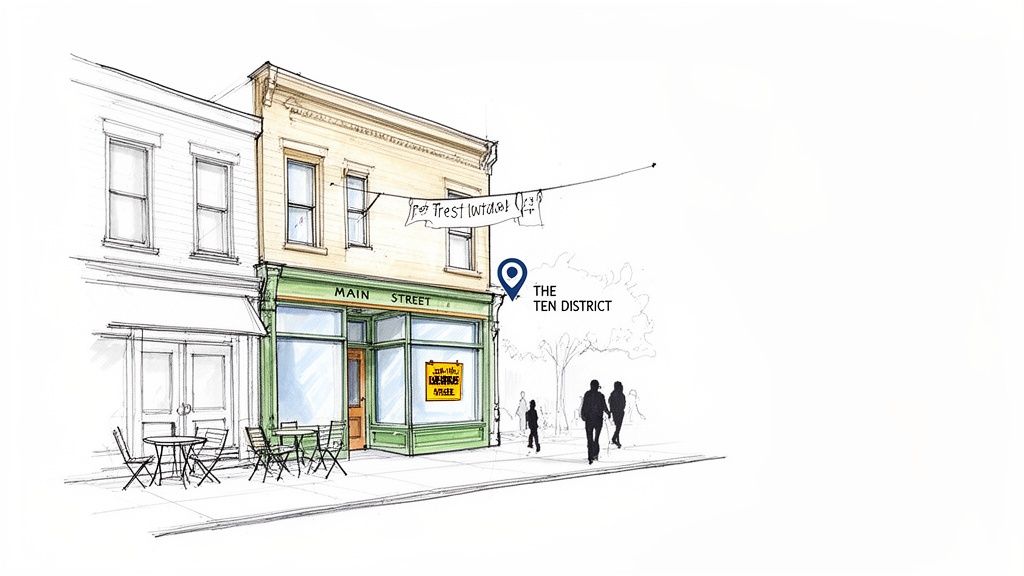
In retail, your physical location is much more than just four walls and a door; it's a massive piece of your brand's story. If you're figuring out how to launch a boutique that really clicks with the community, picking the right spot in The Ten District is a decision that can make or break you. This isn't just about finding an empty space—it's about finding the right space that fits your brand, your budget, and the flow of shoppers.
The vibe on Main Street is worlds away from a charming, quieter side street, and each has its perks. A Main Street location pretty much guarantees high visibility and captures the most foot traffic, especially during peak seasons and big city-wide events. On the other hand, a side-street spot often comes with more friendly rent and can become that beloved "hidden gem" people are excited to discover.
As you're out there scouting for the perfect storefront, never forget how critical local visibility is. Getting a handle on the various Factors That Could Affect Your Local SEO Rankings will have a direct impact on how easily new customers find you, both online and on foot.
Analyzing Foot Traffic and Your Neighbors
Don't make the mistake of just checking out a potential space on a sleepy Tuesday morning. You need to see it in action. Go visit on a Saturday afternoon during a local festival, like the Jenks Herb & Plant Festival or a summer art walk. That’s when you’ll see the area's true potential. Seasonal patterns are a huge deal here, and your sales will absolutely reflect them.
Pay close attention to who your potential neighbors are. Being next to an anchor business—think a popular coffee shop or a busy restaurant—can be a game-changer. These places generate their own constant traffic, and you get to benefit from the spillover of customers browsing while they wait for a table or after they've grabbed their morning latte. It's a symbiotic relationship that can drive a surprising number of impulse buys.
Keep these key location factors in mind:
Proximity to Anchors: How close are you to the businesses that already draw a steady crowd?
Parking and Accessibility: Is it a headache for customers to park and get to your store? Easy access matters.
Seasonal Flow: Does the area come alive during certain events or seasons? You'll want to plan your inventory and staffing around that rhythm.
Demystifying the Commercial Lease
Once you've fallen in love with a spot, the next hurdle is the commercial lease. These documents can be loaded with confusing jargon, but you have to get comfortable with it for the sake of your financial health. A common term you'll run into is a "triple net" (NNN) lease. This just means that on top of your base rent, you’re also on the hook for a piece of the property's taxes, insurance, and maintenance costs.
Those extra costs can add up fast, so it's vital to get a clear estimate from the landlord before you sign anything. And don't ever be afraid to negotiate. Landlords are often willing to talk terms, especially for a promising new business they believe will add value to their property and the district.
Negotiating your lease is one of the most powerful financial moves you'll make. Locking in good terms, like a cap on annual rent increases or a tenant improvement allowance to help with your build-out, can literally save you thousands of dollars over the life of your lease.
Getting into the fine print is non-negotiable. For a deep dive, our guide on how to master negotiating a Jenks commercial lease offers expert tips specifically for our local area.
One last thing: always, always verify the local zoning regulations. You need to be 100% sure your chosen spot is approved for retail use before you sign on that dotted line.
Getting Your Legal and Financial Ducks in a Row
Once you’ve zeroed in on that perfect storefront, it’s time to pivot to the administrative side of things. This part might feel less creative than curating your collection, but getting your legal and financial house in order is absolutely non-negotiable. This is the bedrock of your business—it protects you personally and makes sure you’re operating above board from day one.
The first big decision you’ll make is your business structure. For most new boutique owners, it boils down to two options: a Sole Proprietorship or a Limited Liability Company (LLC). A sole proprietorship is the simplest route, but it merges your personal and business liabilities. That’s a risky game to play.
An LLC, on the other hand, puts a legal wall between you and the business. If the boutique ever runs into financial or legal trouble, your personal assets—like your home or car—are generally safe. Yes, it involves a bit more paperwork and a small filing fee with the Oklahoma Secretary of State, but that peace of mind is worth its weight in gold.
Securing Your Essential Permits and Numbers
With your business structure chosen, it’s time to collect all the necessary permits and ID numbers. Think of these as your business's official credentials. You simply can't open your doors without them.
First up, head to the IRS website and apply for an Employer Identification Number (EIN). It’s free, only takes a few minutes, and this number basically acts as a Social Security number for your business. You'll need it for just about everything, from opening a bank account to hiring your first employee.
Next, you’ll need to register for an Oklahoma Sales Tax Permit with the Oklahoma Tax Commission. This is what legally allows you to collect sales tax from your customers—a crucial part of running any retail shop in the state. Finally, you’ll need to work directly with the City of Jenks.
Don’t get tripped up by local rules. The City of Jenks has its own specific permits, including a Certificate of Occupancy that verifies your space is safe and up to code. Forgetting this can bring your grand opening plans to a screeching halt.
Figuring out the local requirements can feel like navigating a maze. To get a clear, step-by-step picture, our guide explaining Jenks' business license requirements breaks down everything you need to know.
Setting Up Your Financial Systems
Paperwork filed? Great. Now let's talk money. The single most important thing you can do right now is open a dedicated business bank account. Mixing your personal and business funds is a recipe for an accounting disaster and can even pierce the legal veil of your LLC, putting your personal assets at risk.
A separate account keeps your transactions clean and makes tax time infinitely less painful. Just take your new EIN and business formation documents to the bank and get it done.
Finally, you need to choose a Point of Sale (POS) system. A modern POS is so much more than a cash register; it’s the command center for your entire shop.
Look for a system that can handle:
Inventory Management: Track what’s in stock, see what’s flying off the shelves, and know exactly when it’s time to reorder.
Customer Relationship Management (CRM): Collect customer emails and track purchase history. This is how you build a killer loyalty program.
Sales Analytics: Get real data on your busiest hours, most popular items, and other insights that help you make smarter decisions.
Picking the right POS system from the start gives you the data you need to grow your boutique intelligently. It’s a tool that pays for itself over and over in efficiency and insight.
Sourcing Inventory That Sells Itself
Let's be honest: your products are the entire reason you're doing this. They're the heart of your boutique, the story you tell, and the reason someone chooses to walk through your door instead of clicking "add to cart" somewhere else.
Getting your inventory right isn't about chasing every fleeting trend. It’s about curating a collection that feels intentional, special, and impossible to find anywhere else in the Jenks area.
Think of it this way: your shelves are where your business plan comes to life. Every single item should be a nod to that ideal customer you've spent so much time thinking about. If your vision is a haven for young families in The Ten District, filling your space with fragile, high-end decor that screams "don't touch" is a miss. But stocking unique, handcrafted wooden toys from a regional maker? Now you're talking.
The Big Show vs. The Local Maker
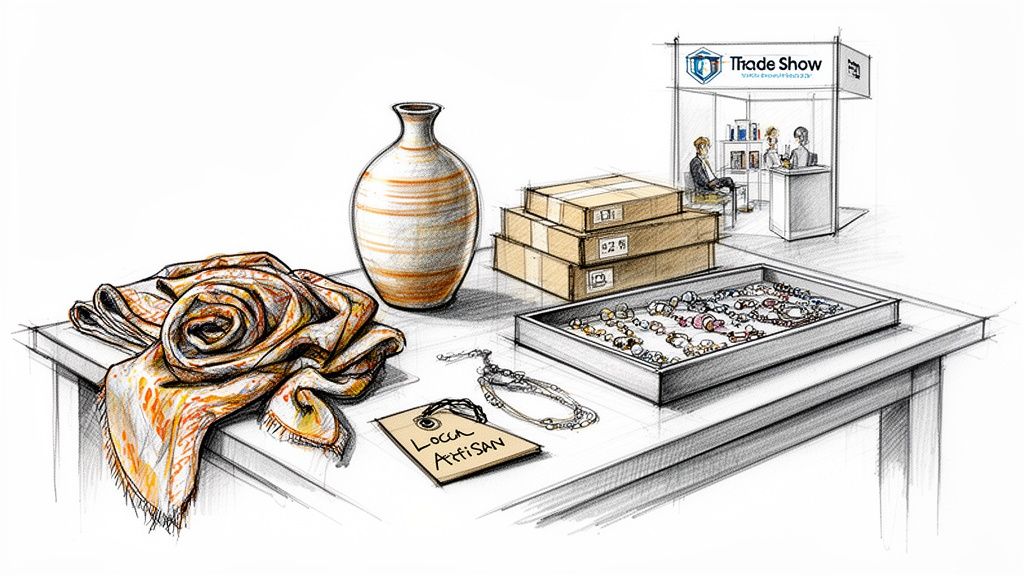
When you're first figuring out how to stock a boutique, you'll quickly find two main paths for sourcing: massive trade shows and independent, local vendors. They both have a crucial role to play in creating a product mix that feels dynamic and fresh.
Trade shows, like the enormous Dallas Market Center, can feel like a sensory overload at first, but they are absolutely invaluable. It's your chance to discover both established and up-and-coming brands, see everything in person, and place orders with dozens of vendors all in one go. You can actually touch the fabrics and see the true colors, which makes all the difference.
On the other hand, sourcing directly from Oklahoma artisans gives you an edge that no big-box store can replicate: exclusivity.
When you partner with a local potter from Bixby or a jeweler from Tulsa, you're offering something truly one-of-a-kind. This isn’t just good business; it builds community and weaves a genuine local flavor into your shop—something people around here really appreciate. Some of the most interesting pieces, even for display, can come from unexpected places, which is why it pays to keep your eyes open everywhere, as our complete guide to Goodwill in Jenks OK points out.
Building Strong Vendor Relationships
Your vendors aren't just suppliers; they're your partners in this venture. Treating them with respect from day one can lead to better terms, a heads-up on new products, and a little bit of grace when you inevitably need it.
Pay on time. This is the golden rule. It sounds simple, but being a reliable client puts you at the top of their list.
Communicate clearly. Whether you’re placing a big order or sorting out a shipping mistake, professional and clear communication solves problems before they start.
Share the love. If a product is flying off your shelves, tell the maker! Send them pictures of how you've styled their items in your store. They love seeing their work out in the wild and might even feature your shop on their own social media.
Don't be shy about negotiating, but always do it with respect. Ask about opening order minimums, flexible payment terms, or even exclusivity for your zip code. The worst they can say is no, but you'd be surprised how often a good conversation leads to a win-win.
Creating a Balanced Product Mix
A great boutique is rarely about just one thing. The real magic happens in the mix—a carefully chosen blend of categories and price points that encourages customers to browse and, ultimately, spend more. You're aiming to build a cohesive collection, not just a random assortment of nice things.
Try to strike a balance between these three key areas:
Core Staples: These are your tried-and-true bestsellers. The perfect white t-shirt, a signature candle scent, a classic leather tote. Customers know they can always count on you for these.
Seasonal Hits: This is the fun stuff that creates excitement and a reason to stop by now. Think holiday decor, the "it" color for spring dresses, or beachy accessories for summer.
Unique "Wow" Pieces: These are the showstoppers. They might be a higher-priced piece from a local artist or a truly unique find from a trade show. These items give your boutique its personality and draw people in off the street.
This balanced approach gives you the stability of consistent sellers while keeping your store feeling fresh and exciting. It’s what turns a one-time visitor into a regular who knows there will always be something new to discover.
Designing an Unforgettable In-Store Experience
Your physical space is so much more than a building—it's the stage where your brand's story comes to life. To really make it in a community-focused area like The Ten District, you have to create a destination, not just a store. It's about moving beyond just selling products and designing a complete, memorable experience that makes people feel something.
This all starts the moment someone walks by your window. Think of your window display as your first handshake, your silent salesperson on Main Street. It needs to do more than just show off your best stuff; it has to tell a story, create a mood, and be compelling enough to literally stop traffic and pull someone inside.
Crafting a Strategic Store Layout
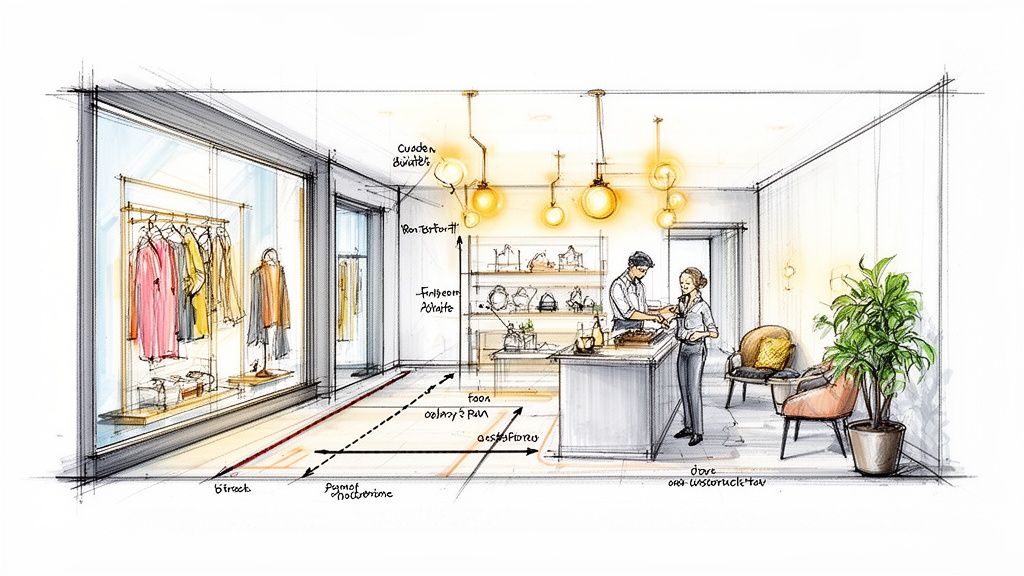
Once they're through the door, the layout of your boutique should feel intuitive and inviting, subtly guiding customers on a journey. Don't just place racks and tables wherever they fit. The goal is to create a natural flow that leads shoppers from one curated section to another, encouraging them to explore deeper.
A circular layout can be fantastic for smaller boutiques. It naturally guides customers around the perimeter and back to the front, making sure they see most of your merchandise without feeling overwhelmed or trapped. And here’s a pro tip: place your most eye-catching, high-margin items to the right of the entrance. Studies consistently show that most shoppers naturally turn right when entering a store.
Decompression Zone: Leave the first five to fifteen feet of your store open and uncluttered. This gives people a moment to transition from the busy street outside and get a real feel for your vibe.
Speed Bumps: Use displays, mannequins, or unique fixtures to create intentional points of interest. These "speed bumps" break up long aisles and encourage shoppers to pause and take a closer look at a specific collection.
The Power Wall: The very first wall a customer sees (usually on the right) is prime real estate. Use it to showcase new arrivals, bestsellers, or a seasonal story that immediately communicates what you're all about.
The Psychology of Atmosphere
How your store looks and feels has a direct impact on how long customers stay and how much they spend. The right lighting, color, and music all work together to create a specific mood that should perfectly match your brand.
For instance, warm, soft lighting creates a cozy, upscale atmosphere that’s perfect for a high-end clothing boutique. In contrast, bright, white light can make a space feel more energetic and modern—ideal for a shop selling activewear or contemporary home goods. Your color palette works the same way. Calming blues and greens can create a serene environment, while bold, vibrant colors inject excitement. For some great visual inspiration, check out these 10 storefront design ideas that work beautifully in a district like ours.
Your boutique is an entry into a resilient and growing part of the retail world. In the U.S., the clothing boutique industry is set to hit a market size of $61.8 billion by 2026. This growth is fueled by consumers seeking unique experiences, with 76% of Americans reporting they feel a stronger connection to brands through in-person shopping. This data underscores why a beautifully designed physical store can build loyalty in ways an online-only shop cannot. You can explore more about these retail industry market trends on IBISWorld.com.
The Human Element of Your Boutique
At the end of the day, the most memorable part of any boutique experience is the people. The best store layout and the most beautiful products can be instantly ruined by poor customer service. This is why hiring the right team is one of the most critical parts of opening your own shop.
Look for employees who are not just friendly but who genuinely embody your brand's spirit. They are your ambassadors, your storytellers, your stylists. Train them to do more than just ring up sales; empower them to build real relationships.
A great boutique employee remembers a customer's name, knows their style, and offers genuine, personal advice. That's the kind of service that transforms a simple shopping trip into a valued experience. It creates the loyal fans who will not only come back again and again but also become your most powerful advocates in the community.
Your Questions Answered: Starting a Boutique in Jenks
Even the most buttoned-up business plan can't account for every question that pops into your head on the road to opening day. We get it. Here are some of the most common questions we hear from aspiring boutique owners, with real-world answers to help you move forward.
How Much Money Do I Really Need to Start a Small Boutique?
This is always the million-dollar question—or, more accurately, the $50,000 to $150,000 question. That's the realistic range for a brick-and-mortar shop, but the final number really hinges on your location, how much of a renovation your space needs, and your initial inventory choices.
A huge slice of that budget is going to be your first product order, which can easily run anywhere from $20,000 to $50,000. Beyond that, think about your security deposit, first month's rent, store build-out (lighting, fixtures, a good coat of paint), your POS system, and the initial marketing push to let everyone know you're coming.
The single best piece of advice any seasoned retailer will give you is this: have a cash reserve. Seriously. Aim to have six to nine months of operating expenses (rent, payroll, utilities) tucked away. This is your safety net, giving you breathing room until sales become consistent.
Your business plan is where you'll nail down a more precise figure. It forces you to put a price tag on everything from business insurance to shopping bags, leaving far less to guesswork.
What Are the First Steps for Sourcing Inventory?
Sourcing inventory is where your vision really starts to come to life, but it can feel like a huge task. The best place to start is right back at your business plan—specifically, the part where you defined your niche and your ideal customer. You absolutely have to know who you're buying for before you even think about placing an order.
Once that customer is clear in your mind, the fun part begins.
Hit the Road for Trade Shows: Events in Dallas or Atlanta are invaluable. You get to feel the fabrics, see the quality firsthand, discover brands you've never heard of, and actually shake hands with your sales reps.
Explore Online Wholesale Marketplaces: Sites like Faire and Abound have been a game-changer for small shops. They make it easy to find independent makers and often have low minimums, which is perfect when you're just starting out.
Look in Your Own Backyard: For a place like The Ten District, this is non-negotiable. Sourcing from local artisans gives you exclusive products that shoppers can't find on Amazon and shows you're invested in the community's success. It’s a win-win.
My advice? Start small and curated. It's better to sell out of a few amazing pieces than be stuck with racks of things that missed the mark.
How Can I Market My New Boutique on a Small Budget?
You don't need a massive ad spend to create a big buzz, especially in a tight-knit community. Your best bet is to focus on smart, grassroots efforts that build real connections.
First things first: get your social media going, especially on a visual platform like Instagram. Start telling your story now. Post behind-the-scenes peeks of the build-out, sneak peeks of products, and talk about your "why." You can build an excited audience before the doors even open.
From there, get out into the community.
Team Up with Your Neighbors: Partner with the coffee shop next door or the salon across the street for a cross-promotion. A joint giveaway can introduce you to hundreds of their loyal customers overnight.
Show Up at Local Events: Set up a pop-up booth at the farmer's market, a local festival, or an art walk. It's the best way to meet people face-to-face and become a familiar, friendly face.
Start That Email List: From day one, have a way to collect email addresses. Offer a small "welcome" discount for signing up. Your email list will become one of your most powerful marketing tools.
What Legal Paperwork Is Essential Before I Open?
Getting the legal stuff sorted out is the least glamorous part of the job, but it’s what makes your business real and protects you down the line. Before you can ring up your first sale, you need a few key things in place.
Start by registering your business name and choosing a legal structure (like an LLC) with the Oklahoma Secretary of State. Next, you’ll need a Federal Employer Identification Number (EIN) from the IRS—it’s free and acts like a Social Security number for your business.
You'll also need to get your Oklahoma Sales Tax Permit so you can legally collect sales tax. Finally, connect directly with the City of Jenks for any local business licenses. This includes getting your Certificate of Occupancy, which is the official thumbs-up that your space is safe for the public.
Ready to bring your vision to life in a community that champions small businesses? At The Ten District, we provide the perfect backdrop for your boutique to flourish. Explore our vibrant district today and find your place in the heart of Jenks.


Comments