

What Is Destination Marketing and How Does It Work?
Think about your favorite places to visit. What makes them special? It’s probably not just the hotels or the tourist traps. It's the feeling you get when you're there—the vibe, the stories, the unique experiences you can't find anywhere else.
That, in a nutshell, is the heart of destination marketing. It’s the art of taking a place—whether it's a city, a specific neighborhood, or an entire region—and turning it into a must-visit spot on a traveler's map. This isn't about printing a few glossy brochures. It’s about building a compelling brand and telling a story that people can connect with on an emotional level.
More Than a Map Dot: Building a True Place Brand
A destination is so much more than a point on a map. Like any great brand, it has a personality. Think about it: Apple sells innovation, and Nike sells determination. A destination sells an experience. This is where destination marketing truly shines—it’s a coordinated effort to shape how people perceive a place.
It's the difference between a dry list of museums and a captivating campaign that brings a city's vibrant arts scene to life. For a place like The Ten District, this means weaving together the stories of our local shops, community events, and one-of-a-kind restaurants to forge an identity that feels both authentic and impossible to resist.
The goal is to answer the one question every traveler has: “Why should I go there?”
Why This Matters Now More Than Ever
In a world overflowing with travel options, a strong destination brand is what sets a place apart. But it’s not just about attracting tourists. When done right, it sparks a fire that fuels the entire community, driving economic growth, attracting new residents, and encouraging business investment.
Great marketing transforms a location from a simple pass-through town into a dynamic hub for commerce and culture. To see how this thinking applies to actively shaping our public spaces, check out our guide on **what is placemaking and how it transforms public spaces creatively**.
The economic numbers don't lie. Travel and tourism are massive global economic drivers. The World Travel & Tourism Council (WTTC) projects that by 2025, the sector’s global economic impact will hit a staggering $11.7 trillion, making up 10.3% of the world's GDP. Even more impressive, it's expected to support 371 million jobs worldwide.
This image really breaks down how all the pieces fit together, from the people involved to the results we're all working toward.
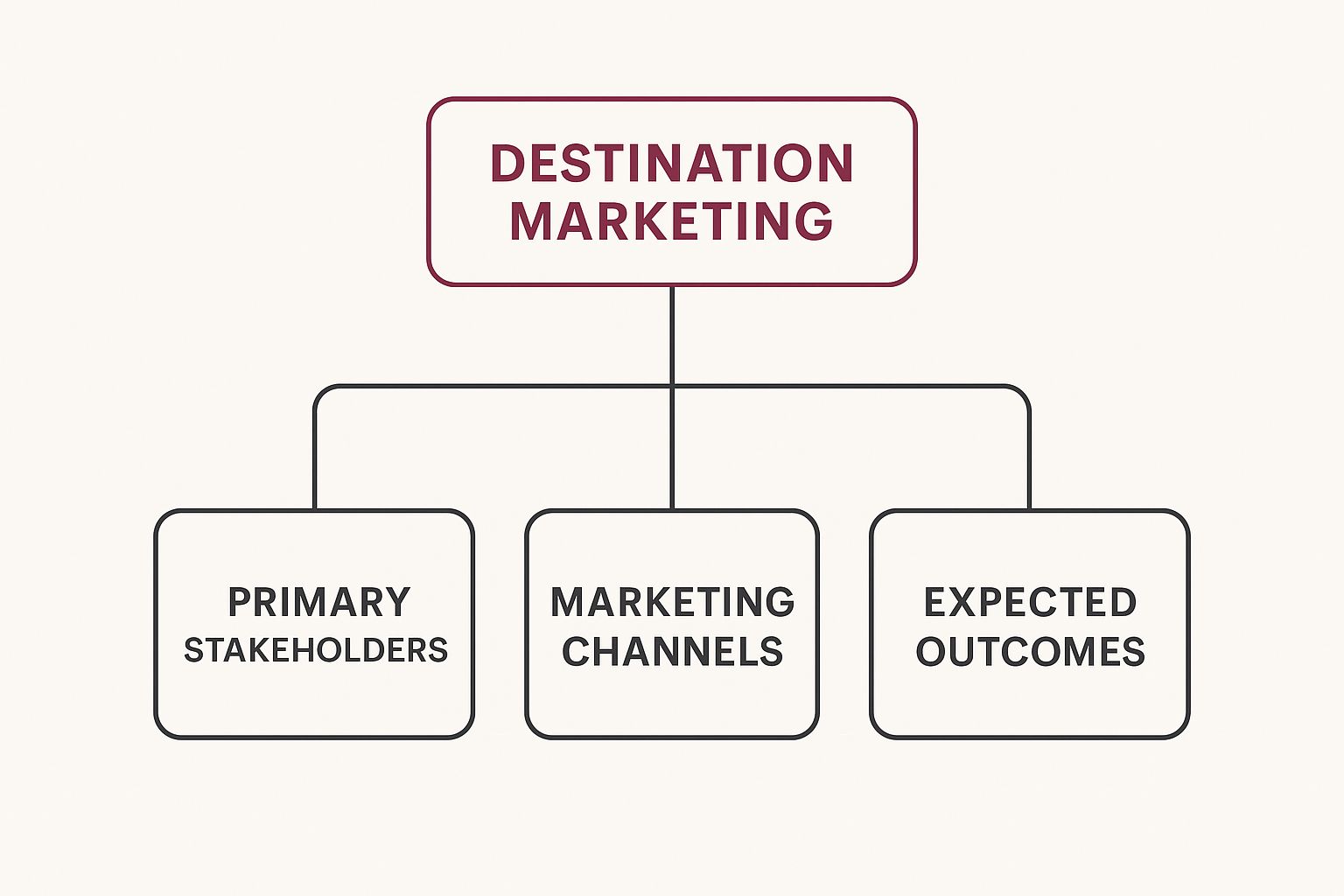
As you can see, success hinges on getting everyone—from shop owners to city leaders—pulling in the same direction.
The Four Pillars Of Destination Marketing
To truly succeed, a destination marketing strategy needs to be built on a solid foundation. These four pillars guide every decision, ensuring the efforts create lasting value for the community.
Pillar | Primary Goal |
|---|---|
Economic Engine | Drive visitor spending at local hotels, restaurants, shops, and attractions to stimulate the economy. |
Community Pride | Foster a strong sense of identity and pride among residents, making them the best brand ambassadors. |
Growth Magnet | Attract new talent, residents, and business investment by showcasing the location as a great place to live and work. |
Year-Round Stability | Manage seasonality by promoting off-season attractions and events, creating a consistent, stable tourism economy. |
By focusing on these pillars, we move beyond just promoting a place and start building a prosperous, sustainable community for everyone.
How Winning Destinations Build Their Strategy
Alright, we’ve covered the "what" and "why." Now for the fun part: let's get into the "how." Moving from theory to action is what separates the places people forget from the ones they can’t stop talking about. Successful destination marketing isn't a happy accident; it’s a deliberate process of building an identity and experience that people actively seek out.
Think of it like building a house. You don't just grab a hammer and start putting up walls. First, you need a solid blueprint—one that details every single component and ensures they all fit together to create something strong and inviting. For a destination, that blueprint is built on four core pillars.
Define A Powerful Brand Identity
Before you can sell a place, you have to know what it really stands for. A strong brand identity is the soul of your destination. It's the unique story, the specific feeling, and the core promise that sets you apart from every other town trying to grab a visitor's attention. This goes so much deeper than just a catchy slogan or a pretty logo.
A destination's brand is built on its most authentic assets. What are your real strengths? Is it the historic architecture, a booming culinary scene, unbeatable family attractions, or a quirky arts community? For a place like The Ten District, that identity is a blend of historic Main Street charm and the energy of modern, independent shops and restaurants.
Key Insight: A powerful brand isn't about trying to be everything to everyone. It's about being something specific and truly unforgettable to the right people. That focus is what makes your marketing message clear, consistent, and impossible to ignore.
Pinpoint The Ideal Target Audience
Once you know who you are, you need to figure out who you want to attract. Here’s a hard truth: trying to market to every type of traveler is a surefire way to waste money and send a muddled message. The destinations that win are surgical in their approach. They focus on specific kinds of people.
Are you trying to reach:
Adventure Seekers? These folks are looking for hiking trails, thrilling activities, and unique physical challenges.
Cultural Enthusiasts? This group gets excited about museums, historic landmarks, local art, and authentic traditions.
Foodie Travelers? Their entire itinerary is built around memorable dining, local breweries, and food festivals.
Families with Young Children? They’re looking for safe, engaging, and accessible fun for all ages.
By narrowing your focus to 2-3 primary audiences, you can tailor every single part of your strategy—from the photos you post to the ads you run—to connect with their specific desires. It's no surprise that a recent report showed 41% of Destination Marketing Organizations (DMOs) are now targeting key audience segments to make the traveler's journey more relevant.
Develop Unique Local Experiences
A strong brand and a clear audience don’t mean much if you don't have a great "product." In destination marketing, the experience is the product. This means curating and promoting the unique activities, attractions, and events that bring your brand identity to life.
This could mean creating a self-guided mural walk that shines a spotlight on local artists, launching a "Restaurant Week" to show off your town's culinary talent, or getting businesses to offer exclusive packages. It's all about creating those "you had to be there" moments. For instance, a focused revitalization effort like the **Jenks Renaissance downtown master plan** is a perfect example of how to directly create new, marketable experiences that get people talking.
Forge Strategic Partnerships
No destination can do it all alone. Think of collaboration as the engine that powers a modern marketing strategy. Strategic partnerships help DMOs amplify their message, share the costs, and create a much smoother visitor experience. In fact, an incredible 92% of U.S. DMOs are actively involved in co-op marketing campaigns.
The most effective partnerships usually involve:
Hotels and Lodging: Working together on "stay and play" packages that bundle a hotel room with tickets to local attractions.
Attractions and Tours: Cross-promoting each other to build compelling itineraries that convince people to stay an extra day.
Local Businesses: Teaming up with shops and restaurants for special discounts, event sponsorships, or shared advertising.
When everyone works together, they create a unified front that makes the entire destination stronger. It really is true: a rising tide lifts all boats.
Understanding The Modern Traveler's Journey
To really get destination marketing right, you have to get inside the head of today's traveler. The entire process—from that first spark of a "we should get away" thought to a finalized booking—has been completely turned on its head. The days of dusty guidebooks and a single visit to a travel agent's office are long gone, replaced by a fast-moving, digital-first world of social feeds, honest reviews, and on-the-spot inspiration.
Think of it this way: the old traveler's journey was a straight road. There were clear signs pointing from Point A to Point B. Today, it’s more like a sprawling, interconnected web. A potential visitor might see a gorgeous photo of a local café on Instagram, watch a TikTok of a street festival, get a tagged recommendation from a friend on Facebook, and then Google "best family-friendly restaurants near me"—all before they even think about landing on an official destination website.
The Rise of Digital Inspiration
In the past, destinations held all the cards, controlling the story through carefully placed ads. Now, the story is being told by thousands of different people online, every single day. The new currency for travel inspiration is content that's visually striking and easy to share.
This shift means that having a strong digital footprint isn't just a nice-to-have anymore; it's the whole ballgame. Authentic, user-generated content (UGC) and partnerships with influencers often pack a bigger punch than traditional advertising because they feel real. People trust them. A traveler wants to see what an experience is really like, not just the polished version from a marketing department.
The numbers don't lie. A 2025 Amadeus survey of 6,000 travelers found that social media is a massive factor in deciding where to go. A huge 33% of travelers now point to social media ads as a main source of travel inspiration, a big leap from just 23% five years ago. This is even more true for younger generations, with 45% of Gen Z travelers depending heavily on these platforms to make their choices.
From Likes and Shares to Real-World Visits
So, how do you convert all that online buzz into actual foot traffic? The secret is being present and genuinely helpful at every single stage of their journey. This demands a smooth, connected experience across all the different places they might find you.
Key Takeaway: The modern traveler's path isn't a straight line. They discover, dream, plan, and book across a dozen different channels. Being visible and valuable on each of those channels is what turns a fleeting interest into a committed visit.
To connect with today's travelers, you have to think about the entire ecosystem. Using strategies like omnichannel messaging for customer engagement is crucial for creating a unified approach. It makes sure your destination's story is consistent and engaging, whether someone stumbles upon you on a blog, a social feed, or a search engine.
This is where a place's unique attractions become your marketing superstars. When a local spot gets recognized, it gives you a brand-new "hook" to hang your marketing on. An award can spark organic buzz and give you fresh content that grabs attention. For example, learning the **Oklahoma Aquarium earned a top global honor** gives The Ten District a powerful story to blast across all its digital channels.
The Stages of The Digital Traveler's Journey
When you understand this journey, you can create content that meets people exactly where they are. While every person's path is a little different, it generally follows these core stages:
Dreaming Stage: This is the very beginning—the initial spark. The person is just browsing, not really planning yet. Your job here is to fire up their imagination with beautiful photos, inspiring videos, and great stories about what makes your destination one-of-a-kind.
Planning Stage: Now things are getting serious. They're actively researching and looking for practical info: things to do, places to stay, how to get around, what to eat. This is where detailed guides, sample itineraries, and easy-to-use websites become essential.
Booking Stage: The decision is made. At this point, you just need to make booking as painless as possible. That means having clear, direct links to hotels, attractions, and event tickets.
Experiencing and Sharing Stage: The visitor has arrived! This is your golden opportunity to turn a happy guest into a passionate advocate. Encourage them to share their moments using a specific hashtag, and then feature their content on your own channels. This creates a powerful, authentic cycle that inspires the next wave of dreamers.
Crafting a Story That Connects and Inspires

Let's be honest: modern travelers are looking for more than just a place to visit. They’re searching for a destination that means something to them. They want to find experiences that reflect their own values, whether it’s a passion for sustainability, a focus on personal wellness, or a deep desire for authentic cultural connection.
This is where the real magic of destination marketing happens. It’s not about listing attractions; it's about telling a story that creates a genuine emotional spark. A simple checklist of amenities just won’t cut it anymore. You have to build a compelling, unified narrative that turns your location into an experience that sticks with the right people long after they've gone home.
Moving Beyond Attractions to Core Values
To craft a story that resonates, you have to dig deeper than surface-level sights. It’s about uncovering the soul of your destination. What are the core values that truly define your community? What makes your place unique?
Think about the powerful themes that can anchor your entire marketing effort. These themes become the pillars of your brand, ensuring every piece of content you create sends a consistent and compelling message.
Some of the most powerful themes today include:
Sustainability and Eco-Consciousness: Showcasing green initiatives, protected natural areas, and local businesses that truly care for the environment.
Wellness and Rejuvenation: Highlighting tranquil settings, spa services, healthy local food, and activities that restore the mind and body.
Cultural Immersion: Focusing on local traditions, historical roots, authentic art, and opportunities for visitors to truly engage with the community’s heritage.
Community and Local Impact: Sharing the stories of local artisans and entrepreneurs, showing how tourism directly supports the people who make your destination special.
For a place like The Ten District, this means telling the stories of our independent shop owners, celebrating our local artists, and spotlighting the community spirit that makes Jenks what it is.
Weaving Your Narrative Across All Channels
Once you've zeroed in on your core values and central theme, the next challenge is to weave that story into every single touchpoint. Consistency is everything. Your narrative has to be crystal clear whether someone stumbles upon an Instagram post, reads a blog, or sees a flyer for a local event.
This demands a unified messaging strategy. Every photo, video, and caption should reinforce your core identity. If your story is about "authentic culinary adventures," your social media better be filled with shots of local chefs, bustling farmers' markets, and unique dishes—not generic stock photos of hotel rooms.
The modern traveler prioritizes experiences rooted in wellness, sustainability, and social impact, reflecting a deeper desire for meaningful connections with people and places. Destinations must now formulate their messaging around identity, purpose, and emotional resonance. This fundamental shift means DMOs are competing not just with other locations, but with lifestyle brands and cultural movements.
This value-driven approach is the heart of what destination marketing is today. It builds a brand that doesn’t just attract a one-time visit but fosters genuine loyalty, turning happy visitors into your most passionate advocates.
Bringing the Story to Life with Events
There’s no better way to make your story tangible than through events. A well-branded event is like a live-action chapter of your narrative, allowing people to experience your core values firsthand. A food festival, for instance, is the perfect real-world expression of a "culinary hotspot" brand.
Beyond just hosting the event, leveraging [creative event branding ideas](https://1021events.com/event-branding-ideas/) can dramatically boost your destination’s appeal and help tell that cohesive story. The right branding makes an event feel like an essential part of the destination’s identity, not just a standalone activity.
Ultimately, a strong story gives people a reason to choose you over countless other options. It elevates your marketing from a simple promotion to an inspiring invitation—an invitation to become part of a story they genuinely care about. That’s how you build connections that last.
Proven Destination Marketing Strategies in Action
Knowing the theory behind destination marketing is a good start, but putting it into practice is what actually turns a location into a place people are buzzing about. A winning game plan isn't about finding one magic bullet; it's about mixing different tactics that all work together, each picked to hit specific goals and speak to different audiences.
It’s time to open the toolkit. Let's look at the real-world marketing strategies that are getting results, from powerful digital methods that grab today's online traveler to the timeless approaches that build credibility and excitement on the ground.
Mastering the Digital Frontier
Let’s be honest: almost every trip today starts with a Google search or a scroll through social media. If you're not visible online, you're invisible. These strategies are all about meeting people exactly where they are—on their phones and laptops.
Search Engine Optimization (SEO): This is the art of showing up first. When someone types "unique urban getaways" or "family-friendly restaurants near me" into a search bar, you want your destination to be at the top of that list. Good SEO means creating genuinely helpful content that answers real questions and making sure your website is structured to rank for the things people are actually looking for.
Content Marketing: This is less about advertising and more about storytelling. Instead of just pushing a sales pitch, you create things people actually want to see—like blog posts, travel guides, or videos that inspire and inform. An article like "The Ten District's Top 5 Hidden Gems" does more than just promote; it builds a genuine connection and positions your destination as the go-to expert.
Influencer Collaborations: People trust people more than they trust ads. Teaming up with travel influencers can put your destination in front of thousands of their loyal followers. The real key is finding the right partners. A micro-influencer who’s obsessed with culinary travel could be the perfect person to showcase your local food scene, giving an authentic review that feels more like a tip from a friend than a paid spot.
Leveraging Traditional Powerhouses
While the digital world is crucial, don't sleep on the old-school strategies. Some of them are still incredibly powerful for building brand awareness and, most importantly, trust.
Key Insight: The smartest marketing plans don’t pick sides between digital and traditional—they weave them together. A local event (traditional) can be supercharged with a targeted social media campaign (digital) to get the word out and maximize its impact.
Public Relations (PR): A positive feature in a respected travel magazine or a popular blog can be worth more than any ad you could buy. PR is all about building relationships with journalists and media outlets to get that kind of positive coverage. That third-party stamp of approval gives your destination a layer of credibility that money can't buy.
Event Marketing: Hosting unique events is one of the best ways to create a real sense of urgency and attract visitors. Think music festivals, art walks, seasonal markets, or food fairs. These events give people a compelling reason to visit right now and create the kind of memorable experiences they'll share with friends and post about online.
The Power of Partnership and Community
No destination marketing organization (DMO) can pull this off alone. Collaboration is the secret sauce that makes every other marketing effort bigger and better. The data backs this up: a staggering 92% of U.S. DMOs are actively involved in co-op marketing campaigns.
These partnerships mean working with local hotels, restaurants, shops, and attractions to create one unified message. A "Stay and Play" package, for example, that bundles a hotel room with tickets to a local attraction makes it a no-brainer for a traveler to book. Taking a look at [top public-private partnership examples](https://www.thetendistrict.com/jenks/top-public-private-partnership-examples-in-2025) shows just how powerful these collaborations can be. When different organizations team up, they don't just achieve their own goals—they drive real economic growth and create a more vibrant community for everyone.
At the end of the day, the best strategy is a dynamic mix of all these approaches, working in sync to tell a single, irresistible story about your destination.
How to Measure Marketing Success and Prove Its Value

A brilliant strategy is only as good as the results it gets. When it comes to destination marketing, you have to look past the easy-to-count stuff like social media likes. The real story is in the Key Performance Indicators (KPIs) that prove you're making a genuine impact and delivering a return on investment (ROI).
Proving your value is all about telling a clear, compelling story backed by solid data. This is how you show everyone—from city officials to local shop owners—that your marketing isn't just another line item on a budget. It's a powerful engine for growth. The goal is simple: connect your campaigns directly to real-world results.
Focusing on Impactful Economic Metrics
The numbers that really turn heads are the ones tied directly to economic activity. These figures show how marketing brings actual dollars into the community. When you’re presenting your results, always lead with the data that highlights the financial wins.
Here are the key economic indicators to keep your eye on:
Visitor Spending: This is the big one. It tracks how much money tourists are actually spending at local hotels, restaurants, and shops.
Hotel Occupancy Rates: A jump in occupancy rates, especially during the slower seasons, is a crystal-clear sign that your marketing is bringing people in for overnight stays.
Tax Revenue Growth: Seeing an increase in tourism-related taxes, like lodging or sales tax, provides undeniable proof that your campaigns are contributing to public funds.
Understanding how tourism fuels financial health is absolutely fundamental. We dive deeper into this connection in our guide on **what is economic development and its key insights**.
Tracking Digital Engagement and Conversion
While the economic data is your headline, your digital metrics tell the backstory of how you're reaching and influencing potential visitors. To really get the full picture, you have to know the **key website metrics to track for growth** and understand how they feed into your bigger goals.
Don't lose sight of these important digital KPIs:
Website Traffic from Target Markets: Are you successfully pulling in visitors from the specific geographic areas you're targeting? Your analytics can tell you exactly where they're coming from.
Conversion Rate on Booking Pages: How many people who land on your site take that crucial next step, like clicking a link to book a hotel room or buy a festival ticket?
Lead Generation: This is all about building an audience for the future. Think newsletter sign-ups or travel guide downloads—every single one is a valuable lead.
Final Takeaway: The most effective way to measure success is by blending hard economic data with sharp digital analytics. This powerful combination proves not only that your destination is drawing more people in, but that your specific marketing strategies are the reason why.
As we've been digging into what destination marketing is all about, a few questions tend to pop up again and again. Nailing these down helps make sense of how this all works in the real world for places like ours.
So, Is This Just Tourism Marketing?
It’s easy to mix up destination marketing and tourism marketing, but they’re not quite the same thing. They’re related, for sure, but there's a key difference in scope.
Think of it this way: tourism marketing is usually laser-focused on selling a specific thing. It’s the ad you see for a hotel deal, a specific tour, or a single attraction. The goal is pretty direct: get you to book that thing.
Destination marketing, on the other hand, pulls the camera back. It’s about selling the entire experience of a place. It’s not just about one hotel room; it’s about the unique vibe, the culture, the story, and the overall feeling you get when you’re here. For The Ten District, the goal isn’t just to bring in tourists for a weekend, but to make this a place where people want to live, where entrepreneurs want to open a business, and where investment feels like a smart move.
Who's Actually in Charge of All This?
You might be wondering who orchestrates this kind of large-scale promotion. That job usually falls to a Destination Marketing Organization (DMO) or a Convention and Visitors Bureau (CVB).
These groups are the central hub for a place’s marketing efforts. They’re often set up as non-profits or quasi-public agencies, and their whole mission is to bring everyone together—from hotels and restaurants to local shops, museums, and event planners—to tell one powerful, unified story about their community.
Can a Smaller Place Really Compete with a Big City?
Absolutely. It might seem like a David vs. Goliath situation, but smaller destinations have a secret weapon. The trick isn't to outspend the big guys, but to get incredibly focused on a unique niche.
A small destination's greatest strength is its ability to offer a specialized, authentic experience that larger cities can't replicate. By owning a specific identity—be it historical charm, outdoor adventure, or a vibrant arts scene—they can attract travelers who are actively seeking that exact experience.
Bigger isn't always better. Smaller places win by leaning into their unique character. They don't have to appeal to the entire travel market—they just need to win over the right people who will truly appreciate what makes them special.
Ready to see how a compelling story can bring a community to life? Explore The Ten District and discover the vibrant heart of Jenks. Visit us at https://www.thetendistrict.com.


Comments