

Video Marketing for Restaurants in Jenks: A Local Playbook
On a Friday night in Jenks, a restaurant line can form before the first plates hit the tables. A hostess points guests toward a back booth, someone checks the wait time, and three phones come out to capture the room, the sizzling dish, or the quick look through the front door. That moment is already video marketing for restaurants, even if nobody on staff planned it.
For restaurants around Main Street and The Ten District, the practical question isn't whether video looks polished. It's whether a diner from Bixby, Glenpool, or south Tulsa can see enough of the actual experience to decide, “That's where we're going tonight.” This local playbook focuses on shared district storytelling, simple production, honest expectations, and the signals that show whether a clip helped fill a table.
Table of Contents
Why Jenks Restaurants Cannot Ignore Video Anymore - What gets ignored
A Jenks-Sized Video Strategy You Can Start This Week - Start with the district - Put people in the frame - Show the process - Finish with the actual plate
Filming on a Phone Without Making Jenks Look Bad - Frame for the destination - Treat sound as part of the meal
Where to Post What Across Reels, TikTok, YouTube, and Facebook - Route the same idea carefully
A Four-Week Content Calendar and Templates That Save You Time - Build the month around four jobs - Copy-and-adapt templates
Getting Found Locally and Promoting Through the Community - Make the district part of distribution
Measuring What Actually Fills Tables in The Ten District - Use a small, honest dashboard - Read the gap, not just the headline
Why Jenks Restaurants Cannot Ignore Video Anymore
Restaurant discovery in Jenks has moved from the highway sign and the printed dining guide to a short clip on a phone. A family driving toward downtown may scroll through Reels or TikTok before deciding where to park, and a day-tripper may look for food, atmosphere, and something nearby to do before reaching the Arkansas River.
The shift is visible in the industry data. Short-form video adoption among restaurants rose from 26% in 2023 to 48% in 2024, nearly doubling in a year, and restaurants using short-form strategies experienced 2–3x faster audience growth than those relying mainly on static posts, according to restaurant short-form video data. Those figures don't mean every Jenks restaurant needs a full production crew. They do show that video has become a regular discovery channel rather than an experiment.
A menu item shown on video can move someone from curiosity to a visit. One restaurant-focused source reports that 55% of diners are more likely to visit after seeing a menu item video, while another summary reports that 74% choose where to eat based on social media (restaurant video marketing statistics). The local lesson is straightforward. Show the dish, but show the sidewalk, the room, the patio, the people, and the way the meal fits into an evening in Jenks.
Local rule: A clip should make someone want the food and understand the visit.
What gets ignored
Studio-style ads often miss the reason people come downtown. Stock voiceovers, generic “food porn,” and glossy footage with no Jenks context could belong to any restaurant in the Tulsa metro. A beautiful close-up that hides the room may earn attention while giving a first-time guest no idea what to expect.
Expectation matters more than polish. A 2025 study of YouTube Shorts and restaurant selection found that 59.4% of respondents visited restaurants after watching Shorts, but many also reported dissatisfaction when the actual visit didn't match the video presentation (the study on Shorts and restaurant selection). If the video suggests a quiet patio, generous portion, or quick service, the restaurant needs to deliver what viewers saw.
That's why our approach in The Ten District treats video as a shared habit. Restaurants can film their own dishes while also showing the neighboring coffee shop, bookstore, street activity, public events, and family-friendly stops that make downtown Jenks worth the drive. For the mechanics of turning regular posting into a sustainable channel, this guide to Instagram growth for restaurants is a useful companion. The creative work still has to sound and look like our part of Oklahoma.
A Jenks-Sized Video Strategy You Can Start This Week
A useful restaurant video plan for The Ten District has four connected parts. Each one answers a different question a diner has before visiting: Where is this? Who works here? What happens behind the scenes? What will I receive?
Start with the district
Film the restaurant as part of downtown Jenks, not as an isolated storefront. A clip can begin at the Main Street sidewalk, show the neighboring coffee stop, pass the bookstore across the street, and end with a plate on the table. Shared filming days with nearby businesses give every account more local material and help viewers understand the district as a place to spend time.
The Ten District's social media guidance for Jenks businesses supports this broader community approach. A restaurant video can serve diners, nearby retailers, event organizers, and families planning an afternoon.
Put people in the frame
A logo can't explain why a place feels welcoming. A regular, line cook, server, or dishwasher can. Ask permission, keep the conversation natural, and let employees describe what they like about a dish or a shift.
One staff member might point out the order regulars request without looking at the menu. Another might explain why morning prep starts early. Those small details build recognition across repeat visits.
Show the process
Natural light and real movement are enough for strong behind-the-scenes footage. Capture the smoker being loaded, a bartender batching a drink, dough being shaped, or the pass during a calm service window. Don't stage a frantic rush if the kitchen isn't operating that way.
Finish with the actual plate
Film the dish tableside or on the patio, with enough surrounding detail to show scale and setting. A close-up can make food appealing, but a wider shot tells viewers whether they're looking at a family meal, a date-night stop, or a casual lunch near Main Street.
Five stories a manager can assign this week:
Walk to the kitchen: A staff member narrates the path from the front door to the pass, naming the room and the dish.
First-date menu: Show a realistic order for two people, including the pace and atmosphere the restaurant can consistently provide.
Dish regulars order: Use a carousel with the dish, the table setting, and a short explanation from the person who serves it most often.
Staff lunch: Capture what employees choose when they're eating on the clock, without turning it into a staged endorsement.
What's new on Main: Combine short clips from participating Ten District businesses into a district roundup.
Keep the standard simple. Show the room, the service pace, and the price. The peer-reviewed research in the IOSR video marketing study found that respondents preferred specialized videos shorter than two minutes, and that video content, duration, color, transitions, animation, and text influenced purchasing behavior. Short doesn't mean vague. It means every second needs a job.
Filming on a Phone Without Making Jenks Look Bad
A phone can handle most restaurant footage if the person filming respects the room. Warm dining lights, a loud HVAC system, reflective glass, and a crowded bar will expose weak habits faster than an expensive camera will fix them.
Use a recent phone, a small clip-on lapel microphone, a phone tripod that can sit on a bar, and one affordable LED panel for prep areas or the pass. That kit is enough for staff interviews, dish reveals, prep sequences, and short room tours.
Frame for the destination
Shoot horizontally when the finished video is intended for YouTube or Facebook. Shoot vertically for Reels, TikTok, and YouTube Shorts. Decide before filming so you don't crop a plate, face, or storefront into an awkward shape later.
Keep the camera at eye level or slightly above the food. Leave enough space to show the table, nearby guests when permitted, and the character of the Ten District. Never tilt toward ceiling tiles, fluorescent fixtures, or a cluttered storage area unless the point is to show an honest behind-the-scenes moment.
The two-minute rule keeps staff from losing patience. If a setup takes longer than two minutes, simplify the shot. Move the tripod closer, use the available window light, or record a voiceover after service instead of stopping the line cook during prep.
Treat sound as part of the meal
Place the microphone within arm's length of the speaker. Record a separate room-tone track by capturing the natural dining-room hum for a short stretch, then lay it underneath a voiceover during editing. Avoid filming interviews during the Saturday rush, when overlapping conversations can bury every useful sentence.
A few problems ruin otherwise good Jenks footage:
Shaky stove footage: Use the tripod or brace both elbows instead of waving a phone over hot equipment.
Extreme close-ups: Include context so viewers understand the room and the district around the dish.
Overdone transitions: A clean cut usually feels more trustworthy than a spinning effect.
Artificial color: Don't make a real burger, cocktail, or dining room look unlike itself.
Unclear permission: Ask before filming guests, especially children and anyone seated at a private table.
A manager can hand this shot list to a line cook on a slow Tuesday: pass, plate, patio, regular, and room tone. Five usable clips from one quiet window are more valuable than a complicated shoot that never gets repeated.
Where to Post What Across Reels, TikTok, YouTube, and Facebook
Each platform has a different local job. Reels is usually the cleanest home for food, staff, and neighborhood context. TikTok gives a restaurant room to test looser ideas, including kitchen humor and quick menu reveals. YouTube Shorts can keep behind-the-scenes stories discoverable, while longer YouTube videos suit sit-down chef conversations or fuller restaurant profiles.
Facebook still matters for community circulation. Jenks families, local groups, event attendees, and older diners may respond more reliably to a clear event post than to a fast trend. Use a full location, practical details, and a direct invitation instead of assuming every viewer knows where the restaurant sits.
Clip Type | Best Primary Platform | Best Secondary | Why |
|---|---|---|---|
Dish reveal | Instagram Reels | TikTok | Reels suits curated food visuals, while TikTok can test alternate openings |
Kitchen blooper | TikTok | Instagram Reels | A looser tone fits quick, personality-led clips |
Chef story | YouTube Shorts | Shorts supports discovery, while Facebook can reach local community audiences | |
Event announcement | Instagram Reels | Facebook supports event circulation, and Reels adds visual awareness | |
District roundup | Instagram Reels | YouTube Shorts | Both can show several nearby stops in one vertical story |
Route the same idea carefully
Don't export a TikTok with a visible watermark and paste it everywhere. Keep a clean master file, adjust the caption for each platform, and change the opening when the audience needs a different reason to stop.
For restaurants without an editor, ShortGenius AI video ad maker can help turn existing material into short advertising variations. Use automation for resizing, organizing, or testing versions, not for inventing claims about food, service, or atmosphere.
For event reminders and RSVP-focused posts, pair video with Facebook event promotion for Jenks businesses. A clip that shows the setting can create interest, but the Facebook post should answer the practical questions a local family will have before leaving home.
A Four-Week Content Calendar and Templates That Save You Time
A restaurant doesn't need to behave like a full-time media company. A steady rhythm of three to four short-form posts plus one long-form piece every two weeks gives a small Jenks team enough repetition to learn without turning every shift into a production day.
Build the month around four jobs
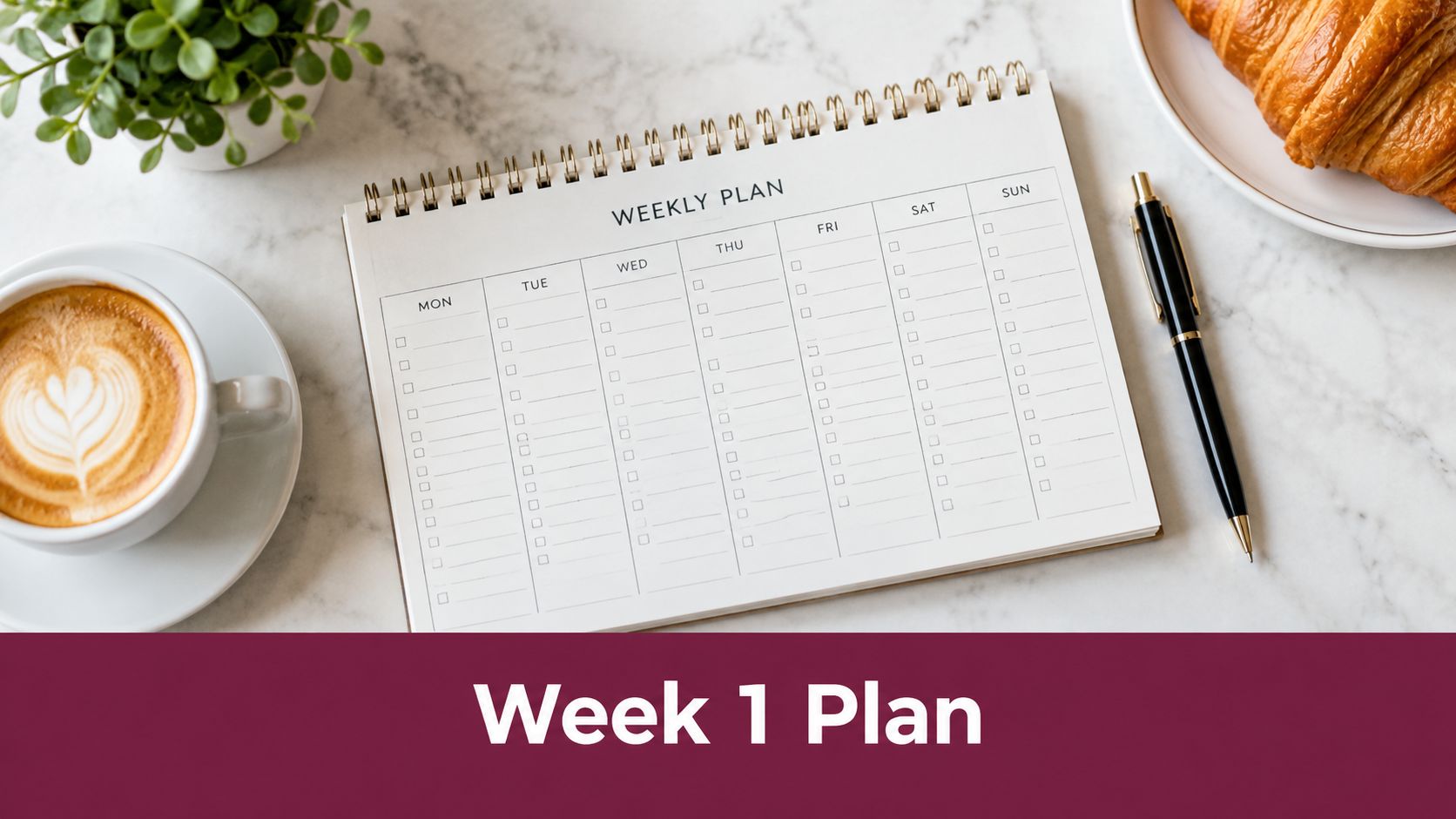
Week 1 is foundation. Post a menu introduction, a staff introduction, and a simple walkthrough from the entrance to the dining room or patio. The long-form piece can be a fuller restaurant profile, chef conversation, or preparation story.
Week 2 is social proof. With permission, record a guest reaction, feature a regular's order, and share a real review in a way that preserves its meaning. Don't manufacture excitement. A calm, specific comment about a dish is more credible than a dramatic reaction staged for the camera.
Week 3 is testing. Make one TikTok-first clip using a trend, quick reveal, or kitchen blooper. Keep the experiment separate from the restaurant's core identity, and review whether the viewers showed local intent rather than chasing reach alone.
Week 4 is a signature moment. Film a Ten District collaboration, seasonal menu change, public event, or shared neighborhood roundup. Check the downtown Jenks events calendar before choosing the subject so the video supports something people can attend.
For teams that like a ready-made planning grid, this free YouTube content calendar template can be adapted for short-form posts, staff availability, and event timing.
Copy-and-adapt templates
Menu reveal, 15 seconds
“Tonight in downtown Jenks, we're showing [dish]. Start with [visual detail], then watch [preparation moment]. It's served at [restaurant setting]. Come by [day or occasion] and see the portion and presentation for yourself.”
Staff feature
“Meet [name], part of the [restaurant] team in The Ten District. Their regular pick is [dish] because [specific reason]. If you see [name] on your next visit, ask about it.”
Event teaser
“On [day], [restaurant] is joining [event or district activity] near Main Street in Jenks. Expect [accurate detail]. Save the post, check the practical information, and bring [appropriate audience detail].”
Recap caption
“Last night in The Ten District, guests came out for [event or meal]. We served [dish or experience], and the room felt [accurate description]. Thanks to everyone who visited from Jenks and the Tulsa metro.”
The template is only a starting point. Replace every bracket with something the camera can prove.
Getting Found Locally and Promoting Through the Community
A restaurant video should name its place plainly. Use “Jenks,” “The Ten District,” “Main Street,” and the actual dish in the spoken audio, on-screen text, and caption when those details fit naturally. A viewer may recognize the food before recognizing the restaurant, so location language gives the clip a better chance of reaching someone searching for a nearby meal.
Write captions for people, not an invisible algorithm. “Smoked chicken near Main Street in Jenks” tells a local more than “You need this.” Add nearby context when it helps, such as a walk from another downtown stop, a family outing near the aquarium corridor, or a meal before a public event.
Make the district part of distribution
A shared filming day can produce a restaurant walkthrough, a coffee stop, a retail visit, and a short “what's new on Main” roundup. Tag participating businesses accurately, ask each partner to share the finished clip, and keep the offer clear if there's a promotion.
Community partnerships work best when they serve a real audience:
Jenks Chamber connections: Coordinate a staff story, business spotlight, or district visit around an existing community touchpoint.
Local schools: Share approved family-night information or staff features, following school permission and privacy rules.
Aquarium corridor traffic: Show how a meal fits into a broader Jenks outing without suggesting an official relationship that doesn't exist.
Cross-river diners: Speak directly to visitors coming from the Tulsa side, Bixby, Glenpool, and nearby communities, while keeping directions and parking information accurate.
Repurpose each finished clip into a Google Business Profile post, a menu-page embed, an email asset, and a local Facebook group post where promotion is allowed. The local SEO guidance for Jenks restaurants can help connect those pieces without creating a separate, disconnected campaign.
The community hooks that usually beat generic trending audio are simple: a new dish on Main Street, a staff member's favorite order, a behind-the-scenes look before an event, a collaboration with a nearby shop, a family-friendly meal plan, and an honest answer about what the visit feels like.
Measuring What Actually Fills Tables in The Ten District
Views are useful only when they lead to a better decision. A clip can travel widely and still fail the restaurant if viewers don't request directions, open the menu, reserve a table, or leave satisfied after the visit.
The 2025 Shorts research makes that tradeoff especially clear. It reports that 59.4% of respondents visited restaurants after watching Shorts, while also identifying dissatisfaction when the experience didn't match the video (the research on expectation mismatch). Track reach, but protect the business by measuring fidelity and follow-through.
Use a small, honest dashboard
Add UTM-tagged reservation links to social profiles and event posts. Use a short promotion code only when staff can record it without slowing service. Compare those signals with Google Business Profile activity, social analytics, and front-of-house notes.
Review each clip within 48 hours of posting, then check booking and visit signals over the longer window your restaurant normally uses. A viral Reel with no direction requests deserves less credit than a modest local clip that brings in identifiable diners.
Metric | Why It Matters | How to Track | Weight |
|---|---|---|---|
Reservation clicks | Shows direct visit intent | UTM-tagged reservation links | High |
Direction requests | Connects discovery with a local trip | Google Business Profile and platform insights | High |
Menu or profile taps | Indicates deeper consideration | Social analytics and website analytics | Medium |
Promo-code use | Gives staff a simple attribution signal | Record codes at checkout | Medium |
Post-visit satisfaction | Tests whether the video matched reality | Ask diners how they found the restaurant | High |
Repeat-visit mentions | Shows whether the content supports trust | Front-of-house notes and customer feedback | High |
Views and reach | Measures distribution | Native platform analytics | Low by itself |
Read the gap, not just the headline
Saves without visits may mean the dish looked useful but wasn't convenient that day. A high completion rate without menu taps may mean the story entertained people without giving them a reason to come. A strong click rate followed by negative feedback points to an expectation problem, not a creative victory.
Use the Jenks foot-traffic analysis resource alongside restaurant-level records to understand how video fits into broader downtown movement. Then score every clip on four questions: Did it reach nearby diners? Did viewers show intent? Did visits match the promise? Did guests report a satisfying experience?
A winning video in The Ten District isn't the prettiest one. It's the one that brings the right people to the right place and shows them what they'll find when they walk through the door.
The Ten District connects Jenks dining, local shops, public events, and Main Street activity in one walkable downtown setting, giving restaurants a shared place to film and promote real experiences. Plan your next meal or filming stop with The Ten District, and see what's happening downtown before you arrive.


Comments