

How to Plan a Day Trip The Ultimate Guide for Any Adventure
A great day trip hinges on three things: figuring out your goal and budget, choosing the right destination and time, and sketching out a loose, flexible plan. Honestly, the real secret is knowing why you're going before you decide where. That simple question will steer every other decision you make.
Defining Your Perfect Day Trip Before You Go
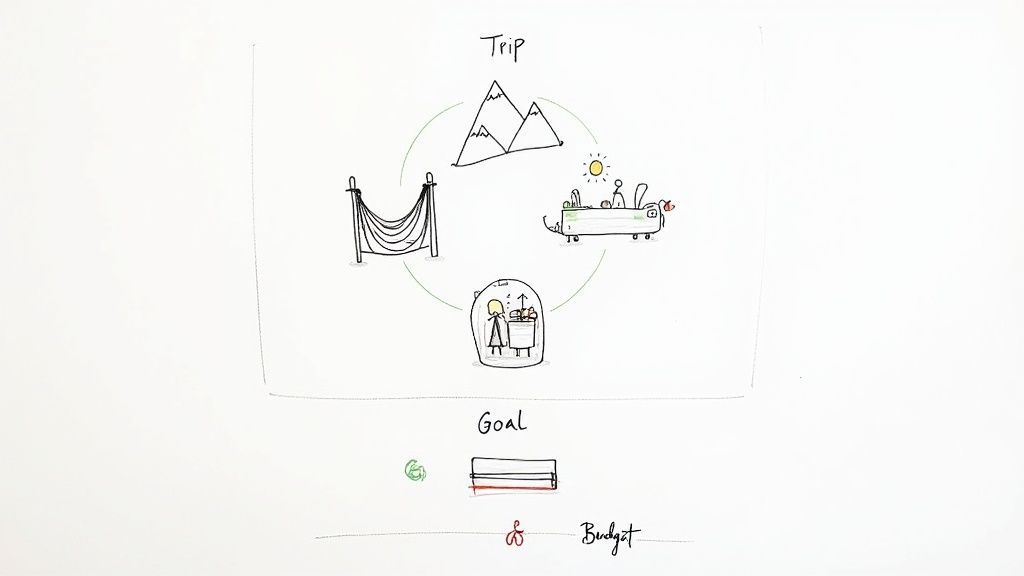
Before you even glance at a map, you have to define the "why" behind your little getaway. A successful day trip isn't just about the place; it's about the experience you want to have. Taking just a few minutes to get clear on your intentions can be the difference between a relaxing day and a frantic mess.
Are you looking for an adventure, a bit of relaxation, or something else entirely? A clear goal is your compass. For instance, a goal like "family fun" might point you toward exploring Jenks' top activities and attractions, while a "foodie tour" would send you to a totally different corner of The Ten District.
Aligning Goals with Your Trip's Vibe
Think about the feeling you want to have when the day is done. Energized? Relaxed? Inspired? Matching your destination to that feeling is everything.
For Adventure Seekers: Start looking for state parks with good hiking trails, kayak rentals on the Arkansas River, or other unique outdoor challenges in the area.
For Relaxation Enthusiasts: Think about a quiet afternoon at a botanical garden, a slow stroll through a historic neighborhood, or finding that perfect scenic spot for a picnic.
For Cultural Explorers: Your focus should be on museums, art galleries, local theaters, or historic landmarks that have a story to tell.
For Food Lovers: Research spots known for their unique cafes, farmers' markets, or a specific type of cuisine you've been dying to try.
Setting a Realistic Day Trip Budget
Once you know your goal, the budget falls into place much more easily. A classic mistake is only planning for the big-ticket items like fuel or event tickets. A real-world budget has to include everything from your morning coffee to that souvenir you didn't know you needed.
We're seeing a big shift in travel habits lately. People are opting for more frequent, shorter, and budget-friendly trips. A recent Deloitte report found that while 53% of Americans are planning leisure travel, they’re being much more careful with their spending. This just goes to show how popular well-planned, affordable day trips are becoming.
A good budget isn’t about being restrictive; it's about giving yourself freedom. When you know your financial guardrails, you can spend confidently on the things that actually matter to your trip's goal, whether that’s a fantastic meal or a special keepsake.
I find it easiest to break the budget down into four simple buckets:
Travel: Gas, tolls, or public transport fares.
Food & Drink: All your meals, snacks, and drinks for the day.
Activities: Tickets, entry fees, and any rentals.
Miscellaneous: A little buffer for parking, souvenirs, or those fun, spontaneous purchases.
Nailing down these foundational pieces first gives you a solid framework. It makes every other part of planning your day trip smoother and way more enjoyable.
Finding the Right Destination and Time to Visit
Alright, you’ve got your mission and your budget locked in. Now for the fun part: figuring out where to go and when. This is way more than just dropping a pin on a map; it's about making sure the destination actually delivers the experience you’re craving.
Start by brainstorming spots that fit the theme you already decided on.
If you’re planning a foodie tour, you’ll be looking for towns with a great farmers' market or a main street packed with unique cafes. For a family adventure, you might research state parks known for easy, scenic trails or communities with hands-on museums. The whole point is to match the location to your trip’s purpose. For some solid ideas on how to structure a nature-focused trip, this detailed Everglades National Park day trip guide has some great insights you can apply anywhere.
Gauging Travel Time and Traffic
This is a step people constantly overlook, and it can make or break your day. You have to calculate a realistic travel time. A place that’s two hours away on a quiet Tuesday morning could easily stretch to three hours in Friday afternoon traffic. As a general rule of thumb, try to keep your one-way drive under three hours. Any longer, and you risk burnout before you even get there.
Use a map app to check the drive time for the exact day and time you plan to leave. It’s a simple check that can save you from spending more time staring at brake lights than enjoying your destination. Remember, the goal is a day trip, not a day spent in transit.
Strategic Timing Is Everything
Picking when to go is just as critical as choosing where. Your timing impacts everything from crowd levels to whether your must-see shop is even open. Before you lock in a date, do a little digging.
The best-laid plans can fall apart if your chosen destination isn't ready for you. A quick check of opening hours, event schedules, and weather patterns prevents disappointment and ensures you arrive when the destination is at its best.
Run through this quick checklist before you commit:
Check Seasonal Hours: Lots of places, especially outdoor attractions, have different operating hours in the spring and fall. Don’t get caught showing up to a closed gate.
Consult Local Calendars: Pop over to the town’s official website. A local festival could be a fantastic surprise, or it could create crowds and parking nightmares you’d rather avoid.
Consider a Weekday Trip: If your schedule is flexible, visiting on a weekday almost always guarantees fewer people and a more laid-back vibe.
Look at the Weather: A quick forecast check is a no-brainer, but think about seasonal patterns, too. For example, our guide to Jenks, Oklahoma weather shows just how much conditions can shift throughout the year.
Putting a little thought into your destination and timing is what sets the stage for a killer day trip instead of a frustrating one.
Building a Flexible Day Trip Itinerary
Let’s be honest: the best day trip itinerary is more of a roadmap than a rigid set of instructions. Think of it as a loose framework for your day, leaving plenty of room for those spontaneous discoveries that always end up being the best memories. The real art is in crafting a balanced plan—one where you hit your must-do spots without over-scheduling yourself into exhaustion.
A simple but brilliant strategy is to group your activities by location. It sounds obvious, but you'd be surprised how many people zigzag across town, wasting precious time in the car. If you're exploring The Ten District, for example, you wouldn’t plan a morning activity on the east end and an early afternoon stop way out on the west, only to double back later. Clustering your stops means more time enjoying, less time driving.
The visual below really drives home the core elements you need to balance when mapping out your day.
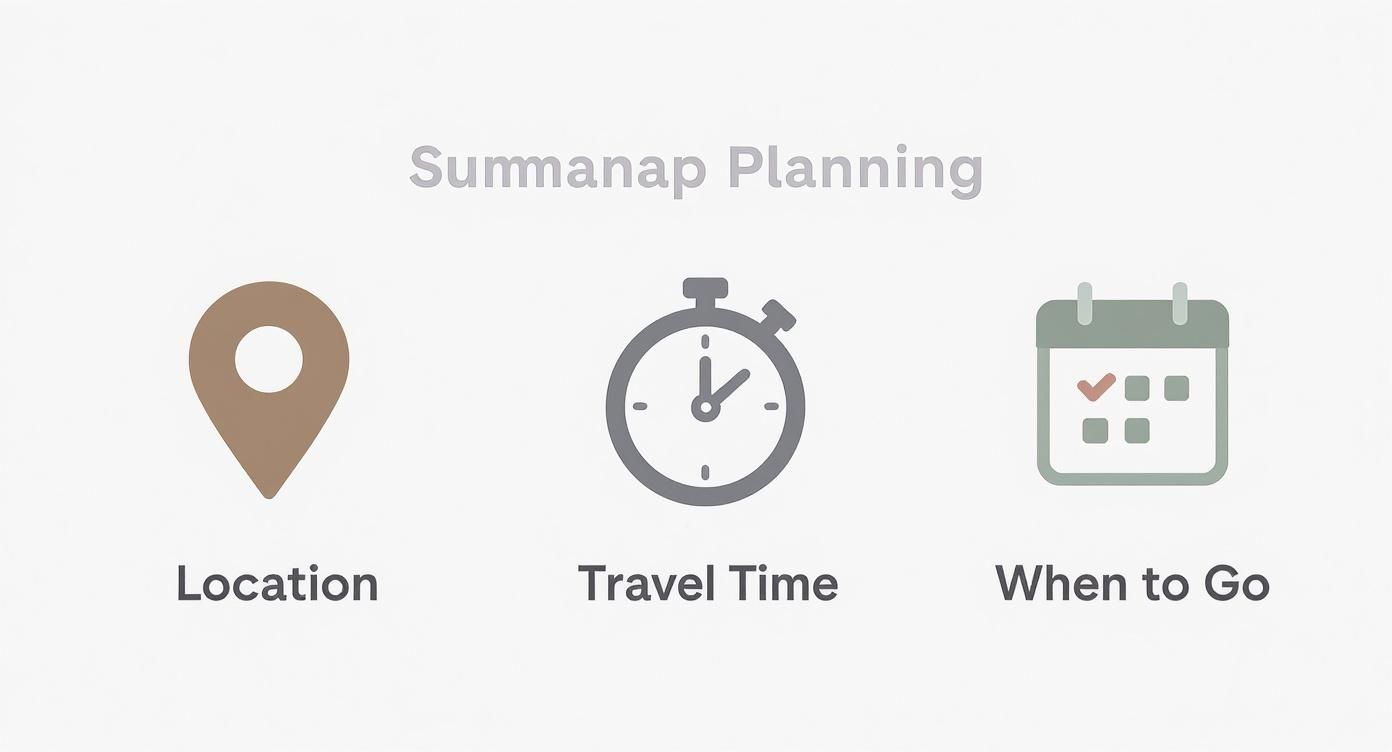
It’s a great little reminder to think geographically, plan around peak times, and give yourself realistic travel windows between stops.
Sample Day Trip Itinerary Ideas
To give you a better sense of how this works in the real world, I’ve put together a few sample itineraries for The Ten District, each tailored to a different vibe. Use them as a jumping-off point to build your own perfect day.
Theme | Morning Activity (9 AM - 12 PM) | Lunch Spot (12 PM - 1:30 PM) | Afternoon Activity (1:30 PM - 4:30 PM) | Evening Wind-Down (4:30 PM onwards) |
|---|---|---|---|---|
Family-Friendly Adventure | Head to the Oklahoma Aquarium right when it opens to beat the crowds and see the exhibits at a relaxed pace. | Grab some kid-approved pizza at Andolini's Sliced, just a quick drive away. | Walk along the Jenks Riverwalk or let the kids run wild at a nearby park to burn off some energy. | A sweet treat from a local ice cream shop before hitting the road. |
The Foodie Tour | Start with specialty coffee and pastries at a cozy local cafe in the heart of the district. | Settle in for a leisurely, multi-course lunch at a farm-to-table restaurant to taste the best local ingredients. | Browse gourmet markets or visit a local brewery for a tasting flight. | Find a great patio for pre-dinner appetizers and a perfectly crafted cocktail. |
Arts & Culture Explorer | Explore the unique boutiques and art galleries along Main Street, soaking in the local creative scene. | Find a quaint bistro or cafe with outdoor seating for a light, European-style lunch. | Catch a matinee performance at a local theater or visit a historical landmark in the area. | Enjoy a glass of wine at a quiet bar and reflect on the day's discoveries. |
These are just ideas, of course. The best day trip is one that reflects what you find interesting, so feel free to mix and match activities until you land on a plan that feels right.
Here's a pro-tip from years of planning these trips: build in buffer time. Seriously, always add an extra 20-30 minutes between activities. This accounts for unexpected traffic, a longer-than-planned lunch, or that charming little shop you just have to explore.
Prioritizing Your Must-Do Activities
It’s so tempting to try and cram everything into one day, but that’s a surefire recipe for a stressful, rushed experience. A much better approach is to identify your top two or three "must-do" activities and build your entire schedule around them. These are your anchors for the day.
Everything else? Those are just bonuses if you happen to have the time.
If you’re heading to the Tulsa area, our guide on the 10 unmissable things to do in Tulsa is a great resource for pinpointing those top-tier attractions. This method ensures you experience your highest priorities without the pressure of a massive to-do list. That, right there, is the secret to a truly fulfilling and flexible day trip.
Handling Logistics Like a Pro
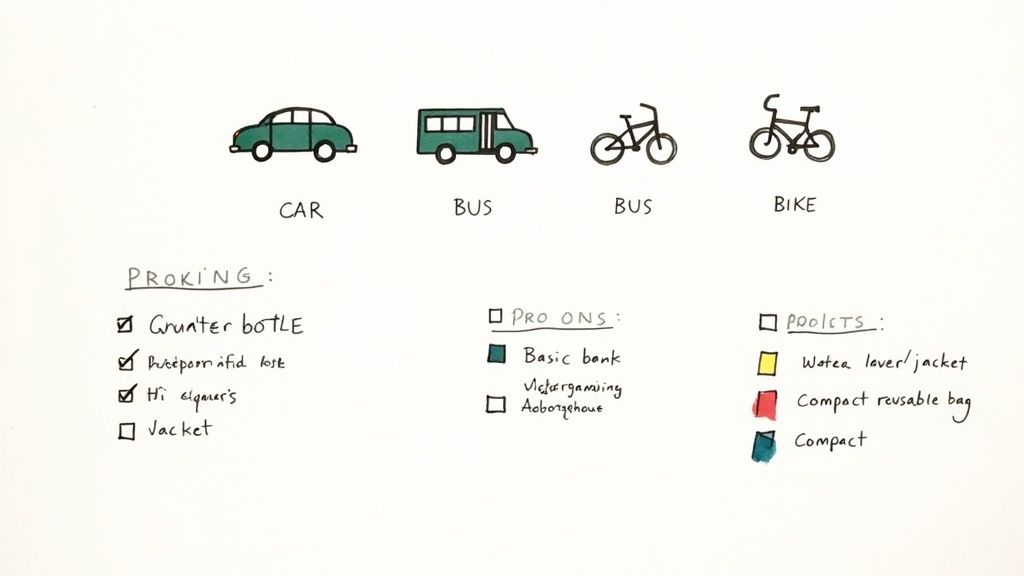
You can map out the perfect itinerary, but if you can’t get there smoothly or you forgot something essential, the whole day can fall flat. Nailing the logistics—how you'll get there and what you'll bring—is the secret sauce that turns a good plan into a fantastic day out.
Figuring out how to get to your destination is more than just a minor detail; it fundamentally shapes your budget, timeline, and the entire feel of the trip.
Driving definitely offers the most freedom. You can set your own schedule, make spontaneous stops, and haul as much gear as you can fit. But let's be real, you also have to deal with gas prices, the gamble of traffic, and the often-maddening hunt for a decent parking spot.
On the flip side, public transit can be surprisingly chill and easy on the wallet. Forget about parking headaches and just enjoy the ride. It's a brilliant option for destinations with good systems. Our guide on Tulsa Transit bus schedules is a great starting point to see just how many local spots you can reach without ever getting behind the wheel.
Pack for the Day You’re Actually Having
Ditch the one-size-fits-all packing list. A truly well-packed bag is tailored to the day you've actually planned.
For the Outdoor Adventurer: Beyond the obvious hiking boots, think about the practical stuff. A small daypack, a reusable water bottle, some high-energy snacks, serious sun protection, and a basic first-aid kit are absolute musts.
For the Foodie Explorer: A small cooler with an ice pack is a total game-changer, especially if you plan on bringing home treasures from a farmers market. I also like to throw in a few reusable containers for leftovers and a tote bag for my haul.
For the Arts & Culture Buff: Comfortable walking shoes. This is non-negotiable. You'll also be glad you brought a portable power bank for your phone, since you’ll likely be using it for photos, tickets, and navigation all day long.
This kind of smart planning is becoming more and more common. A recent report found that 92% of Americans are planning road or air travel, and a whopping 56% intend to travel more than they did last year. People want quality experiences, even on short trips, which makes getting the details right more important than ever. You can discover more about these American travel trends for 2025 and see how you fit in.
My golden rule for any day trip is simple: prepare for the unexpected. No matter what the forecast says, toss a light jacket or an extra layer into your bag. The weather around here can turn on a dime, and being comfortable means you can stay out longer and enjoy yourself instead of shivering your way home.
The Non-Negotiable Essentials
No matter where you're headed or what you're doing, a few items should always make the cut. Think of this as your universal day trip survival kit.
Portable Power Bank: Your phone is your lifeline—map, camera, wallet. A dead battery can bring your entire day to a screeching halt.
Basic First-Aid Kit: Just the essentials. Bandages, pain relievers, and antiseptic wipes can handle minor scrapes or a sudden headache.
Water and Snacks: Staying hydrated and energized is everything. Don't count on finding a shop right when you need a boost.
Sunscreen and Sunglasses: Even on cloudy days, the sun can get you. Protect yourself!
When you put a little thought into your transportation and packing, you’re not just planning—you're setting yourself up for a seamless, stress-free adventure.
Your Final Pre-Trip Checklist
The day before your trip is all about those final checks and tying up loose ends. Honestly, this last-minute run-through is what separates a good plan from a seamless experience. It’s your chance to catch the small oversights before they become big headaches on the road.
You want to wake up feeling confident and ready, not flustered and scrambling. A simple, methodical approach here ensures nothing critical slips through the cracks. This isn’t about re-planning your entire day; it’s just about double-checking that everything you’ve already arranged is good to go.
Confirm All Your Arrangements
First things first, take a few minutes to confirm any bookings you’ve made. This means restaurant reservations, tickets for that gallery you want to see, or any tours you've scheduled. A quick phone call or simply pulling up the confirmation email takes seconds and prevents any of those awful "we don't have you on the list" moments.
Next, get everyone traveling with you on the same page. A quick group text to confirm the departure time and the first meeting spot can save a lot of grief. You’d be surprised how often a simple miscommunication about timing can get a day trip off to a rocky start.
Prepare for the Day Ahead
With your logistics locked in, it’s time to shift your focus to the practical stuff. A little prep work the night before pays off in a big way tomorrow morning.
Check the Latest Weather: Don't just go off the forecast from three days ago. Take a look at the hourly forecast for The Ten District. This lets you make any last-minute tweaks to your packing—like swapping those sandals for boots.
Download What You Need: If you’re heading to an area where cell service gets spotty (it happens!), download your offline maps, playlists, or podcasts now. This guarantees you’ll have navigation and entertainment no matter what.
Fuel Up the Car: If you're driving, fill up the gas tank and give your tires a quick pressure check tonight. Starting with a full tank eliminates an annoying extra stop and potential delays in the morning rush.
Day trips, even small local ones, are part of a much larger trend. International tourist trips hit nearly 690 million in just the first half of a recent year. Many of those travelers build short excursions like this into their bigger itineraries, which just goes to show how much people value well-planned, localized adventures.
Finally, as you’re gathering your things, it’s always a good idea to consult a comprehensive packing list for your day trip to make sure you haven’t forgotten any of the essentials. There's something deeply satisfying about crossing items off a list, knowing you're truly ready for the adventure ahead.
Common Questions About Planning a Day Trip
Even the most perfectly planned day trip can leave you with a few “what if” questions rattling around in your head. It’s completely normal, especially when you're figuring out how to pull off a great local adventure.
Let's walk through some of the most common questions we hear. These are the little details that often pop up right before you leave—or sometimes, right in the middle of your trip. Thinking them through now will help you roll with the punches and keep your day stress-free.
How Far Is Too Far for a Day Trip?
This is the big one, and honestly, it’s all about finding the right balance.
A good rule of thumb is to keep your one-way travel time under three hours. Anything more than that, and you start spending more of your day in the car than at your destination. You'll be wiped out before you even start the drive home.
Before you lock in your plans, pop open a map app and check the real-time traffic for the day and hour you want to leave. A two-hour drive on a Tuesday morning can easily balloon into a three-hour crawl in Friday afternoon traffic. For a great local example, check out our guide on the journey between Jenks and Tulsa.
How Do I Find Unique Local Activities?
To uncover the real hidden gems, you’ve got to dig a little deeper than the usual big-name travel sites.
Start by looking at local blogs or searching for community Facebook groups for the area you're visiting. The town’s official website often has an events calendar, too. These are goldmines for finding out what the locals are up to, something tourists often miss completely.
Following local shops, artists, or restaurants on Instagram can also point you to spots that haven’t made it into the guidebooks yet. And never underestimate the power of just wandering—some of the best discoveries happen when you ditch the map and explore on foot.
What if the Weather Suddenly Turns Bad?
When Mother Nature decides not to cooperate, your best friend is flexibility. The trick is to have a "Plan B" ready to go before you even leave the house.
It doesn’t need to be some elaborate, detailed itinerary. Just having one or two indoor alternatives in mind can save the day.
A change of plans isn't a failure; it's an opportunity for a different kind of adventure. Having a backup idea ready means you can pivot without stress, turning a potential disappointment into a memorable detour.
Think about simple backups you noticed during your research:
That quirky little museum you saw mentioned.
A cozy, independent coffee shop perfect for waiting out the rain.
An indoor artisan market or a cool antique store.
If an attraction is unexpectedly closed or the skies open up, you can just switch gears and keep the day rolling.
Can I Plan a Great Day Trip on a Tight Budget?
Absolutely. A fantastic day trip is about the experience, not how much you spend. The key is to focus on free or low-cost activities that deliver a big impact.
Packing your own lunch, snacks, and drinks is probably the single biggest money-saver. You'll sidestep the overpriced cafes that target tourists. Also, keep an eye out for destinations with free parking or easy access to affordable public transit.
A great day out should refresh you, not drain your bank account.
Ready to put your plans into action? The Ten District is the perfect starting point for countless day trips, packed with one-of-a-kind shops, amazing food, and endless inspiration. See what’s happening and plan your next local adventure by visiting us at https://www.thetendistrict.com.


Comments