

Mastering Downtown Jenks Wayfinding and Signage Planning
When people can’t find their way in Downtown Jenks, they get stressed. Confused. Lost. Effective wayfinding and signage is all about preventing that feeling. It's the art of guiding people through a physical space so they can find what they’re looking for, almost intuitively. A great system is more than just signs; it’s a seamless blend of directional cues, identification markers, and informational displays that makes the journey easy for everyone.
Building Your Wayfinding and Signage Blueprint
A well-thought-out wayfinding plan is a powerful communication tool. It literally shapes how a person experiences your space. Before you even think about fonts or colors, the real work begins—understanding how people move, think, and interact with their surroundings. This is where you turn simple signs into a genuine problem-solving system.
First things first, you have to do a deep dive into the environment itself. I always tell clients to think of it as mapping human behavior. Walk the paths. Watch people. Where do they get stuck? Where do they hesitate or look confused? These are your navigational "pain points," and your blueprint needs to solve them.
Defining Your Core Objectives
Every successful project I've worked on started with crystal-clear goals. What are you actually trying to achieve? Are you hoping to cut down on visitor anxiety in a sprawling hospital, guide shoppers to specific stores in a mall, or just make sure the fire exits are impossible to miss? Your objectives will be the North Star for every decision that follows.
For a dynamic, multi-use space like The Ten District, the goals are often a mix of commercial needs and creating a great visitor experience.
A few key goals might look like this:
Improving Visitor Flow: Getting people from their cars to the main attractions—shops, restaurants, event spaces—as smoothly as possible.
Enhancing Brand Identity: Creating a consistent visual style that reinforces the district's unique character. You want people to feel like they're in The Ten District.
Increasing Accessibility: Making sure the system is clear and easy for people of all abilities, following all the necessary accessibility standards.
This isn't just about throwing up a few arrows. It's a strategic process.
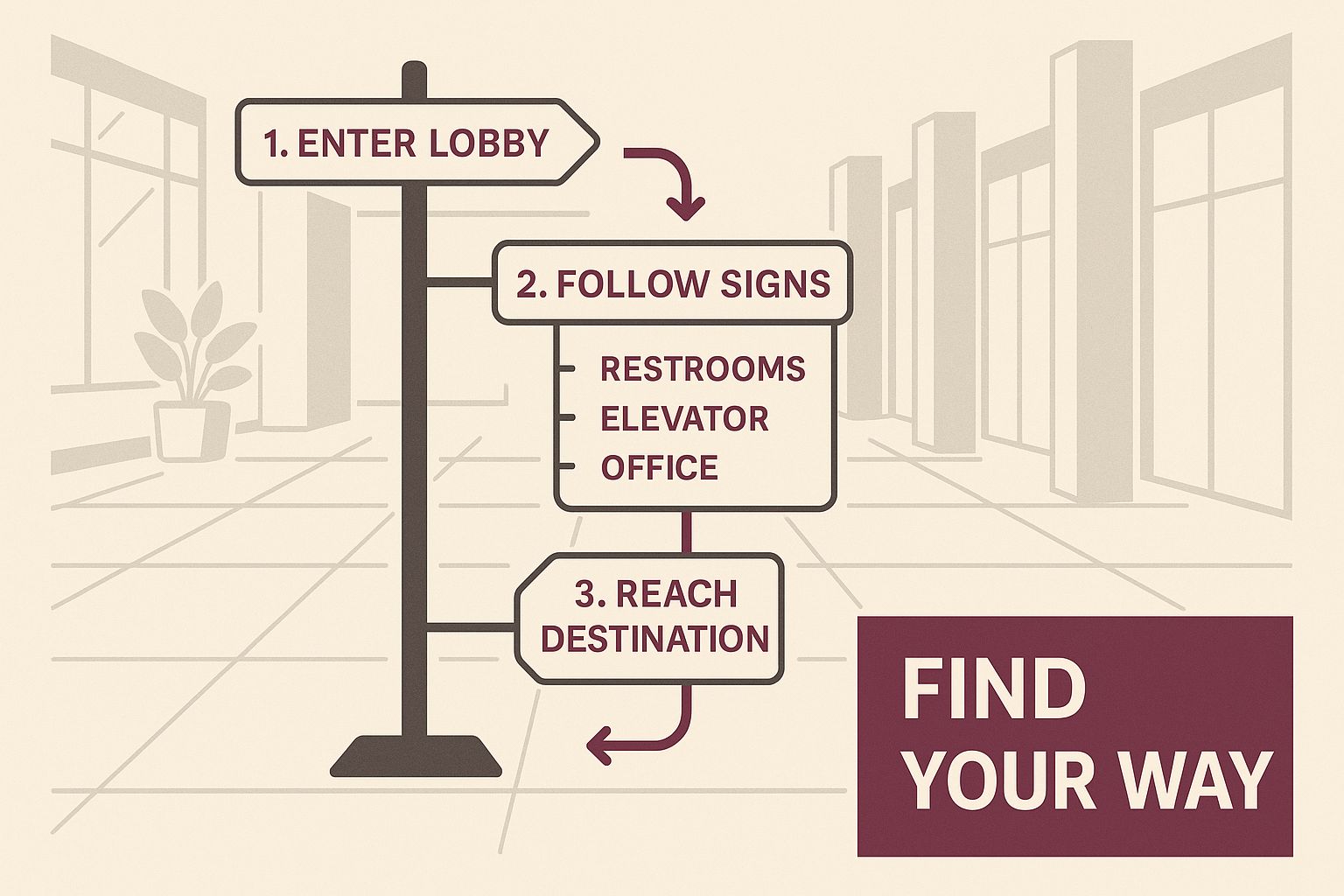
You can see in the image how just a few well-placed signs in a busy lobby can instantly orient visitors. It sets a welcoming tone right from the start.
To get this right, you have to think like your visitors. I find that creating a few "user personas" is the best way to do this. Imagine a tourist hunting for a specific art gallery versus a local resident popping into their favorite coffee shop. Their needs, and their existing knowledge of the area, are completely different.
A truly great wayfinding system anticipates questions before they’re even asked. It speaks a universal language of direction and makes everyone feel confident and in control.
It's no surprise that this field is booming. The global wayfinding system market was recently valued at $11.53 billion and is projected to grow like crazy. More and more complex public spaces are realizing they need better navigation to function well.
Ultimately, this blueprint is about more than signs; it's about crafting an intentional experience. Before we get into the nuts and bolts, it's helpful to see the bigger picture. Understanding the vision behind a place provides crucial context for any wayfinding strategy. Take a moment to explore the core ideas that shape The Ten District and you’ll see how this philosophy translates into creating a welcoming environment for everyone.
Designing a System People Actually Understand
A smart plan is one thing, but great design is what connects that plan to a person's real-world experience. Once you’ve figured out who you're guiding and where they need to go, it's time to create a wayfinding and signage system that speaks their language—clearly and instinctively. This isn't just about making pretty signs; it's about building a visual language that works.
There's a fascinating psychology behind signs that actually work. Things like color, the style of the font, and even the symbols you choose aren't just for decoration. They're powerful shortcuts that, when used right, can get a message across in a split second. The whole point is to create a system that someone can read and understand instantly, whether they're driving by or just glancing up from their phone.
Building a Clear Visual Hierarchy
Let's be honest, not all signs are created equal. A visitor needs to know the difference between a major directional sign, a simple room number, and a regulatory notice without even thinking about it. You pull this off with a strong visual hierarchy.
Think of it like a conversation: your main directional signs should have the "loudest" voice. They get the boldest colors, the biggest fonts, and the most prominent spots at key decision points, like a busy intersection or the entrance to a lobby.
Directional Signs: These are your workhorses—the big signs with arrows pointing you toward parking, specific streets, or major draws. They need to command the most attention.
Identification Signs: These simply label a place, like "The Ten District Theatre" or "Restrooms." They're a step down in prominence from the big directional signs but are still crystal clear.
Informational Signs: Think directory maps, event schedules, or little historical tidbits. These are designed for people who have already stopped and are actively looking for more details.
The best wayfinding systems feel almost invisible because they answer questions before people even have to ask them. When navigation is that seamless, it cuts down on frustration and just makes the whole experience more enjoyable.
This kind of thoughtful design is a huge piece of the puzzle for the district's comeback. You can dive deeper into the real vision behind The Ten District's growth and see how intentional design is helping build a place that feels welcoming from the moment you arrive.
Choosing Materials and Ensuring Accessibility
The sign itself—what it’s made of—is just as critical as what’s printed on it. You can't just pick materials based on looks; you have to think about durability and where they'll live. Are they going to be outside, baking in the Oklahoma sun and getting hit by storms? They better be weather-resistant. Do they need to blend in with the historic brick buildings on Main Street? The materials have to complement their surroundings, not stick out like a sore thumb.
And finally, something that’s completely non-negotiable: accessibility. Every single piece of your wayfinding and signage has to be compliant with the Americans with Disabilities Act (ADA). This isn't an afterthought; it's baked into the design from day one. That means getting the details right on:
Braille: Tactile lettering for the visually impaired is a must.
Font and Character Height: Using legible fonts at specific, mandated sizes.
Mounting Height and Location: Placing signs where everyone, including those in wheelchairs, can see and reach them.
Contrast and Finish: Making sure there’s high contrast between the text and background and using non-glare finishes to prevent reflections.
By weaving these principles together, you create a visual language that guides people effortlessly, strengthens The Ten District's identity, and truly makes the space feel open and accessible to every single visitor.
Integrating Digital Tools for Modern Navigation

While traditional signs are the backbone of any solid wayfinding system, layering in digital elements can completely transform a visitor's journey. This is where wayfinding and signage become truly dynamic, moving beyond static directions to offer real-time, interactive guidance. It’s what makes navigating a vibrant space like The Ten District feel effortless and intuitive.
Think about a big festival that temporarily reroutes foot traffic. With digital signs, you can update paths instantly, heading off confusion before it starts. Or picture a family trying to find a specific kid-friendly restaurant; an interactive kiosk could not only give them personalized directions but also show off a menu and current wait times. That’s the kind of smart, responsive experience we're aiming for.
Choosing the Right Digital Solutions
Look, not every spot needs a massive, high-tech overhaul. The real key is to be strategic. You want to pinpoint exactly where digital tools will give you the biggest bang for your buck, solving specific navigation problems that traditional signs just can't handle as well.
Here are a few powerful options we've seen work wonders:
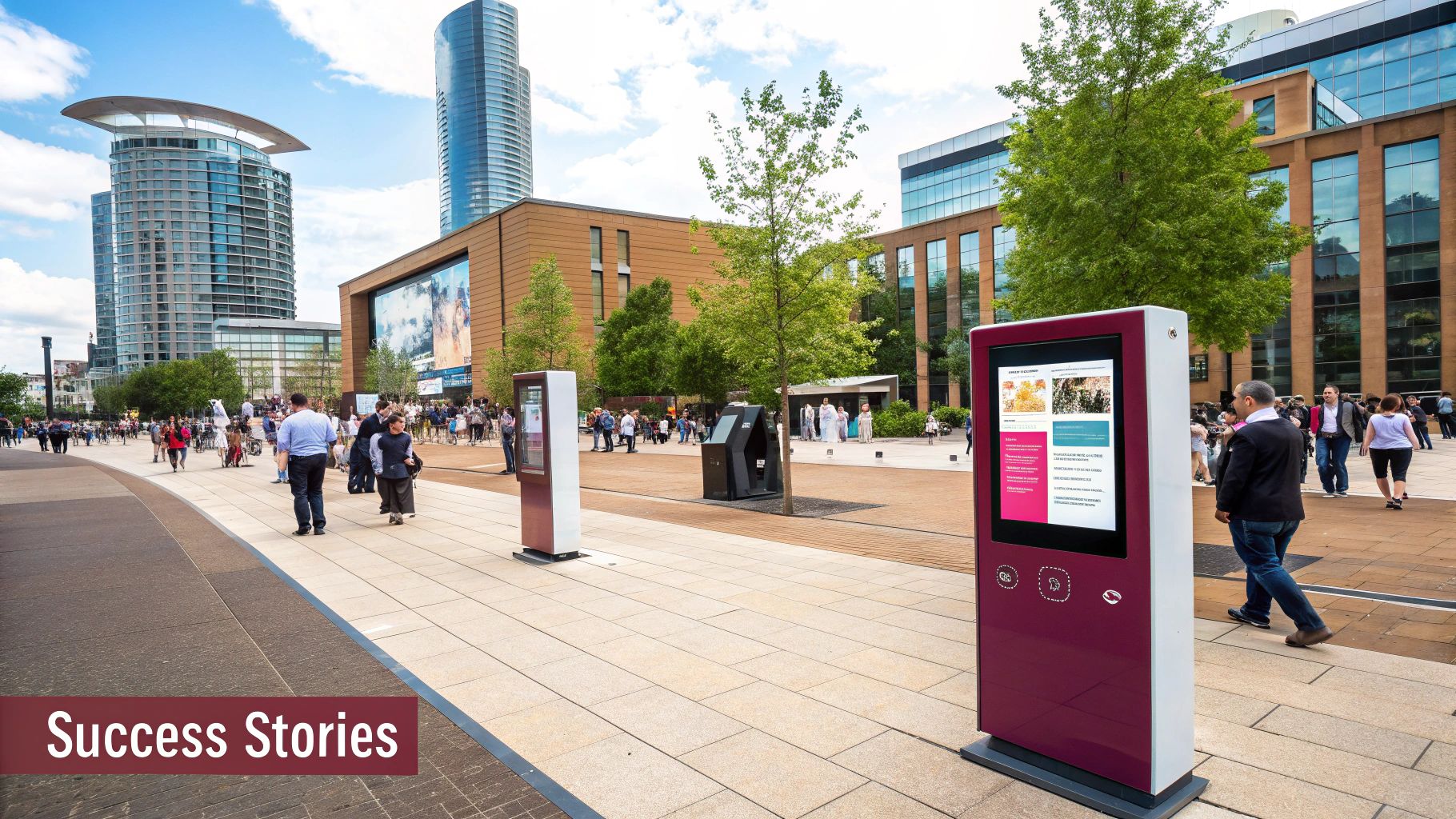
Interactive Kiosks: These are absolute game-changers for central hubs like parking garages or the main plaza. People can search for specific shops, pull up event schedules, or get turn-by-turn directions on a big, user-friendly touchscreen.
Mobile App Integration: For a truly personal touch, tying your wayfinding into a mobile app puts directions right in your visitors' pockets. They can save their favorite spots or even get push notifications about special deals as they walk by a store.
Dynamic Displays: Imagine digital screens at key intersections or transit stops. They can cycle through crucial info—from reminders about upcoming events to weather alerts or sponsored content—keeping everything fresh and relevant.
The results speak for themselves. Hard data shows that 80% of brands have seen sales jump by as much as a 33% increase after putting in digital signage, simply because it grabs attention and engages people. Even better, digital wayfinding can slash perceived wait times by over 35%, which is huge for improving crowd flow and overall satisfaction.
The best digital wayfinding doesn't just show you a map; it gives you context. It helps someone decide where to go next by providing the timely information they need to make a choice.
Making a Strategic Decision
So, how do you decide where to go digital? My advice is to start by thinking about your highest-traffic and highest-confusion zones. A busy T-intersection with a dozen dining and shopping options is a perfect candidate for an interactive kiosk. On the flip side, a simple identification plaque on a historic building? That’s probably best left as a classic, static sign to maintain its character.
This blend of old and new is at the heart of the district’s growth. To really get a feel for how these modern tools fit into the long-term vision, it’s worth understanding the project's foundational timeline. You can learn more by navigating the master plan timeline for downtown Jenks and see how each phase thoughtfully builds on the last.
By marrying dependable traditional wayfinding and signage with smart, targeted digital tools, we’re building a system that’s not just helpful—it’s intelligent and ready for whatever comes next.
From Design File to Physical Installation
This is where the rubber meets the road. All the strategy sessions, stakeholder meetings, and design mockups mean nothing if the final, physical sign isn't executed perfectly. Bringing a wayfinding system from a file on your computer to a tangible object in the real world is a process that demands absolute precision.
A small mistake in fabrication or a sign installed just a few feet off from its intended spot can completely undermine months of careful planning. Getting this phase right is what makes the whole project click into place.
Finding the Right Fabrication Partner
The single most important link between your design and the final product is the specification document you provide to your fabricator. This isn't just a guideline; it's the bible for the project. It needs to be airtight, leaving zero room for interpretation. I'm talking about outlining every single detail—materials, finishes, exact dimensions, and specific color codes. Think of it as a builder's blueprint; without one, you're just hoping for the best.
Once those specs are locked down, the hunt for a qualified fabricator begins. And let me be clear: this is not the time to simply choose the lowest bidder. You're not just buying a product; you're entering a partnership. You need a vendor who genuinely gets the nuances of high-quality wayfinding and signage.
When I'm vetting potential fabricators, I always dig into a few key areas:
A Strong Portfolio: I want to see examples of projects similar in scope and materials to mine. Have they worked with aluminum composite panels before? What does their dimensional lettering look like up close?
Client References: Don't just take their word for it. I always call their past clients. I want to know about the quality, if they hit their deadlines, and how they handled communication when things inevitably went sideways.
In-House Capabilities: A fabricator with their own design and engineering support is worth their weight in gold. They can often spot potential issues—like a material not being suitable for outdoor use or a mounting method that won't work on a specific surface—before it turns into a costly headache.
A great fabricator does more than just build what you send them. They act as a final quality control checkpoint, flagging things you might have missed in the design phase. They're your last line of defense.
This step is absolutely critical for the longevity and quality of the signs that will ultimately shape the visitor experience. It’s the same kind of detailed, long-term thinking that guides major community projects. For instance, when you explore the Jenks Downtown Master Plan, you see how a clear vision is essential for guiding every single execution detail, from infrastructure to public spaces.
Mastering the Final Installation
Before anyone even thinks about drilling a hole, a final site walk-through is non-negotiable. Get your installation team on-site and physically mark out the exact placement for every single sign. I use temporary flags or spray chalk. This is your last chance to catch real-world conflicts you couldn't see on a screen, like a new light pole blocking a sightline or an overgrown tree branch hanging right where a sign is supposed to go.
You also have to anticipate the common hurdles. Weather can shut down an installation for days. Crews can hit unexpected underground utilities. Other construction in the area can create scheduling nightmares. A seasoned project manager knows these things happen and has contingency plans baked into the schedule from day one.
By managing this transition from a digital asset to a physical one with intense focus, you ensure the final wayfinding and signage system isn't just beautiful—it's durable, perfectly placed, and actually does its job.
Keeping Your Wayfinding System Effective Over Time
So, you’ve launched your new wayfinding system. It feels like crossing the finish line, but really, the race has just begun. Think of your wayfinding and signage as living, breathing parts of your environment, not static monuments set in stone. They need consistent care to stay accurate, helpful, and valuable for years.
Neglecting them is a lot like buying a beautiful car and never bothering to change the oil. It looks great for a while, but eventually, it's going to break down.
This ongoing attention is what protects your initial investment and ensures the system can evolve right alongside your space. When new shops open in The Ten District or event schedules change, your signage has to keep up. A proactive approach is the only way to prevent the slow creep of outdated information, which is one of the fastest ways to lose a visitor's trust.
Measuring Your System's Real-World Performance
How can you be sure your signs are actually doing their job? You have to measure their performance. Guessing won't get you very far. You need to dig in and gather real insights to see where people are still getting turned around or where you can make things even better.
Honestly, one of the simplest and most powerful methods is just good old-fashioned observation. Go spend an afternoon watching how people interact with the signs at key decision points. Are they pausing for a long time? Do they stop, look confused, and then pull out their phones? That’s raw, unfiltered feedback telling you what’s working and what isn’t.
An effective wayfinding system is one that continuously adapts. The goal isn't just to install signs, but to cultivate a navigational network that gets smarter over time.
If you want to get a bit more structured, here are a few other methods I've seen work well:
Simple Feedback Surveys: Put a QR code on the signs that links to a quick, two-question survey. Just ask visitors if they found what they were looking for easily.
Analyzing Digital Kiosk Data: If you’ve invested in interactive maps, that usage data is pure gold. You can see which destinations people search for most and, more importantly, where they give up on their search.
Staff Input: Don't forget to talk to the people on the ground. Your shop owners, event staff, and maintenance crews hear the questions and complaints firsthand. They know exactly where visitors are getting lost.
Creating a Proactive Maintenance Schedule
Once you start gathering feedback, you need a plan to actually do something with it. A realistic maintenance schedule is the backbone of a healthy wayfinding and signage system. And this isn't just about fixing what’s broken—it's about keeping everything in pristine condition.
Your schedule should cover both the physical signs and the information on them. For physical upkeep, that means routine cleaning, checking for damage from weather or vandalism, and making sure any lighting is working perfectly. A dirty or busted sign sends the wrong message about the entire district.
For the information itself, you need a clear process. When a new business moves in, who is responsible for updating the directories? How quickly can you change a digital display for a last-minute pop-up event? Figuring out these protocols ahead of time is critical. It’s this forward-thinking mindset that’s essential for any major development, especially one designed to unlock economic potential through a thoughtful master plan.
The numbers back this up. The global signage market, which includes all these systems, is projected to climb from $37.8 billion in 2025 to a massive $57.6 billion by 2035. This isn't a fluke; it shows that cities and districts worldwide see high-quality signage as essential infrastructure. You can explore more about this expanding market to see how it's shaping urban navigation everywhere.
To help you stay on top of it all, a structured checklist can be incredibly useful. It turns abstract goals into concrete, scheduled tasks.
Wayfinding System Maintenance Checklist
Here's a simple checklist to guide your ongoing maintenance efforts. This ensures nothing falls through the cracks and your system remains a reliable asset for visitors.
Task Area | Frequency | Key Actions |
|---|---|---|
Physical Condition | Monthly | - Clean all sign faces and structures.- Inspect for vandalism, graffiti, or weather damage.- Check for loose fittings or structural issues. |
Lighting | Monthly | - Verify all illuminated signs are working correctly.- Replace burnt-out bulbs or fix faulty wiring immediately. |
Information Accuracy | Quarterly | - Audit all directory listings against current tenants.- Update maps with any new construction or path changes.- Confirm event schedules on digital displays are correct. |
Digital Kiosks | Monthly | - Test touch screen responsiveness and software.- Review usage analytics for popular searches and errors.- Ensure all software is up-to-date. |
Performance Review | Annually | - Conduct visitor observations and surveys.- Gather feedback from business owners and staff.- Analyze data to identify areas for improvement. |
By regularly working through a checklist like this, you create a cycle of continuous improvement. It keeps your team accountable and guarantees your wayfinding system doesn't just launch successfully but thrives for years to come.
As you start to plan out a wayfinding system for a place like The Ten District, you’re bound to have questions. It’s totally normal. This field is full of nuances where the smallest details can make or break a visitor's experience. Let’s tackle some of the most common questions I hear to give you some clarity and confidence.
What’s the Real Difference Between Wayfinding and Signage?
I see people use "wayfinding" and "signage" like they're the same thing all the time, but there's a crucial distinction.
Think of it this way: signage is the collection of physical objects. It's the arrows, the room numbers, the maps mounted on the wall. They're the actual tools you use to guide people.
Wayfinding, on the other hand, is the whole strategic experience of getting around a space. It’s the big picture. Wayfinding includes the signs, sure, but it also considers the architecture, sightlines, lighting, landmarks, and even sounds that help someone figure out where they are and where they need to go. It’s the human process of navigating from point A to point B without feeling lost or stressed.
Good signage is a vital piece of the puzzle, but a truly great wayfinding system is so much more than just a bunch of signs. It’s about creating an intuitive journey.
What Are the Major Cost Factors in a Signage Project?
Budgeting for a signage project, especially for a large area, can feel a bit like guessing in the dark. The costs can swing wildly, so knowing what drives the price tag is key to building a realistic plan.
From my experience, here are the biggest budget influencers:
Materials: This is a huge one. Using high-end materials like custom-milled wood or brushed aluminum will obviously cost more than standard acrylic or vinyl. Don't forget that outdoor signs need to be super durable and weather-resistant, which also adds to the expense.
Customization and Complexity: There's a world of difference between a simple, flat-panel sign and a custom-fabricated, internally lit 3D sign. The more intricate the design and the more complex the manufacturing, the higher the price climbs.
Quantity and Scale: The sheer volume of signs is a massive cost driver for a project the size of The Ten District. You might get some economies of scale with a large order, but the total number of units is a primary factor in the final cost.
Installation: Never underestimate installation costs. Professional installation is a must, and the price can go up depending on site complexity, whether you need special equipment like a lift, or if the work has to be done after hours to avoid disrupting businesses.
How Can a Small Business Start a Project Without Getting Overwhelmed?
If you're a small business owner, a complete wayfinding overhaul can sound intimidating and expensive. I get it. The secret is to start small and focus on making the biggest impact first.
My advice? Start with a simple walkthrough. Pretend you’re a first-time visitor and walk through your own space. Where do people get stuck? Where are the most critical decision points? It's almost always the main entrance, the primary hallways, and the restrooms.
Focus your initial budget there. Create clear, high-quality, on-brand signs for just those essential spots. You’d be surprised at the difference it makes. Remember, consistency is way more important than quantity when you're starting out. Even a handful of well-designed, cohesive signs can dramatically improve the customer experience and make your brand look sharp.
Ready to see how thoughtful navigation and community spirit can transform a place? Come experience The Ten District, where every detail is designed to make you feel welcome. Find out more at https://www.thetendistrict.com.


Comments