

9 Effective Volunteer Recruitment Strategies for 2025
In the vibrant heart of Jenks, The Ten District thrives on community spirit. Festivals, markets, and local events are the lifeblood of this area, and they all depend on one invaluable resource: dedicated volunteers. Yet, finding and attracting the right people can be a significant challenge for any organization. Standard volunteer recruitment strategies often yield limited results, leaving event coordinators and nonprofit leaders struggling to fill essential roles.
This guide moves beyond generic advice. It offers a deep dive into nine specific, actionable volunteer recruitment strategies tailored for the unique landscape of The Ten District and the greater Tulsa area. We'll explore innovative methods designed to build a sustainable and passionate community dedicated to making our district shine.
Inside, you will find practical steps for implementing powerful tactics, including:
Harnessing digital outreach and targeted social media campaigns.
Forging strategic partnerships and corporate volunteer programs.
Creating flexible, micro-volunteering roles for busy individuals.
Launching effective peer-to-peer referral and youth engagement programs.
Each strategy is presented with clear implementation details and examples relevant to our local community. Whether you're planning a small neighborhood cleanup or a large-scale festival, these proven approaches will help you attract the right volunteers. Prepare to transform your approach and unlock a new level of community engagement for your initiatives. Let's begin building your powerful volunteer force.
1. Digital Outreach and Social Media Campaigns
In today's connected world, one of the most effective volunteer recruitment strategies involves meeting potential supporters where they are most active: online. Digital outreach leverages social media platforms, email marketing, and targeted advertising to connect with a broad, diverse audience. This approach moves beyond traditional word-of-mouth, allowing Ten District organizations to share their mission with precision and creativity.

By creating compelling, shareable content, you can inspire action and build a community of engaged followers who are primed to become volunteers. The key is to tell an authentic story that resonates with your target demographic.
How to Implement This Strategy
A successful digital campaign requires a multi-faceted approach. Start by identifying which platforms your ideal volunteers use. For instance, a youth-focused environmental cleanup might use TikTok and Instagram, while a professional mentorship program could find success on LinkedIn.
Create Platform-Specific Content: Avoid cross-posting identical messages. Tailor your visuals and text for each platform’s audience and format. Use high-quality photos and videos of current volunteers in action.
Engage Actively: Don't just post and walk away. Respond to comments and messages promptly to build rapport and show that your organization is approachable and appreciative.
Utilize Local Targeting: Use local hashtags (e.g., #TenDistrictVolunteers, #CommunityActionTD) and geotag your posts to reach people in your specific geographic area.
Partner with Community Voices: Collaborate with local influencers, businesses, or community leaders in The Ten District to amplify your message to their established audiences.
For organizations planning specific volunteer events, mastering digital promotion is crucial. For more in-depth guidance on utilizing digital channels, explore effective strategies for promoting events online.
Key Insight: Authenticity is your most powerful tool. Real stories and testimonials from your volunteers are far more persuasive than generic calls to action. Showcase the impact and personal fulfillment that comes from contributing to your cause.
This digital-first approach to volunteer recruitment is highly scalable and provides measurable results, making it an essential component of any modern outreach plan.
2. Partnership and Corporate Volunteer Programs
Building strategic alliances with local businesses, schools, and other community groups is one of the most powerful volunteer recruitment strategies. This approach taps into existing networks, allowing Ten District organizations to engage large, organized groups of volunteers at once. By creating structured programs, you can leverage the community-minded goals of corporations and the service requirements of educational institutions.

These partnerships provide a steady stream of motivated individuals and often come with additional benefits like corporate sponsorships or skills-based support. The key is to create mutually beneficial relationships where partners feel their contributions are valued and directly tied to a positive community impact.
How to Implement This Strategy
A successful partnership program requires clear communication and well-defined opportunities. Start by identifying potential partners in The Ten District whose values align with your mission. For guidance on how corporations structure their community engagement, studying some top corporate social responsibility examples can offer valuable insight into their motivations and program designs.
Develop Clear Partnership Agreements: Outline roles, responsibilities, and expectations for both your organization and the partner. This includes logistics, supervision, and how success will be measured.
Offer Tailored Opportunities: Create volunteer roles that accommodate different group sizes and schedules. Offer skills-based projects for corporate teams (e.g., marketing, IT support) alongside hands-on event support.
Streamline the Onboarding Process: Provide a dedicated orientation for partner groups. This ensures they understand your mission and their specific tasks, making their experience more efficient and impactful.
Provide Public Recognition: Acknowledge your partners on social media, in newsletters, and at events. This not only shows appreciation but also enhances their public image, strengthening the partnership.
Establish a Feedback Loop: After a group volunteers, ask for feedback from both the participants and the partner coordinator to continuously improve the experience.
These collaborations can also lead to new funding streams. For organizations looking to expand their resources, you can explore the 12 best sources for funding for community projects in 2025.
Key Insight: Treat your partners as true collaborators, not just sources of free labor. Understand their goals, whether it's team building, brand visibility, or fulfilling a service-learning requirement, and design opportunities that help them succeed.
3. Skills-Based and Professional Volunteering
One of the most powerful volunteer recruitment strategies involves aligning specific organizational needs with the professional expertise of community members. Skills-based volunteering moves beyond general tasks and invites individuals to contribute their career competencies, such as marketing, finance, or IT support. This approach is highly appealing to professionals in The Ten District who seek meaningful ways to apply their talents, develop new skills, and strengthen their resumes.
By offering these "pro bono" opportunities, your organization gains high-value support that might otherwise be prohibitively expensive. This strategy positions volunteering not just as giving time, but as a strategic contribution of valuable expertise.
How to Implement This Strategy
Successfully attracting skilled professionals requires a targeted and well-defined approach. Start by conducting an internal audit to identify specific, project-based needs where professional skills could make a significant impact. For example, instead of asking for "help with marketing," define a project like "developing a three-month social media content calendar."
Create Detailed Role Descriptions: Craft volunteer job descriptions similar to professional job postings. Clearly outline the required skills, project scope, expected time commitment, and the impact the role will have.
Leverage Professional Networks: Use platforms like LinkedIn to post opportunities and search for professionals in The Ten District with relevant experience. Engage with local professional groups or chapters, such as the Rotary Club.
Offer Flexible and Project-Based Roles: Many professionals have demanding schedules. Offer project-based commitments with clear start and end dates, and consider virtual options to remove geographic and time barriers.
Provide Tangible Recognition: Acknowledge their contribution by offering to serve as a professional reference, providing a letter of recommendation, or featuring their work in your communications.
Organizations like the Taproot Foundation and platforms such as Catchafire have pioneered this model, proving its effectiveness in connecting nonprofit needs with professional talent.
Key Insight: Professionals are motivated by impact and development. Frame volunteer roles as opportunities for them to lead a project, solve a complex problem, or mentor others, demonstrating a clear return on their investment of time and skill.
This targeted recruitment strategy can fill critical operational gaps, delivering immense value and building a dedicated base of high-impact supporters for your cause.
4. Peer-to-Peer and Referral Programs
One of the most powerful volunteer recruitment strategies leverages the trust and enthusiasm of your existing supporters. Peer-to-peer and referral programs encourage current volunteers, staff, and advocates to recruit new members from their personal and professional networks. This approach is highly effective because a recommendation from a trusted friend or colleague is often more persuasive than any formal marketing campaign.

By turning your current volunteers into active recruiters, you tap into a pre-qualified pool of candidates who are more likely to be a good fit for your organization’s culture and mission. This strategy builds on existing relationships to grow your community organically.
How to Implement This Strategy
A successful referral program is built on simplicity and appreciation. Make it easy for your current supporters to spread the word and ensure they feel valued for their efforts. Organizations like the Big Brothers Big Sisters and local animal shelters have long used this method with great success.
Provide Simple Referral Tools: Equip your volunteers with shareable digital flyers, email templates, or simple talking points about why their friends should join. A clear and concise message is key.
Offer Tangible Recognition: While intrinsic motivation is important, small rewards can boost participation. Consider offering a small gift card, branded merchandise, or public recognition for successful referrers.
Host 'Bring a Friend' Events: Organize low-commitment, high-fun volunteer days where current supporters are encouraged to bring a friend along. This provides a casual introduction to your organization and its work.
Train Your Ambassadors: Briefly train your most dedicated volunteers on how to effectively share their stories and invite others. This empowers them to be confident and effective recruiters for your cause in The Ten District.
This approach is a cornerstone of effective community building, as detailed in these 9 community engagement strategies you should know.
Key Insight: The most compelling recruitment tool is a genuine story. Encourage your volunteers to share their personal "why," the specific reason they are passionate about your mission. Personal anecdotes about impact and fulfillment are incredibly motivating for potential new recruits.
By formalizing word-of-mouth, peer-to-peer programs create a sustainable and powerful pipeline of high-quality volunteers who are already connected to your community.
5. Community Event and Tabling Strategies
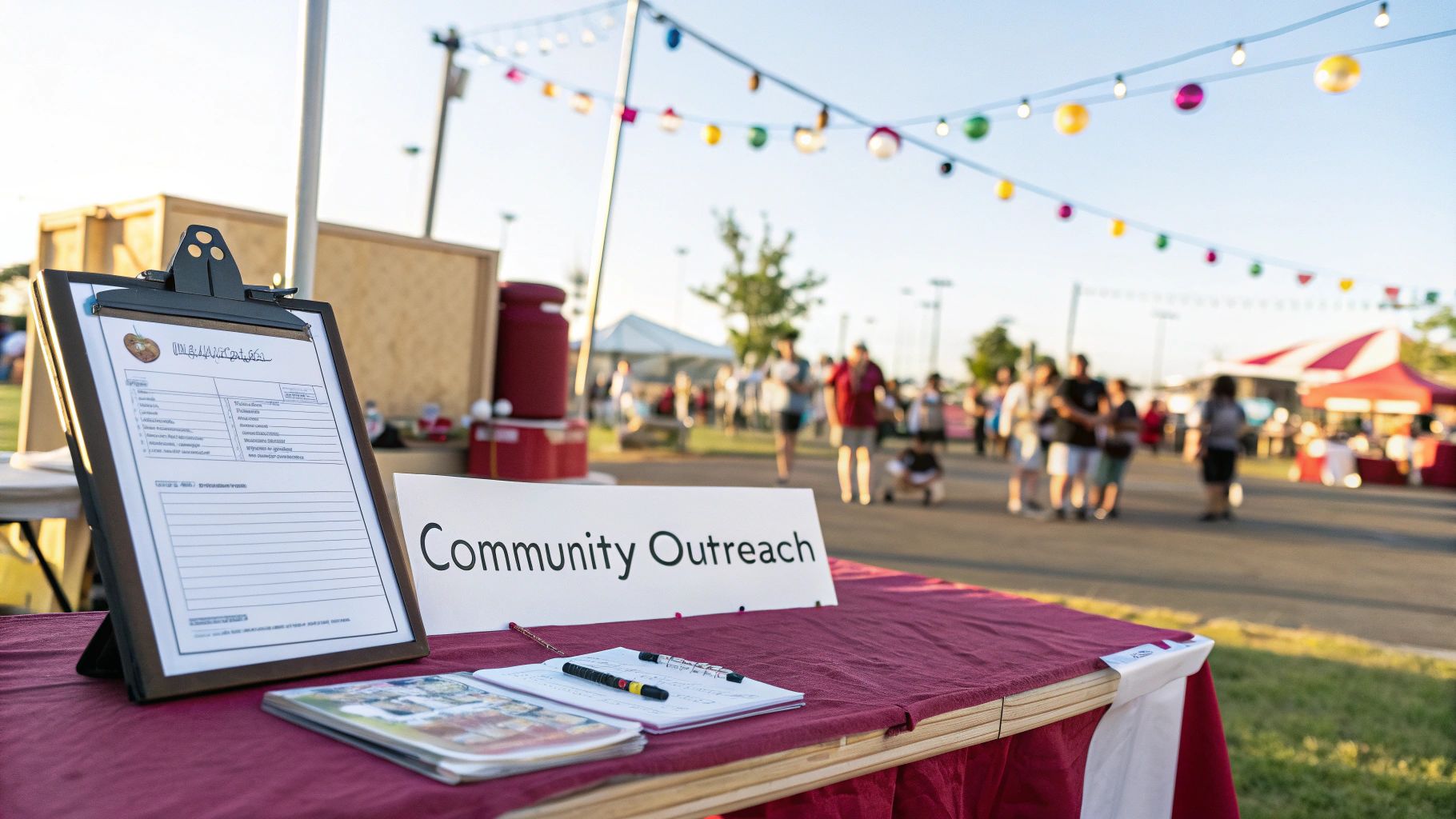
While digital outreach is crucial, the power of face-to-face interaction remains one of the most effective volunteer recruitment strategies. Establishing a physical presence at community gatherings, local festivals, and high-traffic events allows your organization to build immediate, personal connections. This traditional approach puts a human face to your mission and facilitates real-time conversations and sign-ups.
By setting up an engaging booth or table, you create a dedicated space for direct engagement. This strategy is perfect for capturing the interest of community-minded individuals who might not be actively searching for volunteer roles online but are inspired by a personal conversation.
How to Implement This Strategy
Success in tabling events hinges on preparation and engagement. It’s not enough to simply be present; you must create a welcoming and informative experience.
Choose Strategic Events: Don't attend every event. Select ones that align with your mission and attract your target volunteer demographic. For instance, an environmental group should be at an Earth Day festival, while a youth mentorship program would benefit from a presence at a university or high school volunteer fair.
Create an Engaging Booth: Use vibrant, professional banners, high-quality photos of volunteers in action, and even a short video loop on a tablet. An interactive element, like a prize wheel or a quick quiz about your cause, can draw people in.
Staff with Passionate Volunteers: Have your most enthusiastic current volunteers staff the booth. Their genuine stories and firsthand experiences are far more compelling than a prepared pitch from staff alone.
Make Sign-Up Simple: Use a digital sign-up form on a tablet or a simple QR code that links directly to your volunteer application. Have paper forms as a backup. The goal is to capture contact information with minimal friction.
Many community hubs in The Ten District are perfect for these activities, from bustling farmer's markets to well-known event spaces. For instance, understanding local venues can help you identify prime locations for outreach. You can get to know more about local event centers and their community role.
Key Insight: Your goal at these events isn't just to sign up new names. It's to start a relationship. Focus on having meaningful conversations, listening to what potential volunteers are passionate about, and connecting their interests to your organization's needs.
This hands-on method builds a strong, local foundation for your volunteer program, fostering a sense of community from the very first interaction.
6. Youth and Student Engagement Programs
Engaging young people is one of the most forward-thinking volunteer recruitment strategies an organization can adopt. By specifically targeting students through educational institutions and youth-focused initiatives, you tap into a demographic brimming with energy, fresh ideas, and a desire to make a difference. This strategy involves creating roles that accommodate academic schedules and speak to the unique motivations of younger volunteers, helping to cultivate lifelong habits of civic engagement.
By building relationships with schools and youth groups, organizations in The Ten District can create a sustainable pipeline of enthusiastic volunteers. The key is to offer meaningful experiences that provide tangible benefits, such as skill development and personal growth, beyond just fulfilling a service requirement.
How to Implement This Strategy
A successful youth engagement program requires a tailored approach that recognizes the specific needs and communication styles of students. Start by connecting with local high schools, colleges, and community youth organizations to understand their requirements and opportunities for partnership.
Offer Tangible Benefits: Frame volunteer roles as opportunities for leadership development, career exploration, and resume-building. Highlight skills they will gain, such as project management, communication, or event planning.
Partner with Educational Institutions: Collaborate directly with academic departments, career services offices, or student clubs. Align your volunteer needs with their curriculum or service-learning objectives.
Create Flexible Schedules: Young volunteers are often juggling classes, jobs, and extracurricular activities. Offer short-term projects, weekend-only roles, or flexible shifts that can fit around a demanding academic calendar. To effectively plan around school schedules, consult resources like the Jenks Public Schools calendar to identify key holidays and breaks.
Provide Mentorship: Connect student volunteers with experienced professionals or long-term volunteers within your organization. This provides valuable networking opportunities and guidance, making the experience more rewarding.
Key Insight: Treat student volunteers not just as temporary help, but as future leaders. Invest in their experience by giving them real responsibility and a voice in your projects. Empowering them to take ownership will foster deeper commitment and turn them into long-term advocates for your cause.
This approach not only fills immediate volunteer needs but also invests in the next generation of community leaders, ensuring your organization's mission endures.
7. Volunteer Recognition and Retention Programs
An often-overlooked yet powerful volunteer recruitment strategy is to focus on those you already have. By building a robust recognition and retention program, you not only keep your current volunteers engaged and happy but also create a powerful attraction tool. When potential supporters see how much you value and celebrate your volunteers, it speaks volumes about your organization's culture and makes them eager to join a community that appreciates its members.
Showcasing your appreciation systems demonstrates that volunteering with your Ten District organization is a fulfilling and rewarding experience. This approach turns your existing volunteers into your most effective recruiters, as their satisfaction and stories of being valued become compelling testimonials.
How to Implement This Strategy
A successful recognition program is more than just an annual thank-you note; it's an integrated system of appreciation. Start by thinking about what would be meaningful to your specific volunteer base. A formal gala, like those hosted by United Way, might be perfect for one group, while another might prefer a simple, heartfelt feature in a monthly newsletter.
Showcase Recognition in Recruitment: Actively promote how you celebrate volunteers in your recruitment materials. Mention your "Volunteer of the Month" program or annual awards dinner on your website and social media.
Diversify Recognition Methods: Use a mix of public, private, and peer-to-peer recognition. A public shout-out on social media can be powerful, but a private, handwritten card from a staff member can be just as impactful.
Make Appreciation Timely and Specific: Don't wait for an annual event. Acknowledge contributions as they happen. Be specific: instead of "Thanks for your help," try "Thank you for spending three hours organizing the supply closet; it made a huge difference for our team."
Involve Volunteers in Planning: Ask your volunteers how they prefer to be recognized. Creating a small committee to plan recognition activities ensures the efforts are genuinely appreciated and builds a stronger sense of ownership.
For more ideas on creating a culture of appreciation, organizations like the Points of Light Foundation offer extensive resources on volunteer management and recognition.
Key Insight: Retention is the new recruitment. A happy, appreciated volunteer is your best advocate. They will not only stay with your organization longer but will also actively encourage their friends, family, and colleagues in The Ten District to join them.
Investing in your current volunteers creates a positive feedback loop that strengthens your organization from the inside out, making it an essential part of your long-term volunteer recruitment strategies.
8. Cause-Specific and Mission-Driven Campaigns
While broad appeals can cast a wide net, one of the most powerful volunteer recruitment strategies involves a deep, intensive focus on your core mission. Cause-specific campaigns attract individuals who are not just looking for something to do, but are genuinely passionate about the specific problem you are solving. This approach connects with intrinsic motivation, tapping into a potential volunteer's personal values and desire to make a tangible difference.
By centering your recruitment messaging on the "why" behind your work, you attract highly dedicated and loyal supporters. Organizations like Habitat for Humanity and Feeding America have built global movements by consistently communicating the specific impact of their cause, inspiring people to align their actions with their beliefs.
How to Implement This Strategy
A successful mission-driven campaign moves beyond just listing tasks; it tells a compelling story about impact. The goal is to make a potential volunteer feel like an essential part of the solution from the very first interaction.
Connect Roles Directly to Outcomes: Clearly articulate how each volunteer role, no matter how small, contributes to the larger mission. For example, instead of "seeking office help," frame it as "help us streamline our operations so we can rescue more animals."
Use Emotional and Factual Storytelling: Combine compelling personal stories with hard data. Share a moving testimonial from someone your organization has helped, then back it up with statistics that show the scale of your impact.
Show, Don't Just Tell: Create content that visually demonstrates your mission in action. A video of a successful literacy program student reading aloud is far more powerful than a simple text-based request for tutors.
Highlight Your Unique Niche: Emphasize what makes your organization's approach special. This is particularly effective in community-focused areas, and you can discover how community spirit thrives in places like Jenks to understand this dynamic better.
Key Insight: Passionate volunteers are often your best long-term assets. They require less external motivation, are more likely to become recurring supporters, and often become your most effective ambassadors by sharing their genuine enthusiasm with others.
This strategy ensures that the people who join your team are there for the right reasons, leading to higher retention rates and a more cohesive, purpose-driven volunteer force.
9. Flexible and Micro-Volunteering Opportunities
In an era of busy schedules and competing priorities, one of the most effective volunteer recruitment strategies is to lower the barrier to entry. Flexible and micro-volunteering opportunities cater to individuals who want to contribute but cannot commit to a long-term, rigid schedule. This approach breaks down traditional volunteering roles into smaller, manageable, and often one-off tasks.
By offering these low-commitment entry points, Ten District organizations can attract a wider and more diverse pool of supporters. These opportunities respect people's time while still providing a meaningful way to make a difference, turning potential interest into immediate action.
How to Implement This Strategy
Successfully integrating micro-volunteering requires a shift in how you structure your volunteer roles. The goal is to create tasks that are easy to understand, quick to complete, and deliver a clear sense of accomplishment.
Define Bite-Sized Tasks: Break down larger projects into specific, short-term assignments. This could range from a one-hour virtual task like data entry to a two-hour in-person shift at a Ten District community event.
Offer Both Virtual and In-Person Options: Provide flexibility not just in time but also in location. Remote tasks, like those offered by the United Nations Online Volunteering platform, can engage people from anywhere, while single-day events like a local park cleanup appeal to those wanting hands-on work.
Use Modern Scheduling Tools: Implement user-friendly scheduling software that allows volunteers to see available slots and sign up instantly. This removes administrative friction and empowers them to choose what works best for their calendar.
Create Clear Role Descriptions: For each micro-opportunity, clearly state the task, the estimated time commitment, and the impact. This transparency helps manage expectations and attracts the right people for the job. Platforms like DoSomething.org excel at this by presenting clear, actionable campaigns.
Key Insight: Treat every micro-volunteer as a potential long-term supporter. A positive, well-organized, and impactful short-term experience is your best tool for converting a one-time helper into a recurring volunteer, donor, or passionate advocate for your cause in The Ten District.
Volunteer Recruitment Strategies Comparison
Strategy | Implementation Complexity 🔄 | Resource Requirements ⚡ | Expected Outcomes 📊 | Ideal Use Cases 💡 | Key Advantages ⭐ |
|---|---|---|---|---|---|
Digital Outreach and Social Media Campaigns | Moderate: requires digital marketing expertise | Moderate: content creation & platform management | Wide reach, high engagement tracking | Reaching diverse, online-active volunteers | Cost-effective mass reach; targeted demographics |
Partnership and Corporate Volunteer Programs | High: needs relationship management & customization | High: partnership cultivation & program design | Large volunteer group recruitment; sustained relationships | Corporate groups, skill-based volunteering | Access to skilled volunteers; team-building |
Skills-Based and Professional Volunteering | High: needs sophisticated matching & management | Moderate-high: volunteer management systems | High-quality, meaningful volunteer contributions | Skilled professionals seeking impactful roles | Professional development; long-term commitment |
Peer-to-Peer and Referral Programs | Low-moderate: set up referral systems | Low: relies on existing volunteer engagement | High retention, quality recruits via trust | Organizations with active volunteer base | Low cost; fast onboarding; strong community |
Community Event and Tabling Strategies | Moderate: logistics & staffing intensive | Moderate: event fees, materials, volunteers | Immediate sign-ups; direct personal connections | Local engagement; demographics less active online | Strong personal interaction; community visibility |
Youth and Student Engagement Programs | Moderate: coordination with schools & youth groups | Moderate: supervision, training, flexible schedules | Builds lifelong habits; energetic, tech-savvy volunteers | Educational institutions; youth organizations | Leadership development; fresh perspectives |
Volunteer Recognition and Retention Programs | Moderate: ongoing management & resource investment | Moderate: events, awards, program maintenance | Improved retention; positive word-of-mouth | Volunteer-rich organizations focusing on culture | Boosts retention; enhances volunteer satisfaction |
Cause-Specific and Mission-Driven Campaigns | Moderate: storytelling & mission alignment required | Moderate: content creation and communication | Highly motivated, mission-aligned volunteers | Cause-focused nonprofits | Strong volunteer commitment; advocacy |
Flexible and Micro-Volunteering Opportunities | Moderate: requires diverse opportunity development | Moderate: coordination, scheduling tools | Increased volunteer numbers; easy entry points | Busy professionals, families, casual volunteers | Low commitment barrier; scalable engagement |
Activating Your Community: Putting Your Strategy into Motion
The journey through these volunteer recruitment strategies reveals a powerful truth: building a dedicated team of volunteers is not about finding a single magic bullet. Instead, it is about thoughtfully weaving together a diverse tapestry of approaches that reflects the unique character and needs of your organization and The Ten District community. From leveraging the digital reach of social media to forging meaningful corporate partnerships and embracing the flexibility of micro-volunteering, each strategy offers a distinct pathway to connect with the immense talent and goodwill residing right here in Jenks and the greater Tulsa area.
The common thread connecting these diverse tactics is a shift from transactional requests to relational engagement. A successful volunteer program is no longer just about filling a slot on a roster. It's about building a community, fostering a sense of shared purpose, and demonstrating genuine appreciation for the invaluable contributions of every individual. This is where the true power of effective volunteer recruitment strategies lies.
Synthesizing Your Approach for Maximum Impact
As you move from reading to action, avoid the temptation to try everything at once. The key to sustainable growth is strategic implementation. A successful, blended approach requires careful consideration of your organization's specific context.
Start with an Audit: Before launching new initiatives, assess what you're already doing. Are your current methods effective? Where are the gaps? Understanding your starting point is crucial for measuring future success.
Prioritize Based on Resources: If your team is small, a high-touch peer-to-peer referral program might yield better immediate results than a resource-intensive corporate outreach campaign. Conversely, if you have strong existing business connections, that might be the most logical place to begin.
Focus on the "Why": Revisit your mission. The most compelling recruitment tool you have is the impact your organization makes. Ensure your "why" is at the heart of every social media post, every event tabling conversation, and every partnership proposal.
Remember the power of synergy. A strong youth engagement program can be amplified through a targeted social media campaign. A successful community event can become the perfect launching pad for a new micro-volunteering initiative. The strategies detailed in this article are not isolated islands; they are interconnected tools designed to work in concert, creating a continuous and welcoming pipeline of community support.
From Strategy to Sustained Movement
The ultimate goal extends beyond merely recruiting volunteers for a single event or season. It is about creating a vibrant, self-sustaining ecosystem of engagement where people feel valued, connected, and inspired to contribute. This is achieved by embedding two core principles into your operational DNA: flexibility and appreciation.
Key Insight: The modern volunteer expects flexibility that fits their lifestyle and seeks recognition that affirms their impact. By delivering on these two fronts, you transform one-time helpers into long-term advocates for your cause.
By offering a spectrum of opportunities, from skills-based professional roles to quick, accessible micro-tasks, you open the door to a much wider demographic. You make it easy for busy parents, dedicated professionals, and ambitious students to say "yes." When you couple this accessibility with a robust recognition program that celebrates contributions both large and small, you create a positive feedback loop. Appreciated volunteers are happy volunteers, and happy volunteers are your most effective recruiters.
Ultimately, mastering these volunteer recruitment strategies is about more than just boosting numbers. It is an investment in the long-term health and vitality of your organization and our shared community. It’s about building a resilient, adaptable, and deeply engaged network of individuals who are not just participants, but true partners in your mission. The passion and potential to elevate The Ten District are all around us. Your role is to build the bridges that invite them in.
Ready to find the perfect venue for your next volunteer orientation, appreciation event, or community fundraiser? Explore the versatile spaces and vibrant atmosphere at The Ten District, the ideal partner for bringing your community-building efforts to life. Discover more at The Ten District.


Comments